
Eagle Intelligence Reports
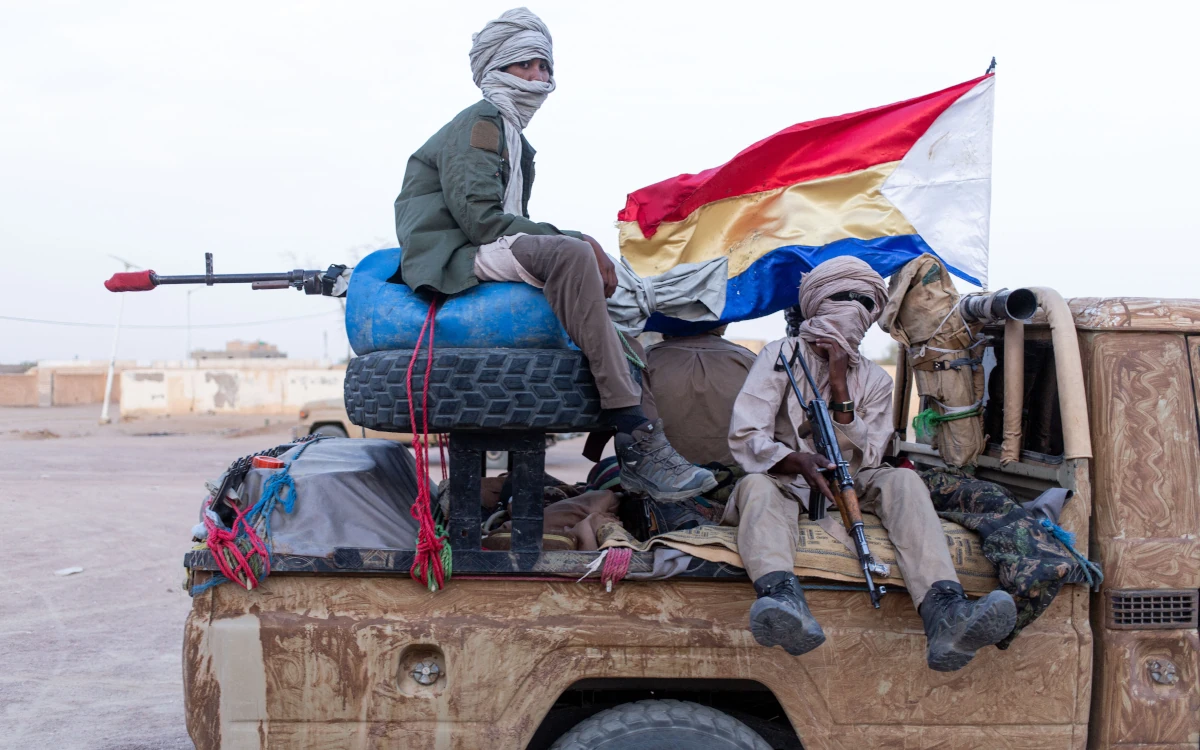
Modern wars are often explained through ideology, ethnicity, or geopolitics. Mali’s conflict contains all three. But beneath these structural forces lies another layer: the individuals who reshaped the country after the collapse of the post-2012 political order.
The trajectory of Mali since 2020 cannot be understood without examining the military officers who seized power in Bamako, the insurgent commanders who expanded armed influence across the countryside, and the foreign military actors who filled the vacuum left by departing French forces and the withdrawal of MINUSMA, the United Nations peacekeeping mission.
The 2020 coup d’état marked a decisive turning point. It transformed the conflict from an internationally managed stabilization effort into a militarized sovereignty project led by a junta increasingly hostile to France, skeptical of the United Nations, and aligned with Russian security structures. At the same time, insurgent leaders adapted faster than the state itself, building networks that now stretch across large parts of rural Mali.
The 2020 coup d’état marked a decisive turning point. It transformed the conflict from an internationally managed stabilization effort into a militarized sovereignty project led by a junta increasingly
What emerged after 2020 was not merely a new phase of conflict, but a new political order shaped by military authority, insurgent governance, and competing visions of sovereignty.
On August 18, 2020, a group of military officers arrested President Ibrahim Boubacar Keïta following months of protests, public anger over corruption, and worsening insecurity. The coup was initially framed inside Mali as a corrective intervention. Large sections of the population had lost confidence in the civilian government, particularly after years of escalating violence despite heavy international military support.
But the coup had consequences far beyond Bamako. It disrupted the implementation of the 2015 peace agreement brokered under international supervision, weakened relations with France, complicated coordination with MINUSMA, and fractured continuity within the state itself. The officers who led the coup formed the National Committee for the Salvation of the People, with Colonel Assimi Goïta emerging as the central figure. A transitional government was announced, but tensions between civilian and military authorities persisted.
In May 2021, Goïta carried out a second consolidation of power—widely regarded as a “coup within the coup”—which firmly placed the military at the center of political authority. From that moment onward, Mali’s trajectory changed fundamentally. The junta increasingly viewed foreign criticism as interference, peace negotiations as weakness, and military sovereignty as the central principle of governance.
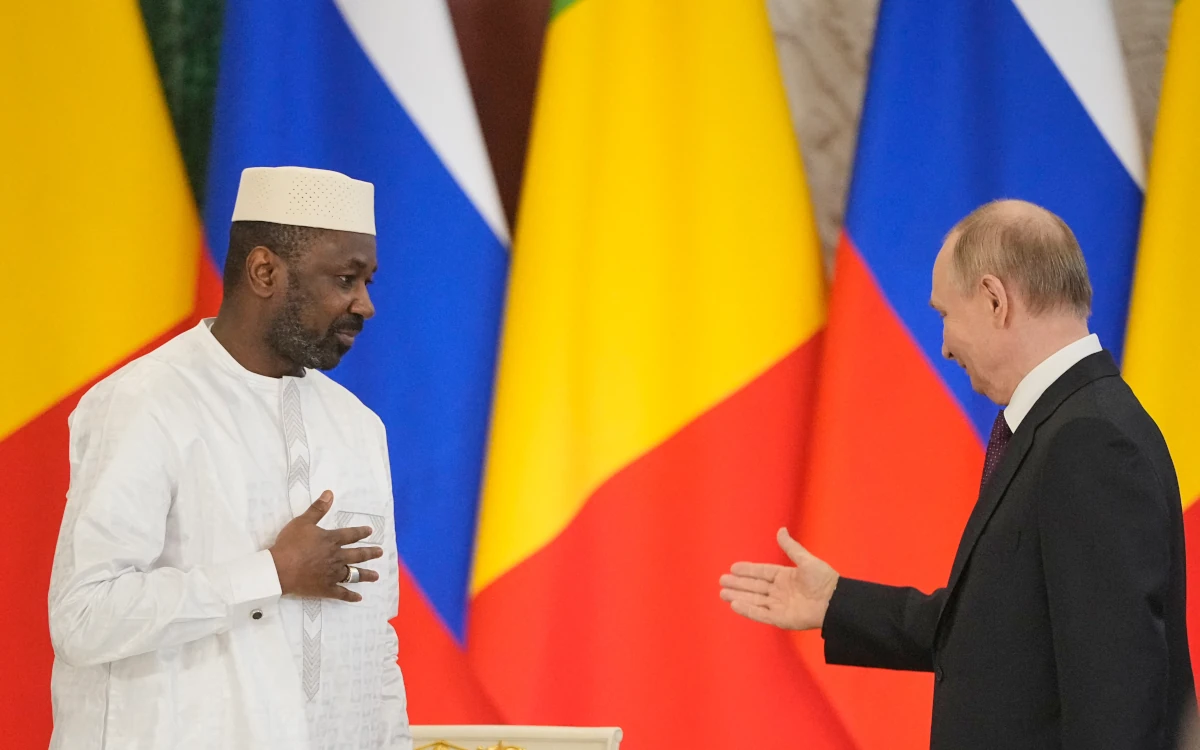
Colonel Assimi Goïta became the defining political figure of post-2020 Mali. Unlike earlier civilian leaders who relied heavily on international partnerships, Goïta positioned himself as the architect of a sovereign nationalist state resisting external pressure. His rise was enabled by several broader dynamics: public frustration with insecurity, resentment toward France, and growing distrust of international institutions.
Unlike earlier civilian leaders who relied heavily on international partnerships, Goïta positioned himself as the architect of a sovereign nationalist state resisting external pressure
Under Goïta, the state adopted a far more confrontational posture toward Western powers while strengthening ties with Russia. This shift was not only geopolitical but ideological. The junta promoted the idea that previous governments had sacrificed sovereignty, that international peacekeeping had failed, and that only a militarized national project could restore territorial integrity. This narrative proved politically effective at home, even as insecurity continued expanding in many rural regions.
France intervened militarily in Mali in 2013 to stop jihadist forces from consolidating control in the north. Initially, the intervention was widely welcomed. French operations rapidly pushed insurgent groups out of major urban centers, including Gao and Timbuktu.
Over time, however, several factors eroded the relationship between Paris and Bamako. Many Malians increasingly believed that the French presence had become indefinite, that insecurity was worsening despite years of intervention, and that France maintained disproportionate political influence over Malian affairs. At the same time, the junta accused France of violating Malian sovereignty, interfering politically, and failing militarily.
Relations deteriorated sharply after the 2020 coup. By 2022, France announced the withdrawal of its forces from Mali, ending nearly a decade of military operations under frameworks such as Operation Barkhane. The withdrawal created a major strategic vacuum. French forces had provided air support, intelligence, logistics, and regional coordination capacity. Their departure weakened the broader international counterinsurgency architecture across the Sahel and accelerated Mali’s pivot toward Russian-backed security partnerships.
MINUSMA was established in 2013 and became one of the UN’s largest and most dangerous peacekeeping operations. Its mandate included supporting the peace process between the Government of Mali and armed groups in the north, supporting implementation of the 2015 peace agreement (often referred to as the Algiers Agreement), protecting civilians, facilitating humanitarian access, and stabilizing contested regions.
Yet MINUSMA faced a contradiction from the beginning. It was deployed into an environment where there was no real peace to keep. Insurgent violence continued expanding, and the state itself remained fragile. Within the UN, officials warned that the mission was overstretched and politically constrained.
After the 2020 coup, relations between MINUSMA and the junta deteriorated rapidly. The military leadership accused the mission of bias, infringing on Malian sovereignty, and failing to support national priorities. MINUSMA, meanwhile, faced increasing restrictions on movement and operations.
By 2023, the junta formally demanded the mission’s withdrawal. Its departure marked one of the most consequential turning points in modern Mali’s conflict history. MINUSMA had functioned not only as a peacekeeping force but also as a monitoring mechanism, diplomatic intermediary, and buffer between armed actors. Once it left, the enforcement structure surrounding the 2015 Agreement effectively collapsed. Within months, fighting in the north intensified sharply.
If Assimi Goïta became the face of the state’s militarized sovereignty project, Iyad Ag Ghaly became the symbol of insurgent endurance. A veteran Tuareg figure with decades of political and militant experience, Ag Ghaly evolved from nationalist activism into jihadist leadership. He now leads Jama’at Nusrat al-Islam wal-Muslimin (JNIM), the most powerful jihadist coalition operating in Mali and across much of the Sahel.
What makes JNIM particularly resilient is not only military capacity but also political adaptability. Under Ag Ghaly’s leadership, the organization embeds itself in local grievances, negotiates selectively with communities, and presents itself as an alternative governance structure in areas abandoned by the state. Unlike the Islamic State model of overt territorial conquest, JNIM often expands through negotiated influence and rural penetration. This strategy has allowed the group to survive French intervention, UN stabilization efforts, and intensified Malian military offensives.
What makes JNIM particularly resilient is not only military capacity but also political adaptability. Under Ag Ghaly’s leadership, the organization embeds itself in local grievances, negotiates selectively with communities
By 2025–2026, JNIM had demonstrated unprecedented operational coordination, conducting simultaneous attacks across multiple regions and increasingly threatening strategic infrastructure near Bamako itself.
The leaders of northern separatist coalitions underwent a major transformation after the collapse of the Algiers Agreement. During the 2015 peace process, many repositioned themselves as political negotiators seeking autonomy within a decentralized Malian state. But the failures of implementation gradually weakened the moderate factions.
As trust collapsed after 2020, especially following MINUSMA’s withdrawal, armed postures returned. By 2024, several northern coalitions had effectively remilitarized. Their commanders increasingly argued that Bamako had abandoned the agreement, that military rule made decentralization impossible, and that armed resistance was once again necessary. This remilitarization coincided with renewed offensives in Kidal and surrounding regions.
The most significant development came when anti-government forces recaptured Kidal after intense fighting against Malian and Russian-backed forces. International reporting frequently portrayed these offensives as exclusively the work of jihadist organizations linked to Iyad Ag Ghaly and JNIM. Such interpretations, however, oversimplified the composition of the insurgent coalition operating in northern Mali. A central role was also played by the Front Militaire pour la Libération de l’Azawad (FLA), whose political leadership includes Bilal Ag Acherif and other former leaders of the Coordination des Mouvements de l’Azawad (CMA).
This distinction remains politically and diplomatically important. Unlike JNIM, the FLA is not internationally designated as a terrorist organization. Many of its constituent movements were signatories to the 2015 Algiers Peace Agreement and participated directly in negotiations supported by Algeria, the United Nations, and other international mediators.
For years, these actors officially pursued autonomy and decentralization within a negotiated political framework rather than a transnational jihadist project. The collapse of that framework accelerated after the 2020 coup d’état and intensified further through the progressive marginalization of the Algiers process by the junta, the withdrawal of MINUSMA, and the military reconquest of Kidal by Malian and Russian-backed forces in late 2023.
For many northern armed factions, these developments confirmed that the peace agreement had effectively ceased to exist. What followed was the gradual remilitarization of former signatory groups and the emergence of tactical battlefield coordination between separatist factions and jihadist forces against a common adversary: the Bamako government and its Russian-backed military apparatus.
The recapture of Kidal therefore carries significance far beyond a symbolic battlefield victory. Kidal has historically represented the political center of Tuareg resistance movements, the strategic heart of Azawad, and the geographic anchor of northern insurgent networks. Its loss represented a major strategic setback for the Malian junta and for Russian-backed military operations in the north.
The recapture of Kidal therefore carries significance far beyond a symbolic battlefield victory. Kidal has historically represented the political center of Tuareg resistance movements, the strategic heart of Azawad, and the geographic anchor of northern insurgent networks
As of 2026, Mali increasingly resembles a fragmented battlespace divided between competing systems of authority rather than a state exercising uniform territorial control.
The FLA and allied northern armed factions now appear to exercise effective control over Kidal and surrounding areas extending toward Tessalit, Aguelhok, and parts of the Algerian border corridor. In these regions, separatist structures maintain the dominant political presence, while Malian state authority has largely disappeared outside remaining military positions.
JNIM retains operational influence in the area and reportedly coordinates tactically with anti-government factions, though the two forces remain ideologically distinct. Their relationship is better understood as a temporary convergence of interests rather than as a unified command structure.
The Malian Armed Forces (FAMa) continue to hold Gao city and several major military installations. However, insurgent groups increasingly contest supply corridors, transportation routes, and rural communes surrounding the city. Eastern Mali, especially around Ménaka, has become one of the country’s most fragmented security zones, with overlapping areas of influence involving JNIM, the Islamic State Sahel Province (ISSP), local militias, tribal self-defense formations, and FLA-linked insurgent factions.
In central Mali, particularly in the Mopti and Segou regions, JNIM continues to expand through rural infiltration, coercive taxation, negotiated local arrangements, and attacks on state infrastructure. While the Malian state retains control over major towns, insurgent actors increasingly dominate the countryside and strategic mobility corridors. The junta still controls Bamako and the southern administrative core of the country. Yet recent coordinated attacks closer to the capital have demonstrated the growing operational reach of insurgent networks and exposed vulnerabilities within the military command structure itself.
The conflict no longer resembles a contained northern rebellion. Instead, Mali now faces a multi-front war in which the state controls major urban centers, insurgent actors dominate large rural territories, and northern separatist movements have re-emerged as major military forces after the effective collapse of the 2015 peace architecture.
The renewed offensives in northern Mali demonstrate that the conflict can no longer be understood solely through the framework of counterterrorism. The re-emergence of the Azawad question has fundamentally altered the political landscape. The insurgency now combines jihadist movements seeking long-term ideological influence, separatist factions pursuing territorial autonomy, and local armed networks exploiting the erosion of central authority.
For the junta, this represents a profound strategic dilemma. The military leadership has framed the conflict as a sovereign campaign against terrorism. Yet the resurgence of former peace-process actors such as Bilal Ag Acherif and the FLA complicates that narrative internationally, particularly because these movements were previously recognized negotiating partners under the Algiers framework.
As of 2026, Mali appears increasingly trapped between militarized state centralization, insurgent territorial expansion, and the collapse of the political mechanisms that once prevented full-scale fragmentation of the north.
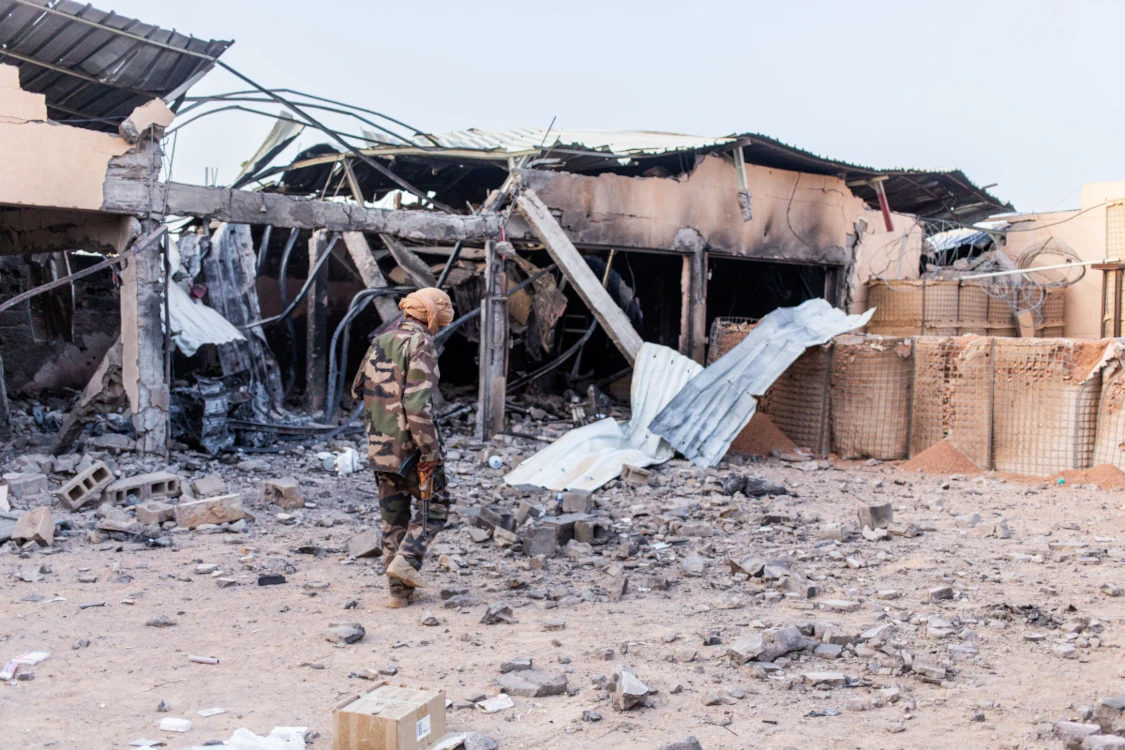
Following the French withdrawal, Russian-linked military contractors entered Mali in growing numbers. Initially associated with the Wagner Group, these forces later became integrated into reorganized Russian overseas military networks often described as the Africa Corps.
Their mission extended beyond battlefield operations. Russian-linked personnel became involved in military training, strategic protection, intelligence support, and regime stabilization. For the junta, the partnership represented a symbolic break from dependence on France. For Russia, Mali became part of a broader Africa strategy aimed at expanding influence amid declining Western military presence.
For the junta, the partnership with Russia represented a symbolic break from dependence on France. For Russia, Mali became part of a broader Africa strategy aimed at expanding influence amid declining Western military presence
Yet despite aggressive operations, the security landscape continued to deteriorate in several regions. Recent developments in 2025–2026 have demonstrated that insurgent offensives increasingly challenge both Malian and Russian-aligned forces in northern Mali, particularly around Kidal and along strategic northern corridors.
The inability of Russian-backed operations to establish durable territorial control further exposed the structural limits of a purely military approach to the conflict.
Mali’s conflict is often analyzed through institutions, agreements, and military operations. But the deeper story is also one of political personalities and competing visions of sovereignty. Assimi Goïta represents a military-nationalist state seeking authority through force and strategic autonomy. Iyad Ag Ghaly represents a decentralized insurgent order capable of embedding itself where the state is weakest. Bilal Ag Acherif and the re-emergent Azawad movements represent the return of unresolved northern political demands that survived both military defeat and failed peace implementation.
The collapse of French intervention and the withdrawal of MINUSMA removed the international scaffolding that once stabilized relations between these competing systems. The result is a country where diplomacy has weakened, militarization has intensified, and political authority is increasingly fragmented across overlapping armed networks. The conflict that began in 2012 as a rebellion in the north has become, by 2026, a struggle over the very definition of the Malian state itself.