

Energy facilities are no longer merely potential targets in the ongoing conflict; they have emerged as a mutual strategic pressure tool between Washington and Tehran. As America threatens strikes on Iran’s energy infrastructure, and as Iran threatens to target power and desalination plants across the Gulf and Jordan, an escalation trajectory is emerging, with risks extending beyond the military arena to global energy security.
US President Donald Trump’s announcement of a 48-hour ultimatum for striking energy facilities, followed by a pause and an extension of the deadline by five days, reflects not only tactical calculations but also a deeper dilemma concerning the use of force without slipping into an uncontrollable escalation. Meanwhile, talk of “productive conversations” reflects an attempt to keep the door open for de-escalation in a persistent threat environment.
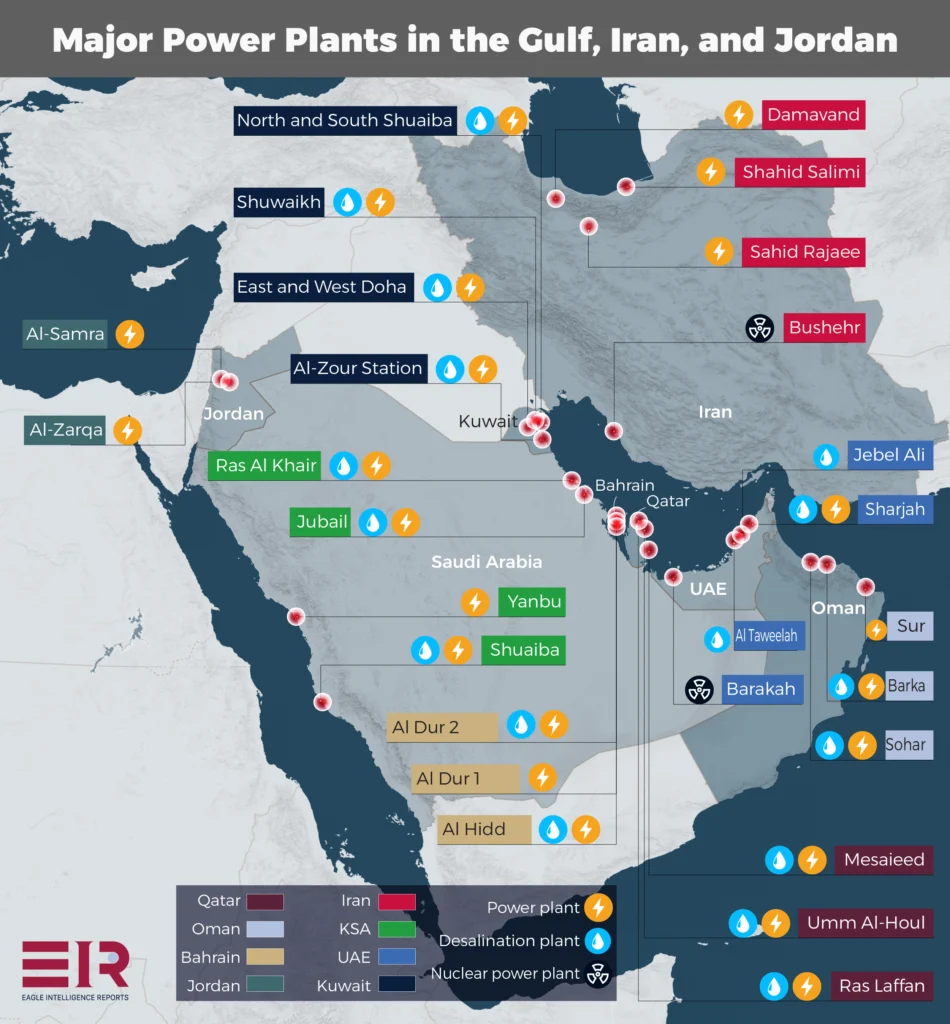
Reactively, Iran has moved beyond rhetoric to explicitly designate targets by publishing a list of 11 key energy facilities across the Gulf and Jordan. Iran’s move aims to raise the cost of any possible attack and broaden the scope of risks to include sensitive infrastructure affecting the regional and global economy.
The threat lies in the nature of these targets. Power and desalination plants are not conventional military targets, but essential pillars of internal stability for any country. They are the direct source of electricity and water for the population and vital sectors. Targeting them not only affects services but also creates widespread internal pressure, paralyzes economic activity, and disrupts the daily functioning and governance of the state. This transforms the strike from a limited tactical impact into a tool of pressure that directly undermines internal stability.
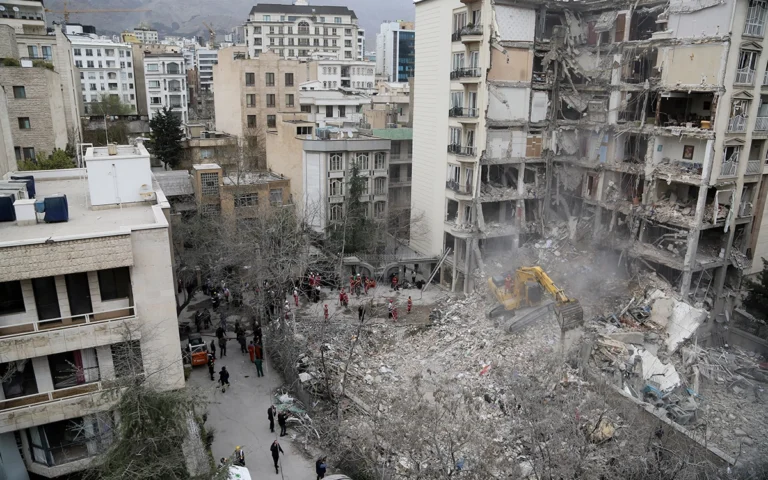
Since Israel and the United States engaged in confrontation with Iran on February 28, the conflict is no longer confined to conventional military targets. Iran’s retaliation with missiles and drones, which have targeted energy facilities in several Arab countries, reflects a shift in the conflict towards a multi-front war of attrition, where the cumulative cost is far greater than a swift resolve. In this context, the danger lies not in a single strike but in a gradually emerging pattern of calculated attacks and calibrated responses within an expanding scope of targets. With eight energy facilities already being attacked since the war began, what was once a mere possibility has transpired into a partial reality, poised to escalate further.
The most significant consequence is that this war is no longer solely measured in terms of the balance of military power, but also by each side’s ability to leverage energy resources without triggering a wider collapse of regional stability. This is precisely where the greatest danger lies.