

Thomas O Falk

HomeThomas O Falk
Thomas O Falk
Thomas O Falk
Thomas O. Falk is a London-based journalist and analyst focused on transatlantic relations, US affairs, and European security. With a background in political reporting and strategic analysis, he draws on in-depth research, historical insight, and on-the-ground developments to explore the forces shaping today’s geopolitical landscape.

The diplomatic rupture between Spain and the United States is not merely a discrete dispute over language but the visible edge of a deeper contest over the legitimacy of the U.S.-led campaign against Iran, the limits of allied acquiescence, and the extent to which economic coercion can substitute for consensus-building in alliance management.

By

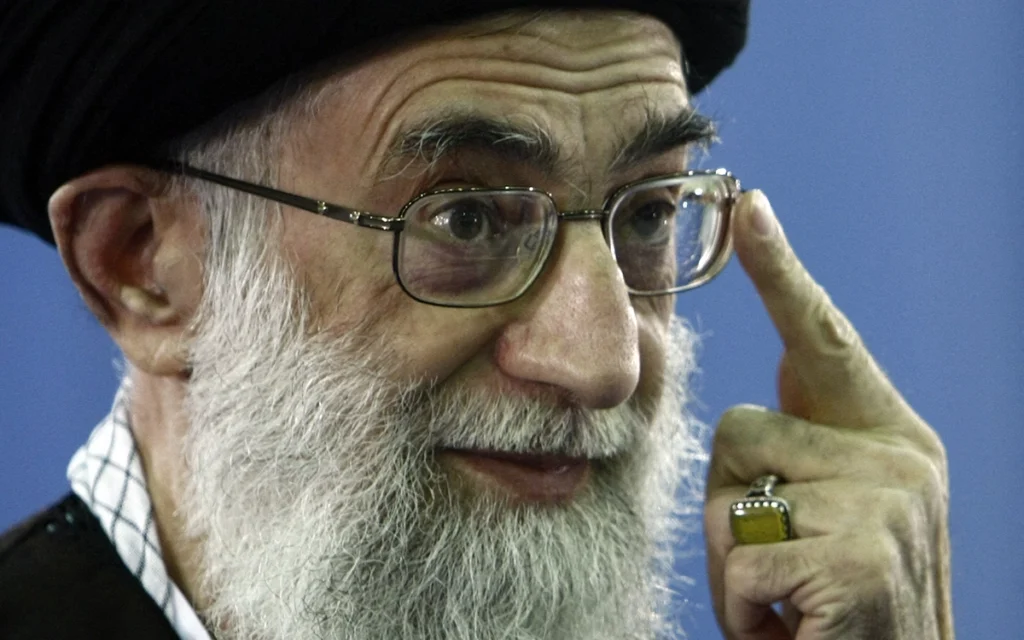
The US, in coordination with Israel, has launched a major military operation against Iran, striking multiple targets across the country. President Trump on Saturday evening announced that Iran’s Supreme Leader, Ayatollah Ali Khamenei, had been killed in the course of the operation — a claim formally confirmed by Iranian authorities on Sunday morning.

By

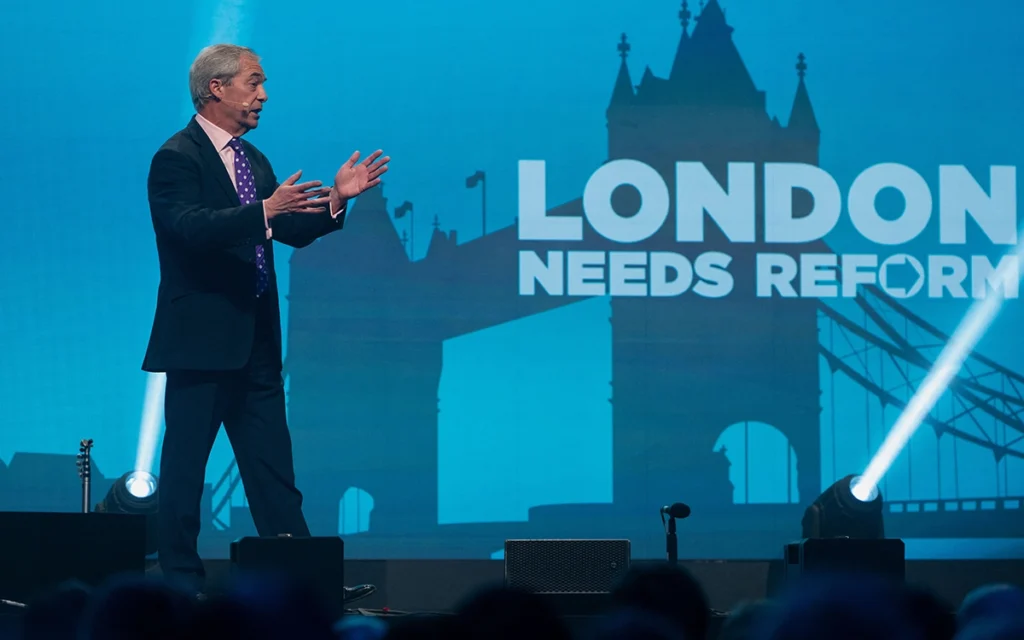
Nigel Farage’s Reform UK emerged as an insurgent challenge to Britain’s two-party order by mobilizing discontent with what it calls a broken political system. Yet its recent absorption of defectors from the Conservative Party exposes a central contradiction: a party defined by opposition to the establishment is increasingly staffed by figures drawn from it.

By

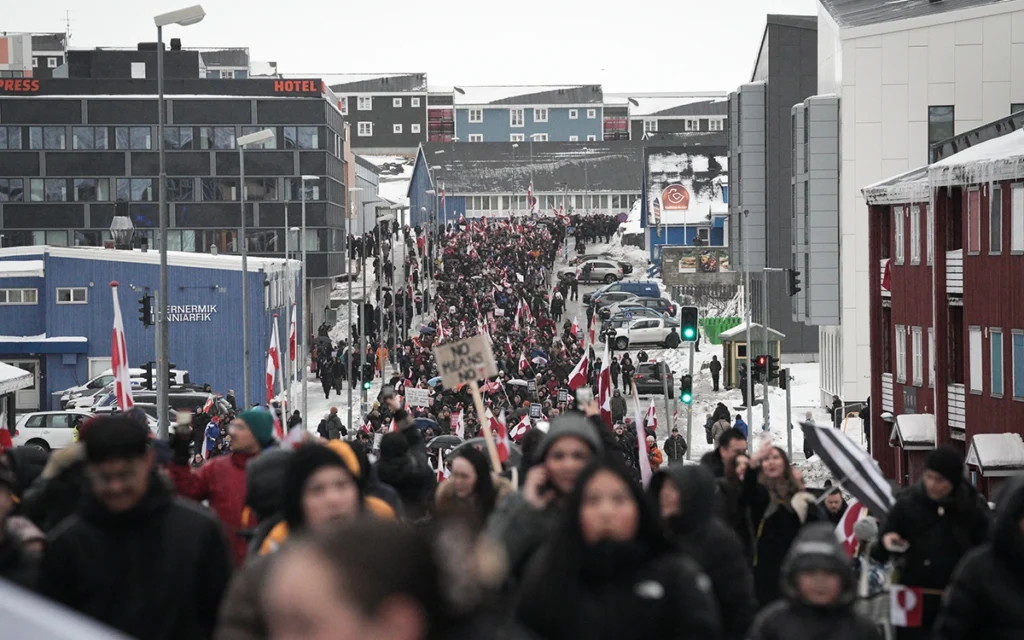
For much of the post-Cold-War era, Greenland existed at the margins of strategic thought. Immense in scale yet negligible in population, the island appeared to confirm the 1990s prevailing assumption: geography had been eclipsed by markets, institutions, and technology as the primary drivers of power. Ice-covered landmasses seemed more symbolic than consequential.

By

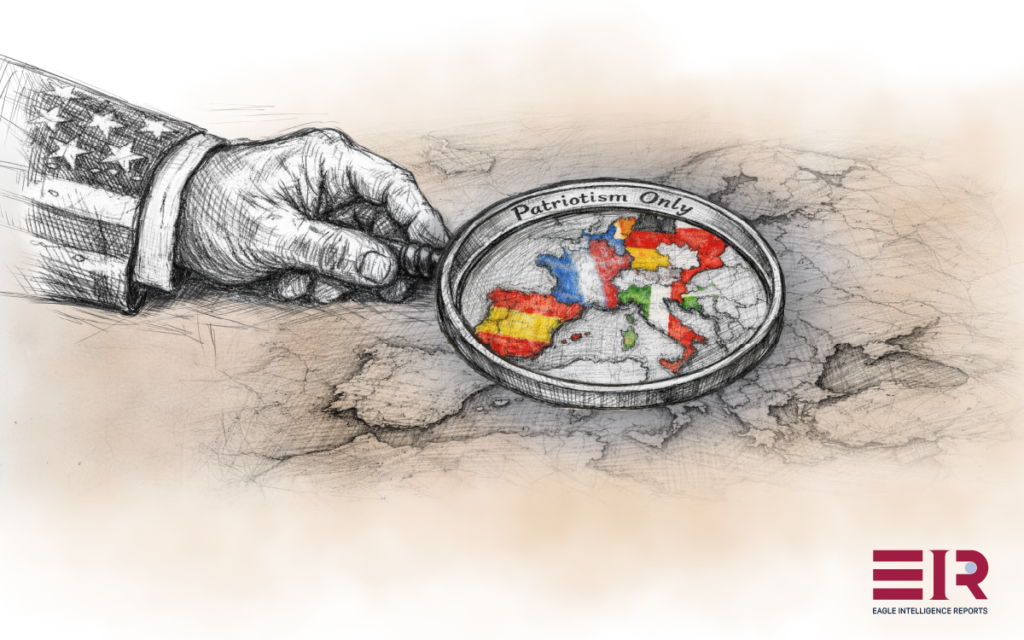
For the first time since the Cold War, the US explicitly seeks to influence Europe’s internal political order. The Trump administration’s 2025 NSS does not merely criticize European policies or institutions but openly endorses nationalist parties as preferred partners. It thus reframes Europe’s conflicts as matters of strategic alignment.

By

For two decades, Berlin treated China less as a geopolitical problem than as an economic solution. German carmakers sold more vehicles in China than in Germany. Machinery firms supplied the tools for the world’s most spectacular manufacturing boom. Politicians wrapped this symbiosis in a comforting doctrine: Wandel durch Handel or “change through trade”.

By

The war that began with Russia’s full-scale invasion of Ukraine in February 2022 is approaching a diplomatic crossroads. For months, Washington and Moscow have pursued talks that, in their earliest form, produced a perilous 28-point draft settlement. It triggered a political storm in Kyiv, across Europe, and even within the US national-security establishment.

By

When British voters handed Labour a landslide in July 2024, they were not seeking a revolution. They were seeking relief from Brexit chaos, from Johnson’s impunity, from Truss’s brief experiment in fiscal arson, and from Rishi Sunak’s oddly weightless premiership. Keir Starmer offered something almost quaint.

By

After a year of political turmoil, Dutch voters have returned to the pragmatic center. D66’s win under Rob Jetten offers Europe a respite, a test of whether coalition-style politics can still deliver capable governance in an age of populism. Europe’s weather vane has swung again, and this time it points back toward the pragmatic center.

By

Paris has seen barricades and coups, the theater of revolutions and plebiscites. Yet the most consequential French crises rarely announce themselves with cannon fire. They arrive softly, disguised as cabinet reshuffles and procedural improvisations. This autumn’s sequence, the resignation and reappointment of Sébastien Lecornu, can look like a farce. It isn’t. It’s a clinical finding.

By
  • 1
  • 2
Eagle Intelligence Reports
Privacy Overview

This website uses cookies so that we can provide you with the best user experience possible. Cookie information is stored in your browser and performs functions such as recognising you when you return to our website and helping our team to understand which sections of the website you find most interesting and useful.