The United States is leading a diplomatic push aimed at engineering a Moroccan–Algerian reconciliation as part of a broader effort to resolve the long-running Western Sahara conflict, according to a Western diplomatic source.
Peace talks over Western Sahara began in Madrid last week in a renewed push to resolve the half-century-old frozen conflict. Under U.S. guidance, the process has shifted from conflict management toward structural resolution. A Western diplomatic source told Eagle Intelligence Reports that discussions now center on a comprehensive normalization package between Morocco and Algeria, including reopening land borders, restoring air links, resuming diplomatic relations, and reactivating the Maghreb–Europe Gas Pipeline.
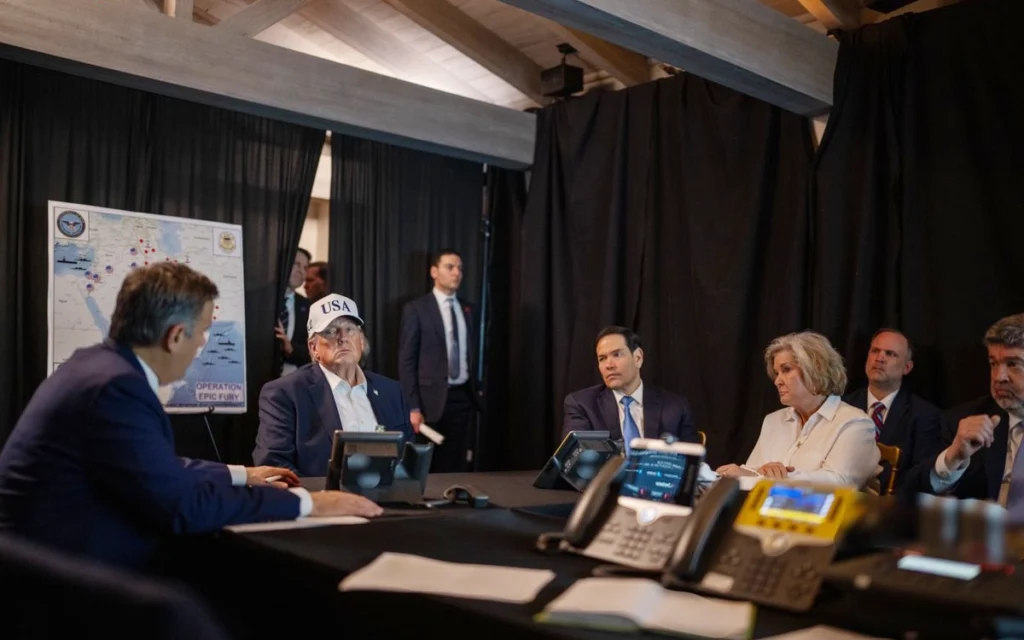
Led by U.S. Special Advisor for Africa Massad Boulos, representatives from Morocco, Algeria, Mauritania, the Algerian-backed Polisario Front, and the UN Secretary General’s Personal Envoy for Western Sahara met behind closed doors at the U.S. Embassy, with Spain acting as a facilitator but not participating directly in the discussions. U.S. objectives include the removal of practical obstacles to diplomacy, the establishment of a technical committee tasked with reviewing a new Moroccan autonomy plan, and ultimately a comprehensive Morocco–Algeria rapprochement. Rabat’s proposal for West Saharan self-governance within Moroccan sovereignty, an elaboration of its 2007 autonomy proposal, is reportedly the only framework under consideration in the talks.
According to the source, Washington views Moroccan–Algerian rapprochement as a prerequisite for breaking the decades-long stalemate over Western Sahara and is working to translate the diplomatic track into concrete political and economic steps.
Washington views Moroccan–Algerian rapprochement as a prerequisite for breaking the decades-long stalemate over Western Sahara
A new round of negotiations will take place from mid-February to mid-March, which will seek to produce an agreement on the mandate of the technical committee for Western Saharan autonomy. Within roughly 90 days, the United States intends for talks to produce a meeting in Washington, likely in May 2026, to narrow remaining political differences and draft a framework agreement.
The United States is also monitoring the UN Security Council’s April renewal of the Western Sahara peacekeeping mission, viewing the mandate as leverage to assess parties’ readiness to make genuine concessions at the negotiating table.
Frozen Conflict in Western Sahara
The Western Sahara conflict emerged during Spain’s withdrawal from the territory in the 1970s. Rabat asserted that the region had belonged to Morocco before Spanish colonization, while Mauritania claimed the southern portion based on tribal ties and the Sahrawi nationalist Polisario Front declared independence. The ensuing war left the territory split between a Moroccan-controlled west and a Polisario-held east.
The last substantive attempt at resolution, a UN-brokered ceasefire in 1991, aimed to resolve the conflict through a self-determination referendum. But disagreements over electorate criteria and voter eligibility prevented its implementation, and the conflict settled into a prolonged stalemate.
The dispute has long reflected broader regional rivalry. Algeria has backed the Polisario Front since 1975 and hosts the leadership of the self-proclaimed Sahrawi Democratic People’s Republic, which claims El Aaiún as its capital despite the city remaining under Moroccan control.
Europe and Algerian Gas
Although Spain is excluded from talks, it has received visiting delegations from Mauritania, Algeria, and Morocco while declining to receive a Polisario delegation. The move signals Europe’s growing acceptance of Moroccan de facto sovereignty in Western Sahara. Algeria’s cooperation in Madrid may suggest a willingness to accept the diminishing influence of Polisario in exchange for normalization and the restoration of gas deliveries to Spain via Morocco.
Algeria’s cooperation in Madrid may suggest a willingness to accept the diminishing influence of Polisario in exchange for normalization
In 2021, Algeria declined to renew its transit agreement with Morocco, halting flows through the Maghreb–Europe Gas Pipeline. Commissioned in 1996, the pipeline runs from Hassi R’Mel in Algeria to Córdoba in Spain via Morocco. Before the closure, it transported more than 12 billion cubic meters of gas to Europe annually.
Since the shutdown, Morocco has lost transit revenues and in-kind gas payments from Algeria. Rabat has thus resorted to importing gas via Spanish LNG terminals, reversing the pipeline flow southward and giving Morocco effective but expensive energy independence from Algerian supply. Algiers has since expanded the capacity of the Medgaz pipeline, which connects directly to Spain via Almería, to compensate, though its throughput remains significantly lower, and its greater depth increases technical vulnerability.
United States Diplomatic Push
The United States initiative reflects an outcome-driven approach that links Western Sahara settlement to broader regional normalization and energy security. Compared to prior preferences for incrementalism and risk containment, Washington now seeks to formalize a settlement architecture that converts the resolution of a long-frozen conflict into a wider framework of political and economic integration.
If negotiations culminate in a framework for peace announced in Washington in May 2026, it will mark a departure from decades of conflict management toward a more defined and concrete settlement architecture. Ahead of the November midterm elections in the United States, the deal would also likely be presented as a significant foreign policy achievement that frees up North African supplies for European partners dependent on high-cost LNG imports from across the Atlantic.
If negotiations culminate in a framework for peace, it will mark a departure from conflict management toward a more defined and concrete settlement architecture