
Eagle Intelligence Reports
The recent upsurge in violence between the Syrian government and Kurdish minority forces has confirmed the consolidation of a fundamentally transformed U.S. strategy toward the country. In Trump’s second term, the administration has prioritized counterterrorism, economic engagement, and the promotion of a strong central government aligned with Washington. Secondary objectives have included managing Israel’s security concerns and reconciling Syrian minority groups with the new regime. The administration has firmly opposed Iranian influence in Syria while showing comparatively less concern about Turkish, Israeli, Russian, and Chinese activities there. Though U.S. officials would welcome further democratic reforms and transitional justice measures in Syria, these aims have not been central priorities.
To pursue these objectives, the administration has employed a diverse set of instruments: limited military force against terrorist targets, sanctions relief, and other economic inducements to solicit cooperation from the new government, and high-level diplomacy to manage U.S. relations with Israel, Turkey, the Kurds, and Syrian stakeholders. While varied, the modest costs of these tools correspond with the limited U.S. strategic stakes in Syria. However, this sensible ends-means balance could come under strain under less favorable future scenarios.
Trump spent much of his first term seeking, unsuccessfully, to disengage from Syria. During the 2024 U.S. presidential campaign, analysts speculated he might pursue direct engagement with Bashar al-Assad, whose regime appeared to have consolidated control. But the regime’s abrupt collapse in December resulted in the United States confronting an unexpected Syrian situation when Trump returned to office in January 2025.
The administration initially viewed the new Syrian authorities, led by former jihadist Ahmed al-Sharaa, with skepticism. Regional leaders in Turkey and several Arab governments, however, urged the White House to engage with al-Sharaa, framing the transition as a historic opportunity to realign Syria with the Sunni mainstream. At the same time, the new authorities signaled pragmatism by readily cooperating with the United States on counterterrorism operations and investigations of missing U.S. citizens.
The new Syrian authorities signaled pragmatism by readily cooperating with the United States on counterterrorism operations and investigations of missing U.S. citizens
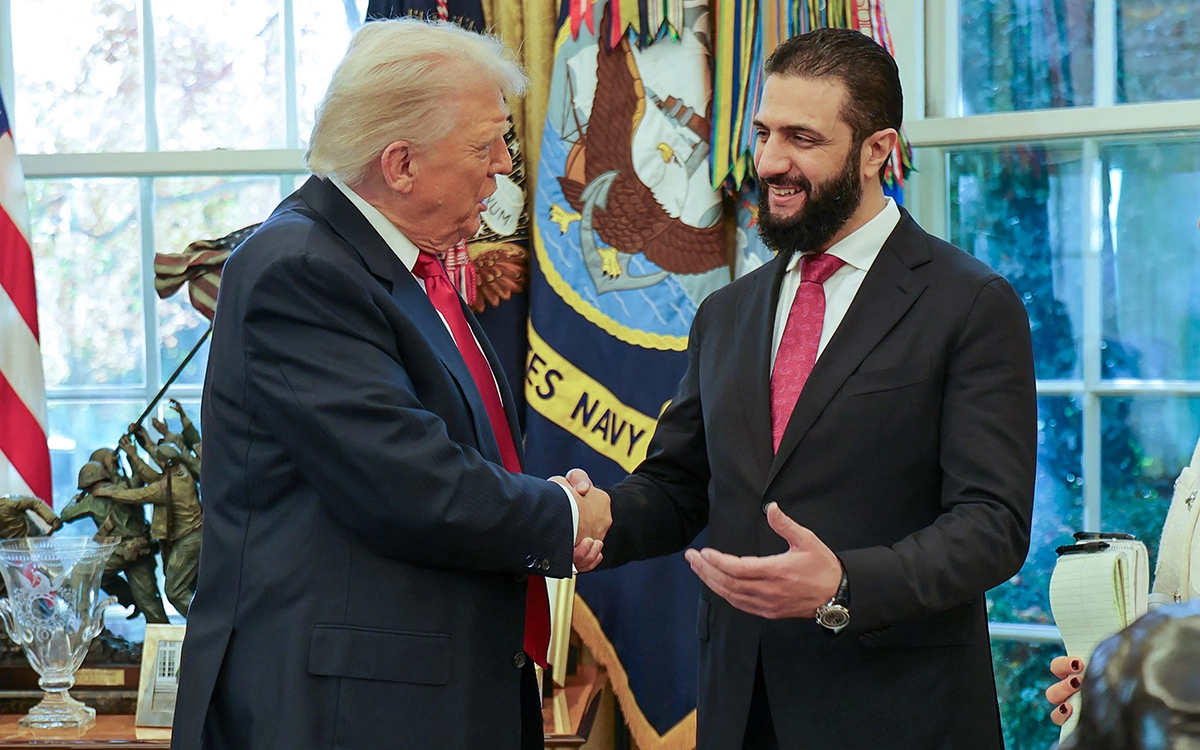
At their meeting in Riyadh in April, Trump judged al-Sharaa to have undergone a “road to Damascus” transformation and to embody the type of strong leader he favors as a partner. Senior U.S. officials, such as Special Envoy to Syria Tom Barrack, argued that regional stability has historically rested more on “enlightened monarchies” than Western-style liberal democracies in the Arab region. They further accepted that Syria is unlikely to hold national elections in the near term given the effects of years of wartime destruction and misrule. Overruling more cautious voices, Trump invited al-Sharaa to the White House and directed the U.S. interagency to provide substantial military, economic, and diplomatic support to the new regime.
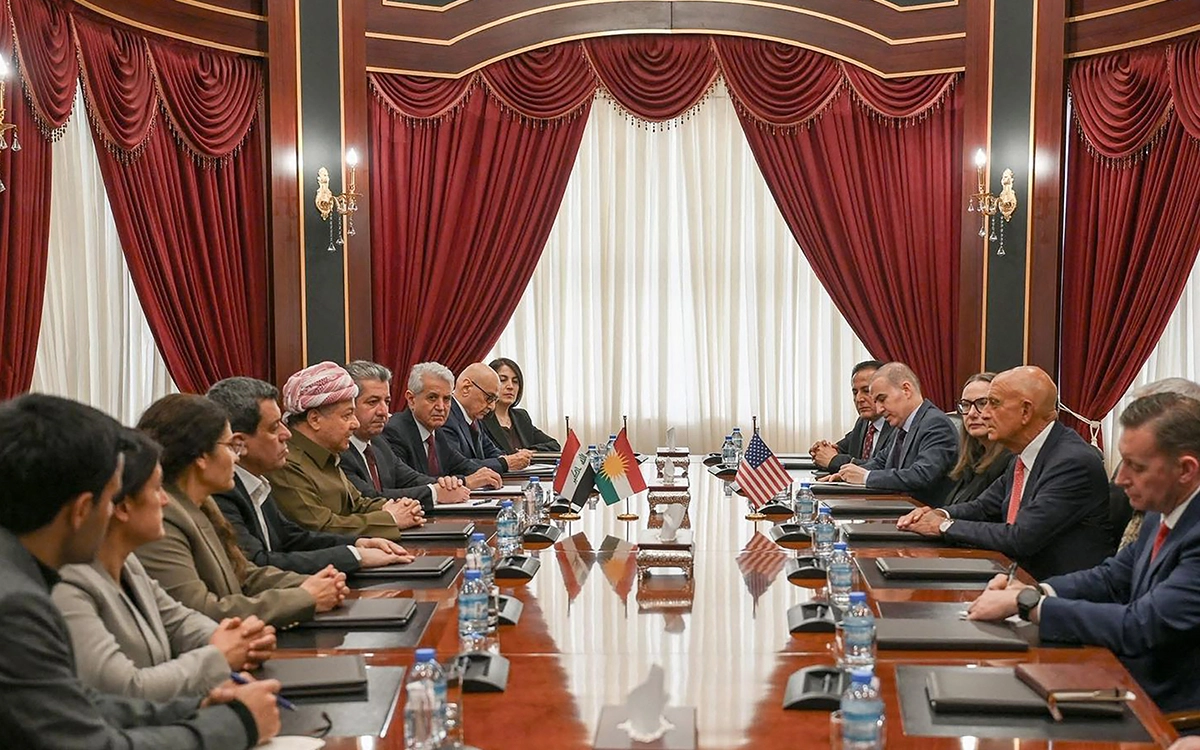
In northeast Syria, U.S. counterterrorism forces have continued air strikes, special forces raids, and the joint operation of detention camps with the Kurdish-led Syrian Democratic Forces (SDF). Elsewhere, U.S. diplomacy orchestrated the de-listing of al-Sharaa and his senior associates from international and national terrorist lists and supported Syria’s entry into the U.S.-led Global Coalition to Defeat ISIS. The United States helped both Syria’s regular armed forces and the Ministry of Interior in intelligence collection, personnel vetting, and the integration of armed groups under the government’s central command.
These tactics have helped contain the terrorist threat. Unlike in Iraq during the mid-2000s, Syrian extremists have been unable to exploit the country’s political transition to catalyze a broader sectarian war and expand recruitment. The light U.S. footprint has also limited the number of American casualties; when incidents have occurred, the administration has responded with brief, targeted escalatory measures. U.S. assistance, combined with Turkish weaponry and operational support, also partly explains the tactical success of the recent government offensive against the SDF, which effectively integrated artillery, armor, and ground forces.
In 2025, U.S. economic diplomacy toward Syria centered on sanctions relief. Trump ended all executive-branch sanctions and successfully lobbied Congress to remove or suspend legislative measures, including the Caesar Act’s sweeping secondary sanctions, without imposing major conditions or snapback mechanisms. The removal of sanctions has reassured Arab partners and removed obstacles to Syrian commerce and investment.
The United States is likely to continue relying primarily on private-sector investment to revive the Syrian economy. Several new Syrian economic policymakers previously worked for U.S. corporations or U.S.-based international institutions while in exile. Special Envoy Barrack has tirelessly promoted foreign investment. Even so, anticipated capital inflows remain far below what Syrian reconstruction requires.
The US has tirelessly promoted foreign investment. Even so, anticipated capital inflows remain far below what Syrian reconstruction requires
Unlike in Venezuela, the United States is not seeking an exclusive—or even dominant—role in Syria. Nevertheless, the Trump administration views Washington as uniquely positioned to mediate Syria’s external and internal relations. U.S. officials have coordinated closely with select partners, especially Turkey and key Sunni Arab states, to support the new government while working to exclude Iran and its proxies. By contrast, constraining Chinese or Russian activity in Syria has not been a U.S. priority: China is a potential source of economic assistance, and U.S. officials acknowledge that Syrian armed forces need Russian maintenance and spare parts for their military equipment.
Israel also lobbied to maintain a Russian military presence in Syria. The United States did not openly oppose Israel’s air campaign to destroy Assad-era heavy weapons, the expansion of its buffer zone deeper into Syrian territory, or Israeli interventions on behalf of Syria’s Druze community. At the same time, the Trump administration pushed for comprehensive sanctions relief, despite Israeli objections, and successfully induced Israel to engage in direct security talks with the Syrian government. U.S. officials consider Israeli fears regarding the new Syrian regime excessive and view Israeli efforts to keep Syria weak and fragmented as counterproductive.
Another U.S. diplomatic priority in 2025 was reconciling the SDF and the central government. In March, U.S. representatives helped secure an agreement in principle on comprehensive political and military integration, but implementation proved elusive. SDF leaders dragged their feet to secure better terms, while the central government, working closely with Turkey, cultivated support among Arab leaders loosely allied with the SDF and expanded its capacity to defeat the group militarily.
U.S. officials have warned the Syrian government—implicitly signaling the possibility of renewed sanctions—to avoid the mass civilian casualties that characterized last year’s brief but bloody campaign against the Alawites along Syria’s coast. With U.S. encouragement, al-Sharaa has recently sought to assuage the Kurds by issuing a decree upholding their cultural and linguistic rights. Washington also pushed for the January 20th ceasefire. Kurdish representatives, however, still want these guarantees enshrined in the new constitution and demand considerable political and military autonomy along the lines of the Iraqi Kurdish model—an arrangement resolutely rejected by Damascus and its Turkish backers.
During the January crisis, Washington prioritized Syrian sovereignty over minority protections. Barrack explained that “the original purpose of the SDF as the primary anti-ISIS force on the ground has largely expired,” and henceforth Washington favored the Kurds’ “full integration into a unified Syrian state with citizenship rights, cultural protections, and political participation.” In earlier periods, the United States might have intervened more forcefully to defend the SDF. But the recent fighting has illuminated how much U.S. policy has shifted in favor of the central government. For the first time in more than a decade, Washington has identified a viable alternative to the SDF in Syria.
The recent fighting has illuminated how much U.S. policy has shifted in favor of the central government. For the first time, Washington has identified a viable alternative to the SDF in Syria
The current U.S. strategic course in Syria presently seems more sustainable than Washington’s more ambitious objectives in Central Asia or the South Caucasus, where the ends-means gaps are substantially wider. Even so, future developments within Syria or shifts in the broader regional environment could prompt course corrections during the 2026–2028 period, especially given the extent to which U.S. decision-making regarding Syria remains concentrated in the hands of one person, President Trump.
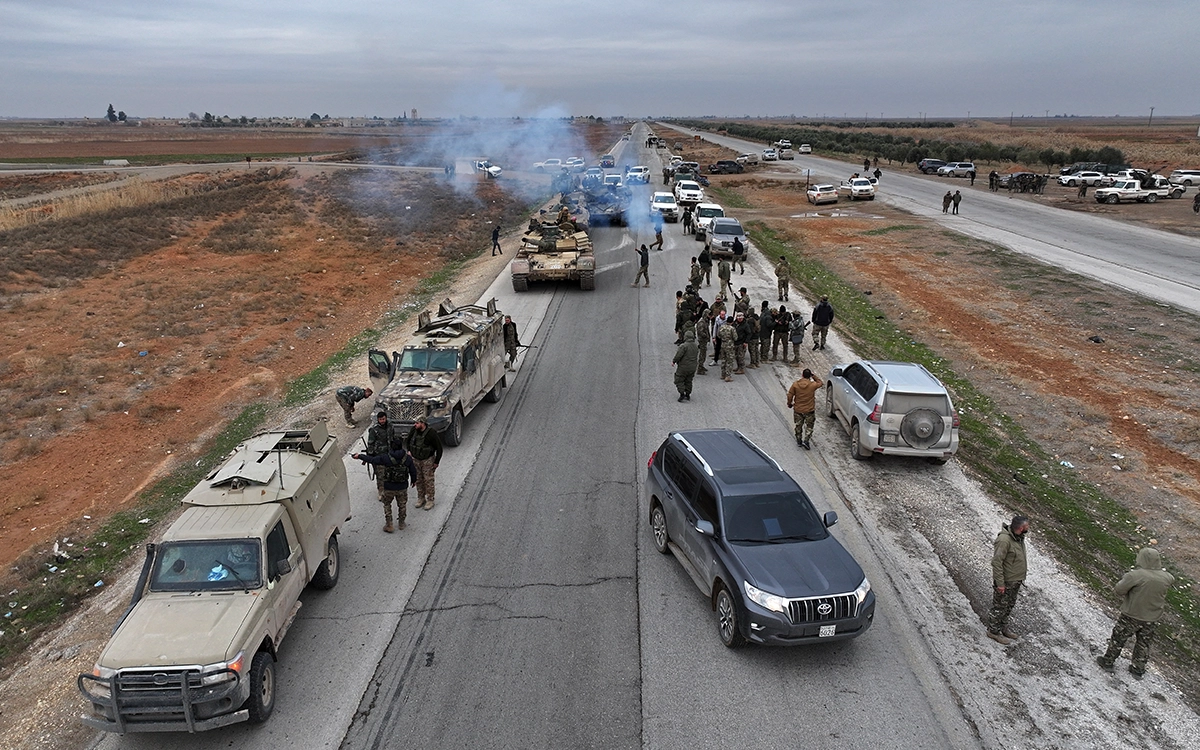
The central government’s recent military victory over the SDF may cow other stakeholders into submission, but it also risks exacerbating grievances over coercive centralization, structural inequality, incomplete transitional justice, and constrained political pluralism. As a result, the fundamental question of Syria’s postwar political structure remains unresolved. It is unclear whether Syria will become a unified, integrated state or retain a weak center with powerful autonomous sub-state entities. The following scenarios outline plausible policy adjustments and outcomes that Washington may face under differing conditions.
The central government consolidates political control and regional integration across Syria while accommodating the cultural and economic rights of ethnic minorities. Restoration of Syria’s territorial integrity boosts al-Sharaa’s authority. Regained control over energy and water resources previously held by the SDF provides the government with additional resources to support economic recovery and influence domestic stakeholders. Alienated internal and external actors remain marginalized as more powerful domestic and foreign players, including militia leaders and key Sunni governments, consolidate their support for Damascus.
In this scenario, Washington aligns decisively with the central government. The Pentagon repositions U.S. forces from northeast to central Syria, while American diplomats facilitate a gradual Israeli-Syrian détente. The United States establishes a more permanent diplomatic presence in Damascus to influence key ministries and help U.S. businesses leverage the improved investment climate to close more deals.
Having consolidated its control over Syria’s minority regions, the government becomes less dependent on U.S. support. It deepens ties with China and Russia through the acquisition of surveillance technologies, military equipment, and other security capabilities, while positioning itself closely alongside Turkey and against Israel. As political authority becomes more centralized, the business environment deteriorates, driven by tighter controls, increased resource extraction, expanded regulation, corruption, and nationalization.
These developments, combined with the end of the Trump–al-Sharaa honeymoon and a White House increasingly preoccupied with domestic politics, lead the Trump administration to disengage from the Syrian question. U.S. involvement narrows to periodic counterterrorism air strikes and the use of sanctions or tariff threats to protect U.S. commercial investments. Although Syrian–U.S. ties weaken, this deterioration has limited strategic consequences given Syria’s relative unimportance to U.S. core interests and the administration’s prioritization of other regions.
If the Syrian government fails to deliver meaningful political and economic progress in 2026, popular dissatisfaction could intensify. Recent victories over the SDF may also encourage al Sharaa to become overconfident and overreach, reigniting regional insurgencies. If al-Sharaa loses power or leaves office, the regime could fracture, creating openings for external actors to exploit the vacuum created by another failed state. Under these conditions, Syria could again become a theater for proxy conflict, transnational crime, and renewed terrorist activity.
In this scenario, the United States would prioritize containment over the resolution of Syria’s problems. U.S. policies would revert to countering terrorism directly, including air strikes and special forces raids, while relying on privileged partners—particularly Israel, Turkey, and the Gulf monarchies—to shape Syrian developments indirectly.
During its first year in office, the second Trump administration successfully balanced its limited goals and means in Syria. The terrorist challenge remains contained, U.S. commercial engagement has expanded through new opportunities, and Washington’s major Arab partners have broadly welcomed its strategy. Although recent developments have highlighted how Syria’s unresolved structural problems could present future challenges requiring U.S. course corrections, the modest U.S. stakes and commitments in Syria limit potential downsides.
Syria’s unresolved structural problems could present future challenges requiring U.S. course corrections