
Eagle Intelligence Reports
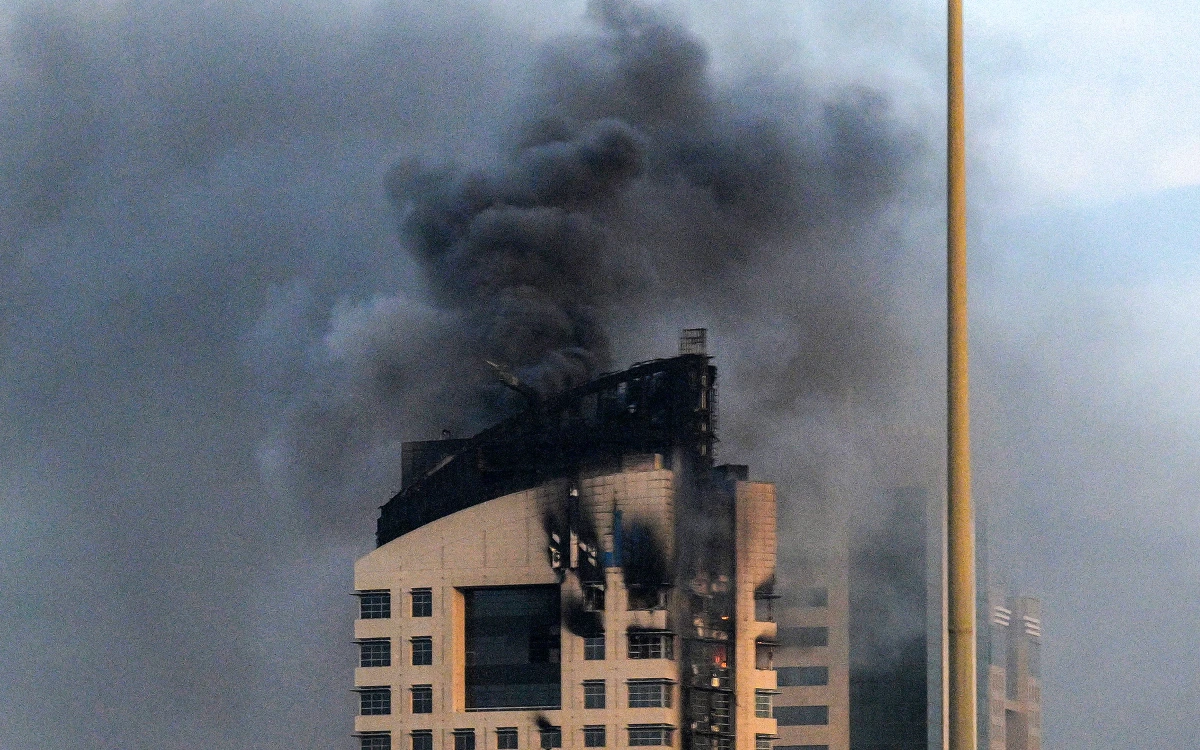
War has now reached the heart of the Gulf. The ongoing conflict in the Middle East is not just an episodic military escalation. It represents the collapse of the entire regional security paradigm on which the Gulf states have relied. For more than three decades, the Arab Gulf states seemed to be living in a state of strategic exception within the broader political turbulence of the Middle East. While conflicts and tensions ravaged the region—from Iraq to Afghanistan and from Syria to Yemen—the Gulf states were able to preserve a significant degree of stability, allowing them to build prosperous economies and achieve remarkable levels of development.
But this exception amid the decades-long storm in the Middle East was not simply the result of geography or good fortune. Rather, it was the practical outcome of a set of complementary factors: the security protection provided by the United States and its allies, the central importance of Gulf energy resources to the global economy, an extensive network of alliances and military bases, and the ability of Gulf leaders to adopt a diplomatic approach that linked international interests with those of the Gulf states themselves. Together, these factors ensured the stability of the GCC countries, effectively tying their security and prosperity to broader global interests. For decades, this arrangement defined the Gulf’s strategic environment, providing the foundation for structural stability. That world is now gone.
Today, as the war reaches the shores of the Gulf states through missile and drone attacks, it is clear that a reckoning is underway. The conflict has invalidated a central strategic assumption of policymakers in the Gulf states: that geography—reinforced by international alliances and common interests—could keep the Gulf out of the cycle of violence and war that has plagued the region.
What is unfolding at this stage not only threatens the security of the Gulf. It also places the entire regional security system that has underpinned stability since the end of the Cold War under unprecedented strain. This raises a bitter question: how did war reach the heart of the Gulf security system, and what comes after the end of the illusion of immunity from conflict?
What is unfolding at this stage not only threatens the security of the Gulf. It also places the entire regional security system that has underpinned stability since the end of the Cold War under unprecedented strain
The Gulf has long occupied a distinctive position within the Middle East. In a region historically marked by political instability and armed conflict—from the era of coups and upheavals in Egypt, Syria, Iraq, and Iran to the subsequent wars and internal conflicts that ravaged many countries—the Gulf states managed to build a different model characterized by political stability, economic openness, and integration into the global economy.
While other parts of the region were engulfed in wars and economic collapse, Gulf cities were transforming into global financial and commercial hubs. They attracted international investment, launched vast development projects, and positioned themselves as centers of trade, finance, and logistics. In this context, what emerged was often described as a “Gulf exception” within a Middle Eastern landscape otherwise dominated by conflict and instability.
This exception was not accidental. Since the early 1990s, the Gulf security system has rested on a relatively clear equation: while regional security remained volatile, strong international security guarantees—above all from the United States—helped prevent conflict from spreading into the heart of the Gulf.
Yet this equation was grounded less in genuine geographical immunity than in a delicate balance of political and military power, reinforced by deeply intertwined international interests.
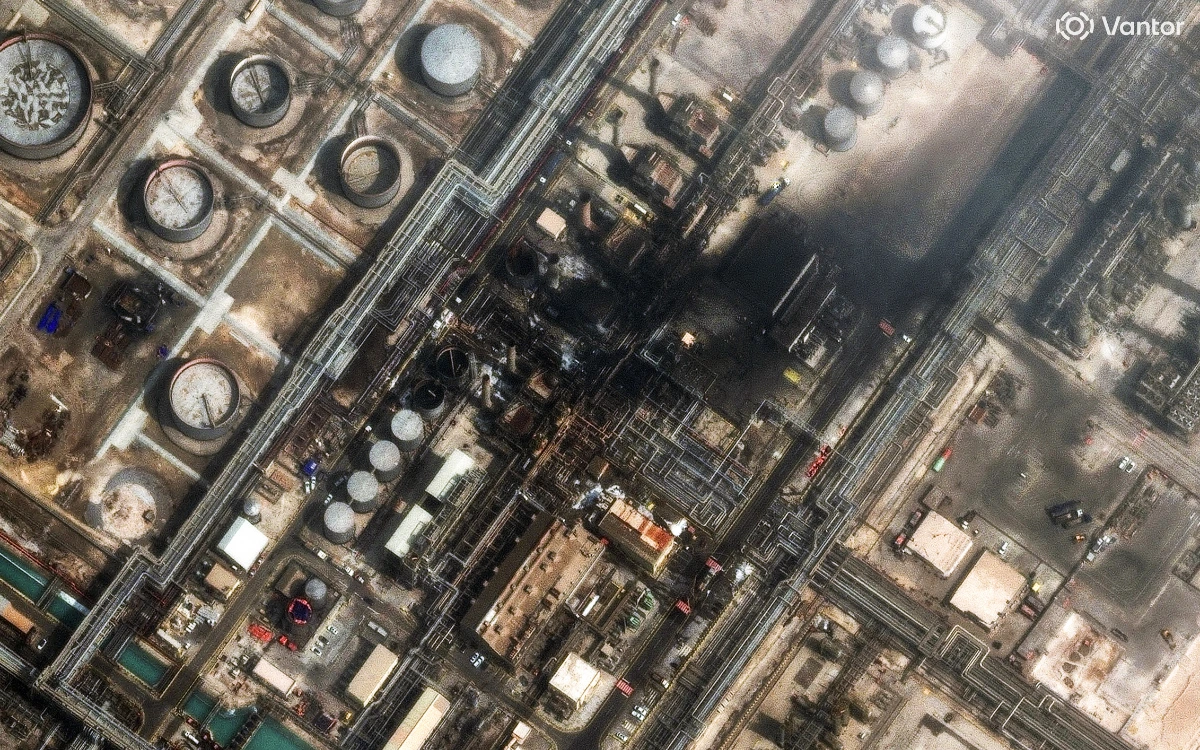
The first signs of strain in this arrangement began to appear with the signing of the nuclear agreement with Iran in 2015. For the Gulf states, the problem was not necessarily the principle of the agreement itself, but rather the way in which regional security concerns were addressed within it. While the agreement focused primarily on containing Iran’s nuclear program, other issues that Gulf states considered more immediate threats—particularly Iran’s ballistic missile program and its regional networks of influence—remained outside the scope of the agreement.
This discrepancy revealed a clear divergence in threat perception and assessment between Washington and its Gulf allies. The United States viewed the nuclear threat as the greatest danger, whereas Gulf states regarded Iran’s missile capabilities and regional influence as the more immediate and tangible threat to their security. In light of the ongoing Iranian missile attacks targeting Gulf cities today, many in the region argue that these concerns were not merely attempts to obstruct the nuclear agreement but reflected genuine and legitimate strategic anxieties.
Today, many in the region argue that these concerns were not merely attempts to obstruct the 2015 nuclear agreement, but reflected genuine and legitimate strategic anxieties
What initially appeared to be a political disagreement in fact concealed something more fundamental—the emergence of a widening rift in how the nature of regional security itself was understood.
This rift was reinforced by a series of events that shook confidence in deterrence across the Gulf. Most notably were the attacks on Saudi oil facilities in Abqaiq and Khurais in 2019, followed by the Houthi missile attack on Abu Dhabi in 2022. These incidents represented a serious test for the Gulf’s deterrence system. Strikes against key allies and critical infrastructure were expected to be met with a strategic response that would restore the credibility of deterrence. Instead, international reaction—particularly from the United States—was relatively limited compared to the scale of the attacks.
For the Gulf states, the message was clear: the security umbrella on which they had relied for decades might no longer operate in the same way against emerging threats, including long-range missiles and drones.
The U.S. withdrawal from Afghanistan further reinforced this perception, as the rapid end to the two-decade military commitment gave Middle East observers the clear impression that Washington was fundamentally reassessing its strategic priorities. For the Gulf states, the significance of the withdrawal lay less in Afghanistan itself than in the signal it conveyed: the Middle East no longer occupies the same central position in U.S. strategic thinking as it once had.
The new U.S. National Security Strategy for 2025 appeared to confirm this message, as it places greater importance on competition and strategic positioning in other regions. In an international environment increasingly shaped by great-power rivalry—especially between the United States and China—it seemed clear that Washington sought to reduce its direct military involvement in the Middle East and concentrate resources on areas it now considers more central to its strategic interests.
Despite all the indicators that preceded it, the current war with Iran has been the clearest moment revealing the magnitude of this transformation. The Gulf states suddenly found themselves at the center of the conflict. Missiles and drones targeting cities and vital infrastructure have exposed the fragility of the assumptions on which the Gulf security system had long rested.
The Gulf is no longer just a peripheral theater in regional confrontations; it has now become a direct arena within the conflict itself. The danger of this shift lies not only in its military dimension, but also in its potential impact on the economic model on which the Gulf states have built their prosperity. These economies have been constructed in an environment of long-term stability, with global investments, international financial centers, and major development projects all dependent on a secure environment.
The Gulf is no longer just a peripheral theater in regional confrontations; it has now become a direct arena within the conflict itself
When cities and vital infrastructure become potential targets for missiles and drones, however, the implications extend far beyond immediate security concerns, shaking the very foundations of the economic model itself. In this sense, the war represents more than just a security challenge. It is also a test of the development model that has defined the Gulf’s rise over the past three decades.
The future of security in the Gulf remains largely tied to the future of Iran itself. If the current Iranian regime endures, the region is likely to move toward a prolonged period of mutual deterrence accompanied by persistent tension.
On the other hand, Gulf states recognize that the collapse of the Iranian state—or its descent into fragmentation—could generate challenges that are no less serious. Iran is not a small or marginal country in the region but a major state in terms of geography, population, and strategic weight. Any widespread internal turmoil there could easily spill across borders and trigger broader regional instability.
For this reason, Gulf states invested significant diplomatic efforts in trying to avoid war and encourage diplomatic and political solutions. Yet on February 28, 2026, everyone woke up to joint U.S.–Israeli strikes and the Iranian response that Gulf leaders had long anticipated: direct attacks targeting the Gulf states themselves. The most shocking for many in the region was the realization that Washington sided with Tel Aviv’s preferences when the decision to go to war was made. Decisions that could reshape the region’s security landscape entirely were taken without addressing the concerns of the states most directly exposed to the consequences of escalation.
The most shocking for many in the region was the realization that Washington sided with Tel Aviv’s preferences when the decision to go to war was made
In this sense, Gulf anxieties extend beyond Iran’s military capabilities and the immediate threat its military poses to Gulf cities. They also reflect a deeper fear: that a destabilization or disintegration of the Iranian state could unleash a chaotic new phase of regional disorder whose consequences would be difficult to contain.
At this stage, it is too early to talk about the features of a new security system in the Gulf. The war is ongoing, and the countries most directly affected continue to face immediate threats to their cities, vital infrastructure, and economic lifelines.
What the war has already revealed, however, are the limits of the assumptions that have underpinned the Gulf security system for decades. Absolute confidence in external security guarantees has been severely tested, and the belief that geography alone could shield the Gulf from direct conflict has proven untenable. Over time, this experience may prompt Gulf states to rethink how they safeguard their security in an increasingly turbulent regional environment.
Early signs of the shift are already visible. The introduction of South Korean weapons systems, the involvement of Ukrainian technical teams assisting in countering Iranian missile and drone threats, and the ongoing search for new defense partners suggest that the Gulf is no longer as interested in remaining solely within the sphere of U.S. military influence. They are now focused on building a layered and diversified security framework that is capable of responding to the urgent and rapidly evolving challenges brought by the explosion of hostilities.
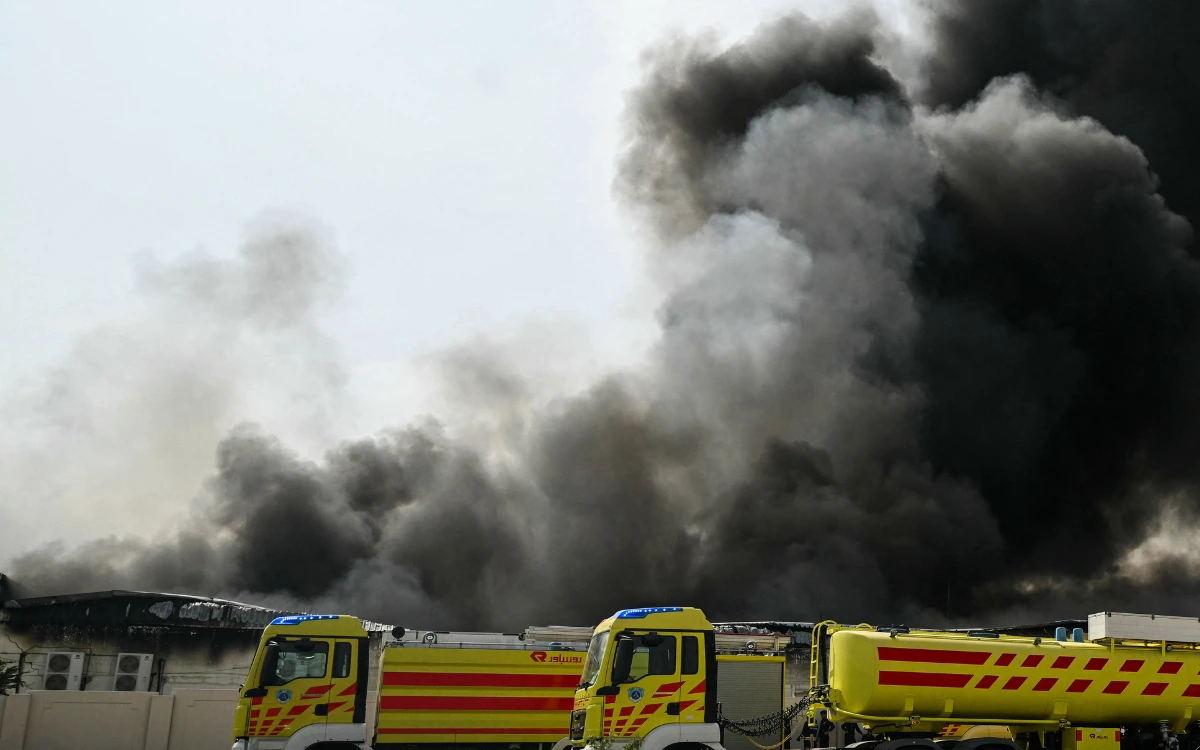
In light of the military attacks on Gulf cities and the increasingly clear limits of U.S. deterrence and its ability to prevent attacks that destabilize the Gulf, it is natural that the lesson of Ukraine is strongly present in the Gulf mindset. The crisis in the Gulf mirrors that in Ukraine to the extent that it reflects shifting American security commitments in a new era of American foreign policy.
Since Donald Trump’s return to the White House in 2025, strategic assumptions have changed, and the logic of deals has taken precedence over that of alliances. Western Europe, despite its collective power and importance, appeared largely helpless in the face of Trump’s willingness to strike a deal with Putin without regard for the concerns of his allies, even though Washington leads NATO. In that moment, long-standing assumptions about alliance solidarity faded away in the face of “America First.”
Today, after the war in Ukraine and Iran’s attacks on the Gulf, the basic assumption that has existed since the Cold War—that certain regions of the world are implicitly protected by the international system—has become a thing of the past. No region now seems exempt from potential instability.
What is unfolding today in the Gulf is not merely another episode of military escalation in the Middle East. It represents a moment of revelation—one that marks the end of an entire phase of security thinking in the region. For decades, Gulf stability rested on the assumption that geography, reinforced by an international security umbrella, could insulate it from conflict.
However, the war that has now reached the Gulf has exposed the limits of this assumption. The illusion of permanent security has ended, giving way to a new phase in which the foundations of Gulf security are being reconsidered.
The war that has now reached the Gulf has exposed the limits of this assumption. The illusion of permanent security has ended, giving way to a new phase
The transformation will not happen overnight. It may take years—perhaps even decades—before a new security arrangement is developed. Yet one conclusion already appears unavoidable: the Gulf that emerges from this war will not be the same as the one that existed before it.