
Eagle Intelligence Reports
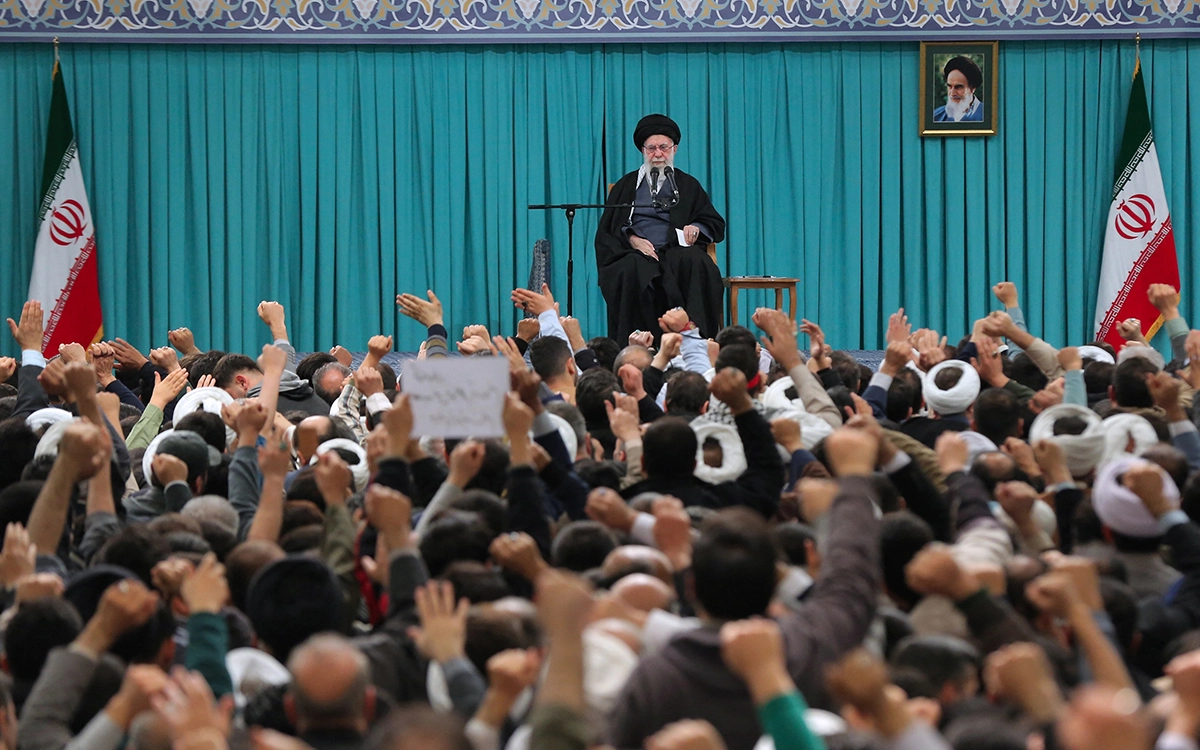
The ongoing dynamics in Tehran, from sustained domestic social tension and deepening economic crisis to evolving deterrence messaging amid continued diplomatic stagnation, should not be viewed as isolated episodes or mere reflections of crisis communication. Rather, they indicate a convergence of drivers that is reshaping both Iran’s internal resilience as well as its external posture within a multifaceted environment shaped by international pressure and strategic competition.
Iran’s trajectory is increasingly affected by the interaction of sociopolitical strain, deteriorating economic conditions, and a more securitized approach to internal governance. This mix has reduced predictability around elite cohesion and foreign policy behavior. Domestic unrest, therefore, should be understood not as a sequence of sporadic protest episodes but as a persistent structural condition that incrementally compresses policy space and alters the leadership’s risk tolerance over time. However, the focus here is not concentrated on protest activity as an event cycle, but rather on how sustained internal friction reshapes Tehran’s risk calculus, deterrence signaling, and strategic time horizon.
Domestic unrest should be understood not as a sequence of sporadic protest episodes but as a persistent structural condition
Simultaneously, the regime’s official messaging continues to frame internal contestation through the lens of external interference. This shifts accountability outward and reinforces national security logic as an instrument of domestic legitimacy. Under cumulative strain, this framing becomes a durable mode of governance rather than an episodic communications tactic.
At the strategic level, Tehran’s objective is not escalation, but risk management to absorb long-term pressure. The leadership seeks to preserve internal control and deterrence credibility while avoiding new fronts that would impose abrupt costs on an already constrained system. However, the parallel requirement to demonstrate resilience may drive sharper external signaling, increasing the risk of misinterpretation and miscalculation across multiple regional theaters.
Against this setting, it is necessary to analyze how Iran’s domestic trajectory intersects with regional security dynamics and the broader policy environments of key external actors, including Europe, the United States, Russia, and China. Understanding Tehran’s current posture, therefore, requires starting from the internal arena, where sustained strain increasingly sets the boundaries of Iran’s external behavior.
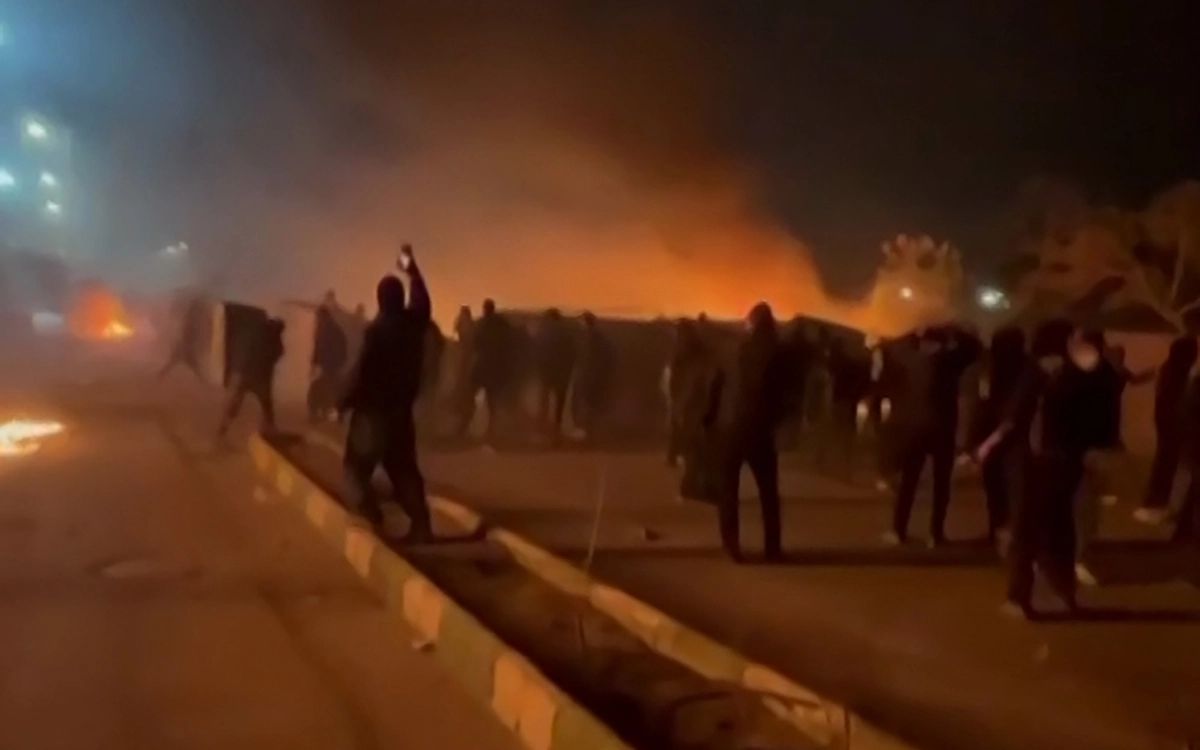
Iran’s internal trajectory is often viewed separately from its regional posture and international strategy. Yet in practice, internal stability constitutes the regime’s firm strategic foundation. Sustained social tension, legitimacy pressures, and persistent economic challenges constrain Khamenei’s leadership and the broader security establishment, redefining the level of strategic risk Tehran can realistically absorb.
Domestic instability matters not only because it produces recurring protest cycles, but also because it undermines predictability across the system. It also compels decision makers to concentrate resources on internal control and reinforces reliance on coercive instruments of governance. Under prolonged strain, continuity becomes the overriding objective, and foreign policy largely functions as an extension of internal stabilization rather than an arena for independent strategic ambition.
Economic constraints amplify this dynamic further, as sanctions pressure and structural weakness reduce Tehran’s ability to cushion social strain, maintain redistributive capacity, or sustain external commitments without political trade-offs. Economic stress also accelerates political erosion, as insecurity becomes a daily reality, shaping the state-society relationship.
At the same time, economic pressure does not solely operate as a constraint, as it can encourage sharper bargaining behavior. When Tehran assesses containment as durable rather than temporary, it has incentives to raise the perceived costs of pressure and widen its negotiating space through selective escalation tools.
These factors, however, do not automatically lead to either restraint or escalation. But they do narrow the policy space in which Tehran must project strength while managing vulnerability. In this environment, the projection of resilience becomes a strategic requirement rather than a communicative preference.
This internal pressure landscape also shapes how Iran interprets time and strategy. A political system under sustained strain focuses less on transformative long-term projects and more on preserving continuity through repeated cycles of shock, recovery, and recalibration.
A political system under sustained strain focuses less on transformative long-term projects and more on preserving continuity
This helps explain why Tehran’s posture often appears adaptive and persistent rather than revolutionary. In turn, the domestic environment frames how Iran projects power outward. As policy options narrow, signaling becomes more central, and deterrence increasingly depends not only on material capability but also on perception and perceived resolve.
Against this background of domestic and economic strain, Iran’s recent security signaling should be understood as an effort to preserve deterrence credibility within clear structural limits. Tehran is not operating with unlimited freedom of action, and its external messaging reflects the same internal constraints that restrict its conventional capacity.
This helps clarify why Iran’s recent signaling is recalibration rather than rupture. The most plausible interpretation is an adjustment through managed ambiguity rather than a fundamental doctrinal shift. The objective is twofold: to signal capability and readiness while maintaining uncertainty over intent, timing, and escalation thresholds. This approach preserves room for deconfliction even as Tehran seeks to retain credible escalation options.
Such a posture serves multiple functions simultaneously. Externally, it complicates adversary calculations and discourages preemptive moves by raising perceived costs. It also signals that Tehran retains several response channels, including conventional, asymmetric, and proxy-linked options.
Internally, it reinforces narratives of sovereignty and control at a moment when Iran’s leadership must manage visible signs of strain. In systems under pressure, deterrence messaging often doubles as a stabilizing instrument, strengthening elite cohesion through projected continuity and competence.
However, the same signaling that strengthens deterrence can also generate instability. Specifically, actions intended to deter can be perceived as preparation for escalation, particularly in low-trust environments where decision cycles are extremely tight. Adversaries may read Iranian signaling as more aggressive than intended, while Tehran may interpret defensive measures by others as indications of imminent confrontation.
The core danger is therefore less deliberate Iranian maximalism than the interactive effects of signaling and response. Deterrence moves can trigger countermeasures that accelerate escalation more quickly than political leadership can manage, especially when crises compress space and timelines for clarification or deconfliction.
Deterrence moves can trigger countermeasures that accelerate escalation more quickly than political leadership can manage
Therefore, deterrence signaling is both essential and increasingly risky, as it anchors Tehran’s endurance strategy while raising the likelihood of misinterpretation and miscalculation. These risks become most acute in the regional arena, where deterrence is not only signaled, but also enacted through dispersed networks of influence and leverage.
Iran’s internal dynamics have a direct regional impact since key elements of Tehran’s deterrence architecture are externalized across multiple theaters. Besides state capabilities, strategic depth is also preserved through a distributed network of partnerships and aligned non-state actors. While this model generates leverage and flexibility, it also introduces volatility, particularly when crises evolve rapidly and as the margin for control narrows.
This is reinforced by the fact that the regional environment rewards ambiguity more than settlement. Tehran’s posture is designed to retain leverage while operating below the threshold of a direct war. The challenge, however, is that this same architecture multiplies friction points. Proxy activation, maritime incidents, and cycles of calibrated retaliation can transform controlled pressure into unstable escalation, despite the original intent being limited and instrumental.
Nowhere is this dynamic more visible than in the Gulf. The region remains vulnerable to rapid escalation due to the density of military assets, the sensitivity of maritime corridors, and the political weight of energy security. A limited incident can trigger a sequence of responses that quickly becomes difficult to reverse. Attribution ambiguity, pressure for swift response, and high economic stakes combine to shorten decision cycles, raise escalation likelihood.
Beyond the Gulf, escalation is often even harder to manage across the broader Middle Eastern theaters, where multiple actors operate with uneven command structures and divergent incentives, making coordination and deconfliction structurally fragile. Even when Tehran seeks calibrated pressure, operational momentum can shift quickly from signaling to retaliation. This is a built-in vulnerability of proxy-based deterrence. It generates leverage, but reduces centralized control once a crisis accelerates and actors begin responding to events rather than intentions.
The central question is whether sustained internal strain pushes Iran toward restraint or stronger externalized deterrence. The most plausible outcome is that Tehran attempts both simultaneously. It will seek to project resilience and preserve regional leverage while trying to contain escalation. That balance is inherently difficult to sustain, particularly as crises compress timelines and reduce room for maneuver.
The most plausible outcome is that Tehran will seek to project resilience and preserve regional leverage while trying to contain escalation. That balance is inherently difficult to sustain
Crucially, regional volatility does not remain confined to the region only. It feeds back into Iran’s confrontation with Western actors, especially through the linkage between escalation management, sanctions enforcement, and the nuclear file.
In this context, Iran’s posture toward the West is shaped by the absence of a stable diplomatic framework and a sanctions and deterrence architecture designed to manage escalation rather than resolve it. The United States remains the actor that sets the primary escalation ceiling through its deterrence posture, sanctions architecture, and capacity to impose or relieve economic pressure. Europe, while less decisive than Washington, remains relevant through institutional alignment, enforcement choices, and diplomatic signaling.
From Tehran’s perspective, the Western environment is defined by containment without settlement. U.S. policy emphasizes deterrence, pressure, and crisis control, while avoiding open-ended confrontation unless critical thresholds are crossed. This approach produces a dynamic balance in which Iran tests limits incrementally and the United States responds selectively to prevent escalation from becoming uncontrollable. What follows is not stability, but predictability of confrontation, as signaling, coercion, and tactical retaliation become routine instruments of communication for both sides.
Under these conditions, Tehran’s behavior cannot be read solely as provocation. It also operates as a negotiation through risk, in a context where formal diplomatic engagement remains limited.
Notably, Europe’s role functions through normative framing and secondary leverage. European pressure raises reputational costs and reinforces economic isolation, but it rarely shifts Tehran’s core security priorities when the Iranian leadership views the issue as existential. European influence becomes more consequential when enforcement intensifies, or when political signals suggest cohesion or fragmentation within the broader Western posture.
The nuclear file sits at the intersection of these dynamics. Diplomatic stagnation is not simply a pause and has become a strategic condition. For Tehran, the nuclear issue acts as bargaining leverage and an insurance mechanism. For Western actors, it remains both a key justification for sanctions and a framework for managing escalation risk.
Without credible pathways toward settlement, the nuclear file becomes structurally linked to regional escalation dynamics. It provides Tehran with an instrument for calibrated pressure that can raise the stakes without forcing immediate confrontation. At the same time, it increases the risk that tactical nuclear moves transform into catalysts for wider crisis escalation, particularly if Washington concludes that its thresholds are being crossed.
In this context, sanctions will remain a structural constraint, but they will also reinforce Tehran’s preference for multi-arena bargaining and asymmetric tools. As a result, Western policy and regional crisis dynamics remain tightly coupled, even when actors attempt to treat them as separate tracks.
That coupling also increases the value of external hedging, as Tehran is not navigating this Western environment in isolation, and its ability to sustain leverage is shaped in part by the limited strategic space offered through Russia and China.
Iran’s ties with Moscow and Beijing are often framed as a decisive strategic pivot. Yet, a more grounded assessment suggests that Tehran is pursuing hedging rather than dependency, as both powers provide partial openings that reduce isolation, but neither represents a strategic sponsor capable of neutralizing Iran’s core vulnerabilities.
Russia’s engagement reflects conditional convergence shaped by shared friction with the West. Iran benefits from political cover, selective security cooperation, and economic channels that help mitigate pressure. Yet, Russian support remains calibrated to Russian interests. Moscow is unlikely to underwrite Iranian escalation that could trigger uncontrollable regional war or impose direct costs on Russia itself. Tehran, therefore, gains tactical flexibility rather than strategic guarantees.
Russian support remains calibrated to Russian interests. Moscow is unlikely to underwrite Iranian escalation that could trigger uncontrollable regional war
This distinction is critical. Russian cooperation can expand Iran’s short-term options, but it does not alter Tehran’s structural exposure to Western pressure. Moscow’s willingness to cooperate will also fluctuate as its own incentives shift, particularly when Russia recalibrates its broader priorities. Tehran, in turn, approaches Russia as an enabling relationship, not as a security anchor.
China’s posture is similarly pragmatic, though driven by a different logic. Iran offers energy value and geopolitical utility within a wider environment of systemic competition with the West. At the same time, Beijing prioritizes stability and limits its exposure to Middle Eastern crises. Chinese engagement can provide economic space and diplomatic breadth, but it cannot substitute for the systemic relief Iran would gain from reintegration into global markets. China strengthens endurance, but it does not remove constraints.
Taken together, Russia and China widen Tehran’s room for maneuver while leaving its core exposure intact. Their significance lies in shaping the margins of Iranian resilience rather than eliminating the pressure environment that continues to structure Tehran’s strategic choices.
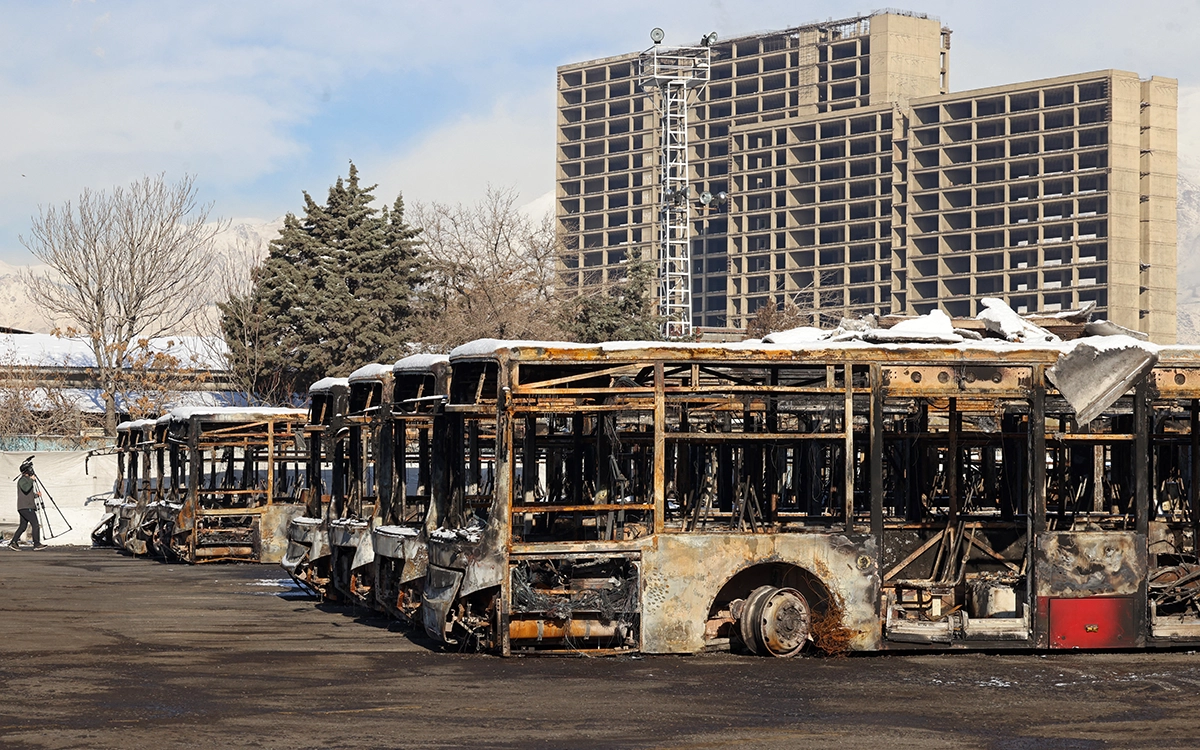
Moving forward, Tehran is likely to remain committed to a strategy of calibrated endurance. The key variable is not whether Iran faces pressure, but how sustained strain reshapes risk tolerance, strategic time horizon, and escalation management. The objective is to preserve deterrence credibility and domestic control while avoiding abrupt, high-cost confrontations. This logic does not produce a single trajectory, but several distinct endurance configurations.
A first configuration combines elevated internal strain with disciplined escalation management. Tehran would rely on signaling, selective pressure, and controlled ambiguity, while avoiding steps that could trigger a decisive external response. Friction would persist, but restraint would hold at higher thresholds.
Another pathway pairs sustained internal strain with more assertive deterrence behavior across the regional periphery. Tehran would place greater emphasis on externalized leverage and a higher willingness to impose costs, while still attempting to manage escalation ceilings. This would raise the likelihood of episodic crises, particularly through proxy dynamics and maritime friction, without necessarily signaling intent toward a systemic war.
A third posture reflects partial internal stabilization and a shift toward more structured risk management. Under this setting, Tehran may seek to reduce exposure to rapid escalation cycles and pursue more disciplined bargaining, especially where sanctions relief and nuclear signaling intersect. This would represent recalibration rather than strategic realignment.
Across all of these, a persistent constraint remains that escalation is not always centrally controllable. The more deterrence is enacted through dispersed networks and ambiguous thresholds, the higher the risk that tactical events generate strategic consequences.
The durability of Tehran’s approach, therefore, depends on preserving internal cohesion, managing economic strain, and maintaining control over crisis sequencing in an environment where adversaries are also operating under compressed timelines.
Tehran’s trajectory is best understood through the lens of strategic endurance and risk management. The central question is not whether Iran can project resilience in the short term, but whether its endurance strategy can remain sustainable under cumulative pressure. Managed ambiguity depends on time, control, and predictable escalation ceilings, conditions that regional crises rarely provide. As a result, proxy dynamics, maritime friction, and retaliation cycles continue to generate recurring pathways for miscalculation.
Externally, stagnation on the nuclear file is likely to remain a strategic condition, tightening the linkage between sanctions enforcement and escalation management. Russia and China will continue to provide partial openings, but their engagement remains transactional, widening Tehran’s options without eliminating core vulnerabilities.
Ultimately, the endurance model holds as long as Tehran sustains internal cohesion, absorbs economic strain, and manages escalation sequencing across multiple theaters. Its limits emerge when these pillars weaken simultaneously, and deterrence signaling shifts from managed risk to escalation that is no longer fully controllable.