
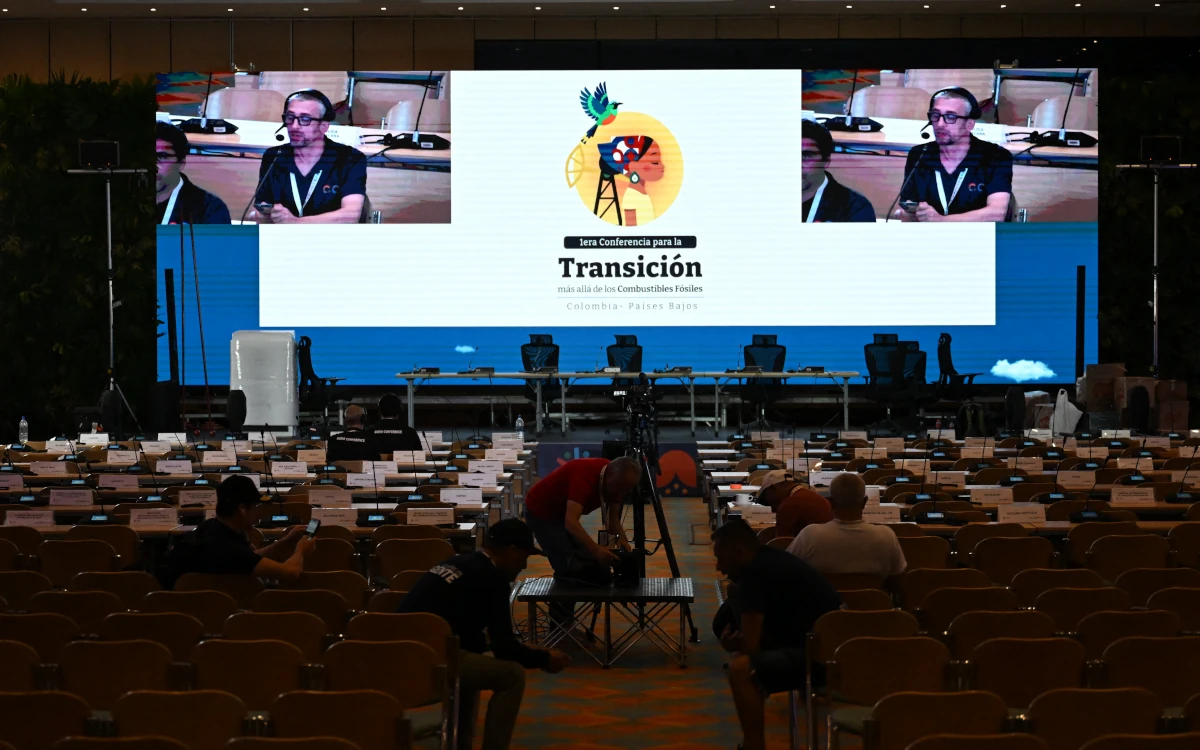
More than 50 governments meet in Colombia on Tuesday against the backdrop of the Iran war and a global energy crunch for the first international talks on phasing out planet-heating fossil fuels.
Ministers and climate envoys aim to revive the transition from fossil fuels at the inaugural conference in Santa Marta, one of the country’s busiest coal hubs in a nation heavily reliant on energy exports.
The two-day conference bypasses the United Nations climate talks and reflects a growing impatience with its failure to tackle fossil fuels, the main driver of global warming.
“People seem refreshed to be able to talk about these issues without having to sort of argue the existential question of — do we need to do this at all?” the UK’s special climate envoy Rachel Kyte said in Santa Marta.
The conference is not expected to produce binding commitments but a scientific panel has asked governments taking part to consider a halt on new fossil fuel expansion, among other proposals.
On the list of attendees are major fossil fuel producers Canada, Norway and Australia and developing oil giants Nigeria, Angola and Brazil. They join major energy consuming nations in the European Union, coal-reliant emerging markets Turkey and Vietnam, and small island nation states extremely vulnerable to climate shocks.
The world’s biggest emitters of greenhouse gases — including the United States, China and India — are not attending, nor are oil-rich Gulf states.
The conference was announced late last year but organizers say the US-Israel attacks on Iran had bolstered the case for a fossil fuel phaseout as nations confronted a sudden shortage of oil and gas.
“Fossil fuels are now clearly to be seen as a source of instability,” Kyte said. Many nations “are here in good faith to really work through what is a very complex challenge made more urgent by the crisis,” she added.
This includes developing nations highly dependent on fossil fuel revenue like Colombia, which is co-hosting the conference with the Netherlands. AFP