
Eagle Intelligence Reports
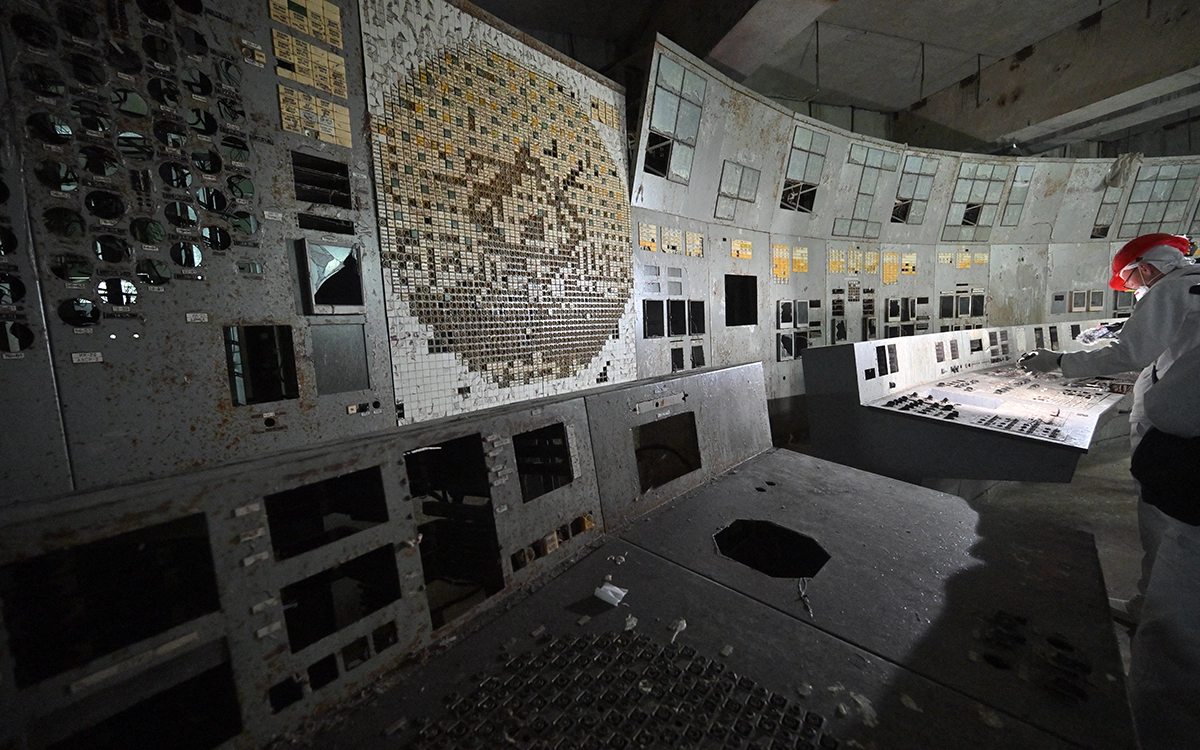
Recent attacks on nuclear infrastructure suggest the emergence of a new form of calibrated coercion in which states generate psychological pressure and manipulate escalation dynamics without crossing the threshold into nuclear disaster. Attacks targeting both civil and dual-use nuclear infrastructure in Ukraine and the Middle East have not only set a new precedent; they have expanded the scope of asymmetrical warfare.
Recent attacks on nuclear infrastructure suggest the emergence of a new form of calibrated coercion in which states generate psychological pressure and manipulate escalation dynamics without crossing the threshold into nuclear disaster
Targets have included fuel-cycle infrastructure such as uranium enrichment facilities that can manufacture fissile material capable of powering nuclear explosions. But for the first time, it has also included civilian nuclear power infrastructure. This includes attacks on auxiliary systems that provide cooling water, electricity, and other essential services to operating power plants, if not the reactors themselves. Through such tactics, the attackers have sought to moderate genuine escalation risks while exploiting nuclear fears to signal resolve, weaken adversary capabilities, and impose psychological and international costs.
Popular anxiety about such operations is understandable given the association of attacks on nuclear sites with catastrophic risks. However, it is essential to distinguish the risks generated by striking different targets. Attacks that damage an operating reactor could result in the large-scale release of dangerous fission products like barium, Cesium-137, iodine, and strontium. These radioactive fragments could devastate the people and places near the damaged facility, along with those situated downwind or down current from the site. Though less risky, striking a reactor’s cooling, water, or electrical supplies dangerously erodes nuclear safety and risks initiating a chain of adverse events, potentially ending in catastrophe.
In some cases, the attackers seek to elevate cascading risks to alarm the targeted state’s population and increase international concern. In contrast, damage to other types of nuclear infrastructure presents more limited problems, such as the release of toxic chemicals or low-level radioactive waste near the site.

The Russia-Ukraine war has been unprecedented in that protracted battles have occurred in the vicinity of operating nuclear power stations. Before Moscow’s invasion, Ukraine operated 15 nuclear reactors at four large plants, powering approximately half of the country’s electricity. Attention quickly focused on the Chernobyl Nuclear Power Plant, the site of the world’s most serious nuclear disaster. Advancing from Belarus, the Russian forces immediately occupied the plant, which lay undefended along the Belarus-Ukraine border.
During the five weeks of occupation, the Russian troops violated established rules of nuclear safety and security by holding the plant’s staff hostage, looting the facility’s equipment, and digging trenches nearby, upsetting the radioactive soil surrounding the plant. Nonetheless, popular alarm was misplaced. There was little prospect of a nuclear meltdown or mass release of radioactivity, though some Russian soldiers will likely suffer long-term health problems from localized exposure.
A more serious problem occurred three years later, when a Russian drone punched a large hole in the steel New Safe Confinement structure surrounding the disaster site. While Moscow denied culpability, the attack imposes clear costs for Kyiv: estimates are that restoring the shield’s full integrity will cost approximately €500 million. The United States has pledged €85 million toward the total. Unless repaired, the dome will corrode, potentially leaking radioactivity from the site. The damage will also lengthen the time required to completely decommission the site. At worst, though, the events at Chernobyl will worsen impacted people’s long-term health prospects but not threaten the kind of nuclear meltdown the world faced during the original 1986 disaster.
Events surrounding the Zaporizhzhya power plant, the largest in Europe, have also been unprecedented. The Russian decision to conduct military operations around the plant’s six reactors since March 2022 has intentionally exploited the plant’s degraded safety margins for force protection, bargaining power for truce negotiations, and use as a tool of occupation. Russian forces use the plant as a shielded military base while compelling its hostage Ukrainian staff to maintain it. More recently, Russia applied military, political, and psychological pressure on Ukraine and its foreign backers by disrupting Zaporizhzhya’s electric supplies, limiting access by the International Atomic Energy Agency (IAEA), and later attacking the plant’s organic and auxiliary structures (but not their reactors). Degrading the plant’s safety also helps deter Ukraine from launching a major military operation to recover the plant or its surrounding territory.
Russian forces use the Zaporizhzhya power plant as a shielded military base. More recently, Russia applied military, political, and psychological pressure on Ukraine and its foreign backers by disrupting Zaporizhzhya’s electric supplies
The most frequent threat to the Zaporizhzhya plant has been the potential loss of off-site electricity provided by some dozen external power lines connecting the plant to Ukraine’s electric grid. Military activity around the site has constantly interrupted these transmissions, which, if severed, would prevent the pumping of cool water through the reactor. This flow is required to remove heat generated by radioactive decay from the reactors and the storage pools containing spent fuel. Without coolant, the internal fuel rods could melt, generate steam and hydrogen explosions, and spew radioactive elements into the containment facility and beyond if the structure is damaged or imperfect. Risks have also grown due to staff shortages, lack of maintenance, and restricted inspections, along with the accumulating shelling and drone attacks that have damaged various facilities in and around the plant, which has been under Russian control since March 2022.
Russia’s recent interest in restarting Zaporizhzhya as a component of Rosatom’s nuclear energy network has transformed the plant into a sovereignty and control issue. Moscow insists on retaining control of the region or at least leveraging possession as a bargaining chip in peace negotiations. Russian and Ukrainian representatives have been airing competing narratives about which side most threatens the plant’s safety. For now, both parties and the IAEA have agreed to keep the reactors in cold shutdown until the end of hostilities.
The war between Iran and the U.S.–Israeli bloc differs from the Russia–Ukraine case in that they demonstrate a counterproliferation-retaliation cycle. Israel and the United States have directly attacked Iran’s nuclear infrastructure to constrain Iran’s future weaponization capabilities. Iran has retaliated by striking near Israel’s known nuclear site to deter future attacks by demonstrating reciprocal reach.
The Israeli and U.S. strikes against the Iranian uranium enrichment sites in Fordow and Natanz, the nuclear complex in Isfahan, and the plutonium-producing Khondab Heavy Water Research Reactor (formerly known as the IR-40 Arak plant) had the primary purpose of constraining Iran’s technical capacity to make nuclear weapons. The attacks also impose costs by striking assets that the Iranian regime has treated as a pillar of its domestic legitimacy and international status. Even so, the targets have been fuel-cycle facilities that Iran can later use to make fissile material like highly enriched uranium or plutonium—not operating power reactors, where fission occurs. The strikes therefore likely killed technicians and other personnel at the facilities, and perhaps released poisonous gases, chemical toxins, and other hazards, but have not presented mass radiation risks.
In contrast, Israel and the United States have eschewed direct attacks on Iran’s sole operating power reactor at Bushehr, along Iran’s southern coast. Damaging this pressurized-water reactor could plausibly result in mass radiological release. The reactor remains operating and stores two hundred tons of spent reactor fuel that could spill into Gulf waters, threatening nearby Bahrain, Kuwait, and Qatar.
The presence of Rosatom personnel at the Bushehr site adds an additional escalation risk insofar as Moscow would hold Israel and the United States responsible for the deaths of Russian personnel and the destruction of Russian-owned property. Iran has likewise refrained from directly targeting the reactors at Israel’s Negev Nuclear Research Center at Dimona even while launching missiles near the facility to amplify deterrence through the threat of retaliation. Though the parties have manipulated risks by striking near the reactors at Bushehr and Dimona, they have so far calculated that they accrue more benefits by holding these targets hostage as potential future escalatory steps.
The past few years have demonstrated that nuclear safety planning before 2022 did not adequately account for deliberate military threats against civilian nuclear power plants. Previous measures focused on reducing accidents, managing natural disasters, preventing cascading equipment failures, and, most recently, reducing insider and terrorism risks. For instance, the Zaporizhzhya reactors were designed to avoid a Chernobyl-style meltdown as well as thwart a terrorist attack or insider sabotage attempts. But the operators did not anticipate that a foreign government would employ modern heavy weapons in the site’s vicinity or pilot drones into sensitive nuclear facilities.
The past few years have demonstrated that nuclear safety planning before 2022 did not adequately account for deliberate military threats against civilian nuclear power plants
The precedents established during these recent wars, combined with the increasing number of countries with civilian nuclear power plants, mean the world will likely see more conflicts in which the combatants engage in nuclear-adjacent targeting. The following are likely escalation scenarios connected to that threat.
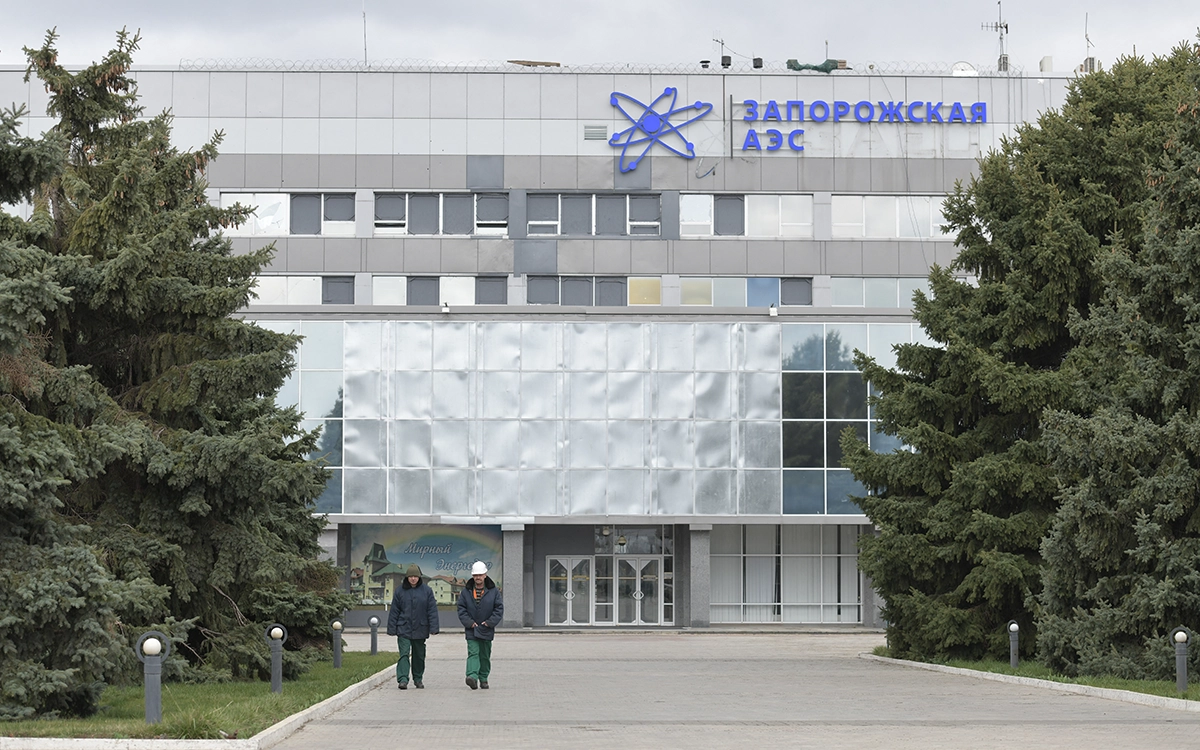
The degradation of Zaporizhzhya’s reactor safety through military operations increases over time, leading to a chain of failures: one power line goes down, a backup line is unavailable, a substation is damaged, staff are exhausted, and fighting prevents repairs. The most likely location where this chain could result in a massive radiological incident is Zaporizhzhya, especially if the leakage flowed into a river providing cooling water to the plant.
Should such a catastrophe occur, it could claim the lives of millions and render substantial areas of Ukraine unsafe for human habitation. Though such a disaster may not lead Russia and Ukraine to halt the war, it could limit combat in the impacted area, altering the course of military operations.
According to Russian government sources, last August, a Ukrainian drone hit an auxiliary transformer at Russia’s Kursk Nuclear Power Plant. The incident did not produce a sharp Russian response. Still, if a Ukrainian drone were to inflict greater damage on a Russian nuclear plant in the future, the Russian government could feel the need to retaliate with a reciprocal strike for deterrent purposes. Alternatively, both Kyiv and Moscow have the ability to exploit a fabricated incident at a nuclear facility as a pretext to damage their adversary’s nuclear facilities, escalating the situation and aggravating the country’s energy challenges.
Given recent events, the political-military leaderships of future conflict parties may confidently conclude they can attack an adversary’s nuclear infrastructure for deterrent gains and military advantages without causing catastrophic radiological release.
The political-military leaderships of future conflict parties may confidently conclude they can attack an adversary’s nuclear infrastructure for deterrent gains
Thus far, efforts to manage these new-age nuclear threats have focused on strengthening international laws and regulations. However, these instruments have limited scope, applying primarily to nuclear power plants rather than their ancillary systems, which have been the focus of most recent attacks. Additionally, they lack consensus support, assured measures of attribution, or means of punishing violators.
Governments can provide more targeted air, drone, and passive defenses of nuclear facilities to supplement legal measures. States with nuclear power plants should also prepare in advance wartime protocols for protecting operating reactors and their most sensitive auxiliary systems against penetrating weapons, prolonged power interruptions, constrained staffing, and other high-level threats. In particular, they should plan and rehearse rapid cold shutdowns. Emergency reactor suspensions do not eliminate risks, but they can increase response times and decrease radioactive leakage.
Recent attacks suggest that civilian nuclear facilities are no longer considered off the battlefield. Attacks on power plants and auxiliary facilities have become tools of coercion and psychological manipulation, with significant and dangerous implications. Future conflicts will likely see further manipulations of nuclear risk that are below the catastrophe threshold—at least until miscalculation, escalation, or system failure collapses the distinction entirely.