
Eagle Intelligence Reports
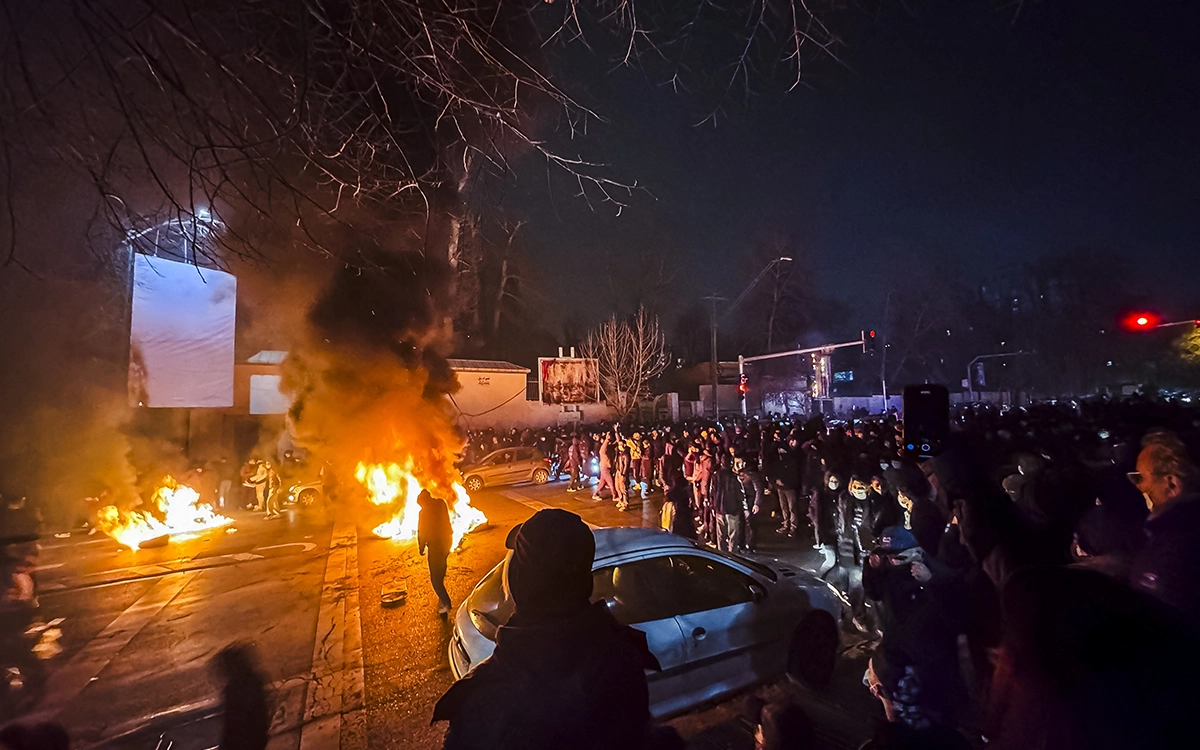
In the last month, Iran has faced its most serious nationwide challenge in decades. In protests across dozens of cities, demonstrators not only demand economic relief but openly call for the overthrow of the theocratic regime. The government’s response couples extreme violence and repression with information warfare, including a near-total internet shutdown that has reduced connectivity to low single-digit percentages, according to monitoring groups. While street mobilization has ebbed in several urban centers following a deadly crackdown, the underlying drivers of unrest remain unresolved. Tehran’s reliance on coercion has strained administrative capacity and pushed the regime into a sustained stress test of legitimacy, indicating a qualitative shift from earlier protest cycles.
What distinguishes the current protest wave is also its social and functional expansion. Participation now extends beyond the urban middle class to include workers in energy and transport sectors, local merchants, and residents of peripheral regions. As a result, both symbolic power centers and operational hubs of state control are under pressure. Reports of local security forces being overwhelmed suggest a gradual erosion of repressive enforcement capacity. While evidence remains fragmentary, recent protest dynamics suggest a shift toward more recurrent and sustained forms of dissent compared to earlier, clearly episodic cycles.
Iran’s domestic crisis also increasingly feeds into regional and global calculations. Decision-makers in Washington, Moscow, and Beijing, as well as in key regional capitals, are adjusting their strategies in response to a more fragile but still functional Iran. A divergence in external positioning heightens the risk that internal unrest could intersect with existing fault lines over nuclear proliferation, maritime security, and proxy conflicts, increasing the potential for wider destabilization across the Middle East.
Decision-makers in Washington, Moscow, and Beijing, as well as in key regional capitals, are adjusting their strategies in response to a more fragile but still functional Iran
Donald Trump increasingly appears to be using the Iranian protests as an instrument of geopolitical pressure. His public rhetoric is explicit: the President has declared his “full support” for demonstrators, branding the regime “criminal” and threatening a 25% tariff on any country “doing business” with the Islamic Republic. Analysts widely interpret this threat as directed primarily at China and other major trade partners, with significant spillover risks for European firms. While the crisis is framed publicly as a moral confrontation between a repressive theocracy and a population demanding freedom, Trump’s response in practice relies on familiar tools of transactional leverage.
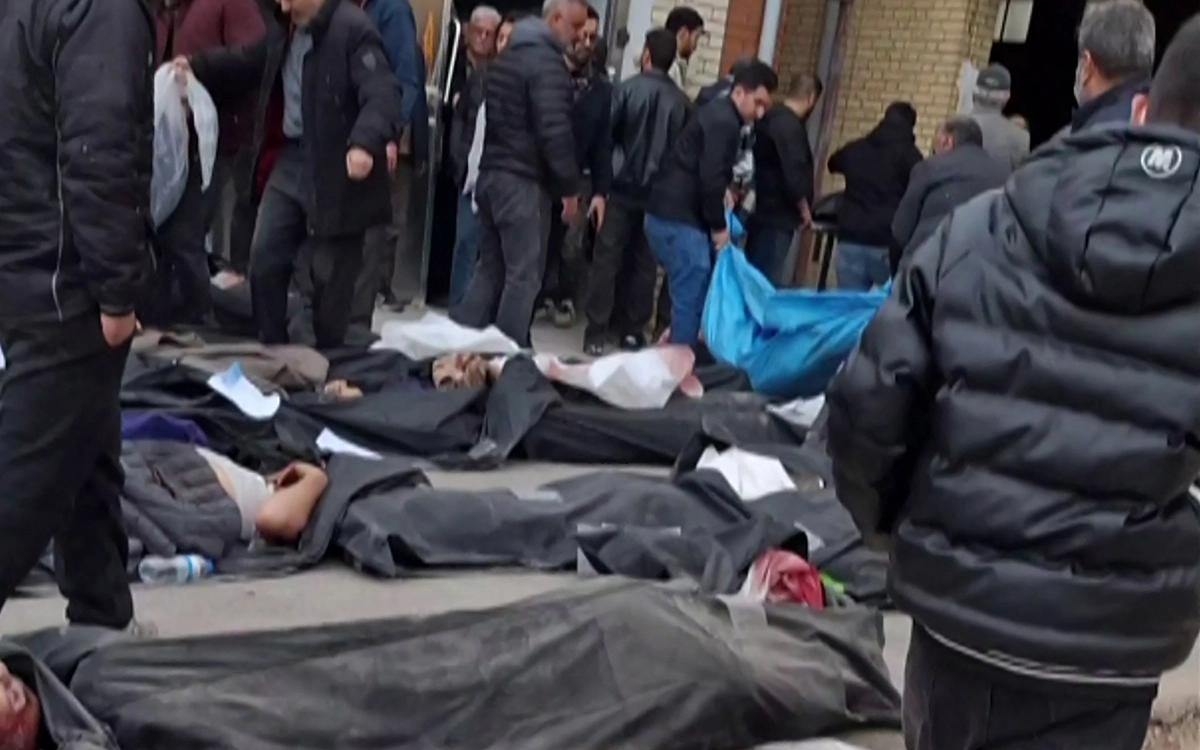
Yet what stands out is the absence of strategic logic and a durable framework. Washington’s approach follows an established pattern under Trump: rapid escalation designed to generate bargaining power, coupled with maximalist rhetoric that lacks a clearly articulated political end-state for Iran or the regional order. Support for the protests remains tactical rather than embedded in a longer-term strategy. This strategic ambiguity increases the risk of miscalculation both in Tehran and among U.S. partners.
Trump also faces a real strategic dilemma behind his tough talk. As of mid-January 2026, U.S. deterrence signaling has been complicated by force-posture constraints, including periods without a carrier strike group positioned to provide rapid and flexible strike options in the Gulf region. In the absence of a carrier, the viable alternatives—long-range bombers, land-based aircraft, and cruise-missile strikes—remain operationally more complex, politically more sensitive, and more exposed to escalation risks. Any such military action would almost certainly be interpreted in Tehran as an existential threat and would trigger retaliation against U.S. forces, Gulf bases, and maritime traffic.
Trump’s essential objective is not democratization in Iran but the strategic weakening of a regional counterweight to the U.S.–Israel–Gulf alignment. Economic pressure and the threat of secondary sanctions are intended to degrade Iran’s capacity to project power through missiles, drones, and proxy networks. Washington is also testing Europe’s tolerance for linkage. Trump’s leveraging of trade, energy, and security dossiers in parallel underscores a broader pattern. In this sense, Iran has become not only a Middle East file, but also a test case of Europe’s exposure to transactional U.S. pressure. Trump’s open proposal to acquire Greenland from Denmark either by purchase or military action demonstrates how far this approach can be pushed. Europe remains caught between its normative rhetorical commitments and its structural dependence on U.S. security guarantees. It is increasingly uncomfortable with Trump’s methods, yet unable to set its own course.
Iran’s growing fragility invites hedging rather than decisive action by external actors. Russia’s response is shaped by pragmatic risk management. Moscow benefits from Tehran’s inward focus and from the distraction the crisis creates for Western governments. Security cooperation has reportedly continued and may include the transfer of crowd-control and digital-surveillance technologies, although the precise scope remains difficult to verify. On the other hand, the Kremlin has little interest in a strong, assertive Iran capable of acting independently of Russian priorities.
Iran’s growing fragility invites hedging rather than decisive action by external actors
Moscow’s ideal outcome is a managed weakening of Iran. A surviving regime would absorb Western attention while growing more dependent on Russian support. A functioning, if battered, Islamic Republic serves as a tactical asset in Russia’s confrontation with the West—a partner that supplies drones and missile technology while providing diplomatic alignment in international fora. By contrast, a regime collapse would destabilize Russia’s southern periphery, threaten military supply lines, and create space for jihadist groups, drug trafficking networks, and refugee flows into the Caucasus and Central Asia.
The Russo-Iranian axis is therefore driven by converging interests rather than ideological alignment. Iran supplies low-cost capabilities for Russia’s war in Ukraine, while Russia offers logistics support, defense-industrial capacity, and diplomatic cover. As the balance of power between the two shifts, Moscow is likely to seek tighter control over cooperation, particularly in technologically sensitive areas and long-term resource arrangements. Yet Russia’s leverage is no longer grounded in structural strength. The war in Ukraine, extensive sanctions, and growing economic dependence on China have reduced its room for maneuver. Meanwhile, Iran continues to pursue its own regional agenda and cultivate alternative partners in Asia and the Gulf. Tehran is thus a useful but increasingly demanding partner that Russia can influence in an increasingly limited way.
China is watching the Iranian protests with caution and restraint. Official statements emphasize respect for sovereignty and reject “external interference,” while avoiding any direct criticism of Tehran’s handling of the unrest. Behind this neutral posture lies a clear hierarchy of interests: Beijing’s primary concern is not the nature of Iran’s regime but the continuity of a state capable of honoring long-term energy and infrastructure commitments.
Iran is a central pillar of China’s efforts to strategically diversify away from maritime choke points and Western-controlled financial systems. The 25-year cooperation agreement signed in 2021 grants Chinese companies preferential access to oil and gas projects, transport corridors, and critical infrastructure. Iran’s integration into the Belt and Road Initiative and its full membership in the Shanghai Cooperation Organization further anchor it in Beijing’s vision of an alternative connectivity order. A sudden state collapse in Iran would jeopardize these projects, disrupt energy supplies, and undermine China’s narrative of offering stability-oriented partnerships across the Global South.
For Beijing, the crisis is also a reminder of the fragility of authoritarian partners exposed to simultaneous internal and external pressures. Iran joins a growing list of states across Africa and Central Asia where regimes sustained by repression and external backing have nonetheless seen their internal resilience weaken. This does not yet amount to a systemic crisis for China’s partnership model, but it does raise the long-term costs and political risks of close alignment with brittle regimes. As a result, Beijing is likely to hedge backing Tehran diplomatically against Western pressure while quietly building redundancy into its regional energy and infrastructure networks.
While global powers largely control external narratives around Iran’s unrest, the most immediate spillover risks are borne by regional middle powers—Israel, Turkey, Saudi Arabia, and the UAE. Each assesses Iran’s crisis through the prism of regime survival, regional balance, and vulnerability from domestic exposure to instability. Although their policy instruments differ, their strategic objectives converge: none wants to be responsible for an uncontrolled regime-change outcome.
Israel, Turkey, Saudi Arabia, and the UAE assess Iran’s crisis through the prism of regime survival, regional balance, and vulnerability from domestic exposure to instability
For Israel, the crisis presents a genuine strategic dilemma. A regime collapse in Tehran could neutralize its most dangerous adversary, particularly with respect to Iran’s nuclear program, missile arsenal, and support for proxies such as Hezbollah, Hamas, and Shia militias. Yet the experiences of Iraq, Syria, and Libya show that authoritarian collapse more often produces prolonged war and instability. Tel Aviv has therefore paired operational restraint with strong rhetorical support for the protesters and covert cyber and intelligence assistance to anti-regime networks. It avoids highly visible military moves that could trigger diversionary retaliation by Tehran. Over the longer term, Israel’s objective is not regime change at any cost, but the sustainable degradation of Iran’s regional reach without provoking state collapse. This would leave an Iran that is more constrained, technologically weakened, and cut off from key parts of the Shia Crescent but still capable of basic governance.
Turkey’s posture is deliberately ambivalent. Ankara and Tehran have long managed a relationship of controlled rivalry and selective cooperation. They coordinate on energy transit and the containment of Kurdish armed groups while competing for influence in Iraq, the South Caucasus, and increasingly Central Asia. A breakdown in Iran would bring obvious risks for Turkey, including refugee flows, security vacuums, and potential spillover of unrest into its own Kurdish regions. However, a weakened Iran would open space for Ankara to expand its military footprint and shape trade and energy corridors across Northern Iraq and the wider region. Ongoing Turkish operations in Duhok, Erbil, and Sinjar already signal a willingness to move quickly should Iranian influence recede.
Saudi Arabia and the UAE approach Iran’s crisis from a position of cautious pragmatism. Riyadh’s strategy has shifted from open confrontation to managed risk since the 2019 attacks on its oil infrastructure and the subsequent détente with Tehran. The kingdom would welcome a reduction in Iran’s missile and drone capabilities and a loosening of its grip over the region, but it remains wary of the consequences a power vacuum could produce. Saudi strategic culture, shaped by the fallout of the Arab uprisings, tends to prefer a predictable authoritarian neighbor over a fragmented one. The UAE shares this preference for stability but pursues a more flexible approach, mixing economic engagement and back-channel diplomacy with hard-security investments in missile defense, cyber capabilities, and control of critical sea lanes in the Gulf and the Red Sea.
Taken together, these middle powers are practicing calibrated containment. They seek to limit Iran’s reach, shape the surrounding strategic environment, and prepare for contingencies while avoiding actions that could precipitate the Islamic Republic’s collapse. In a scenario of collapse or military escalation, however, this careful hedging could quickly give way to uncoordinated and competitive crisis management.
While Washington, Moscow, and Beijing hedge and regional actors position themselves for spillover, Europe remains largely reactive. The EU is constrained by institutional fragmentation and the absence of a unified security decision-making framework. Policy on Iran remains deeply entangled with Washington’s choices, even as European interests, exposure, and escalation costs are directly affected by developments in the Gulf and the Levant. The E3’s activation of UN snapback sanctions and the EU’s own human-rights and drone-related measures show that Europe is not without agency. Yet these steps have not produced a coherent security role, as Europe lacks the command structure and a credible escalation and deterrence framework for high-intensity crises vis-à-vis Iran.
While Washington, Moscow, and Beijing hedge and regional actors position themselves for spillover, Europe remains largely reactive
In its public stance, the EU condemned the crackdown, with High Representative Kaja Kallas stressing that “any violence against peaceful demonstrators is unacceptable” and criticizing the security forces’ “heavy-handed” response. Commission President Ursula von der Leyen added, “I unequivocally condemn the excessive use of force and continued restriction of freedom”. This rather reserved institutional line, however, did not reflect markedly more confrontational national rhetoric, such as Chancellor Merz’s public claim that the regime had “lost all legitimacy” and might be entering its “final days and weeks.”
The EU also incrementally expands individual and sectoral sanctions against those responsible for repression, continued activities beyond JCPOA limits—including expanded enrichment and restrictions on IAEA oversight—and drone exports to Russia. Yet these instruments remain disconnected from a broader geopolitical strategy that would integrate human-rights concerns, maritime security in the Red Sea and the Gulf, integrity of energy markets, and regional stability. Naval Operation Aspides, launched to protect shipping from Houthi attacks, illustrates both the potential and the limits of European hard power. The EU can secure key sea lanes, but it does so on the margins of a crisis in which strategic tempo is set by others.
Over the past two decades, Europe’s Iran policy—from the JCPOA and attempts at economic engagement to the recent shift towards punitive sanctions—has yielded limited strategic returns. A regime that is repressive at home and revisionist abroad has outlasted European goodwill, and the EU has moved from offering incentives to managing risks. The reimposition of snapback sanctions and successive EU listings of Iranian officials and entities underline this transition. But they have not altered the underlying asymmetry between Europe’s exposure and its leverage.
A strategic redefinition of Europe’s Iran policy is long overdue. At a minimum, it would require the EU to articulate its interests, which range from preventing nuclear proliferation and missile attacks to safeguarding sea lanes and managing migration and refugee flows. It could then determine appropriate instruments, such as calibrated sanctions, support for independent information flows into Iran, crisis diplomacy with regional powers, and a modest but credible contribution to deterrence and resilience in its southern neighborhood. To date, however, there is little evidence that such a reorientation is taking shape; Europe remains caught between normative rhetorical commitments and structural dependence on U.S. security guarantees.
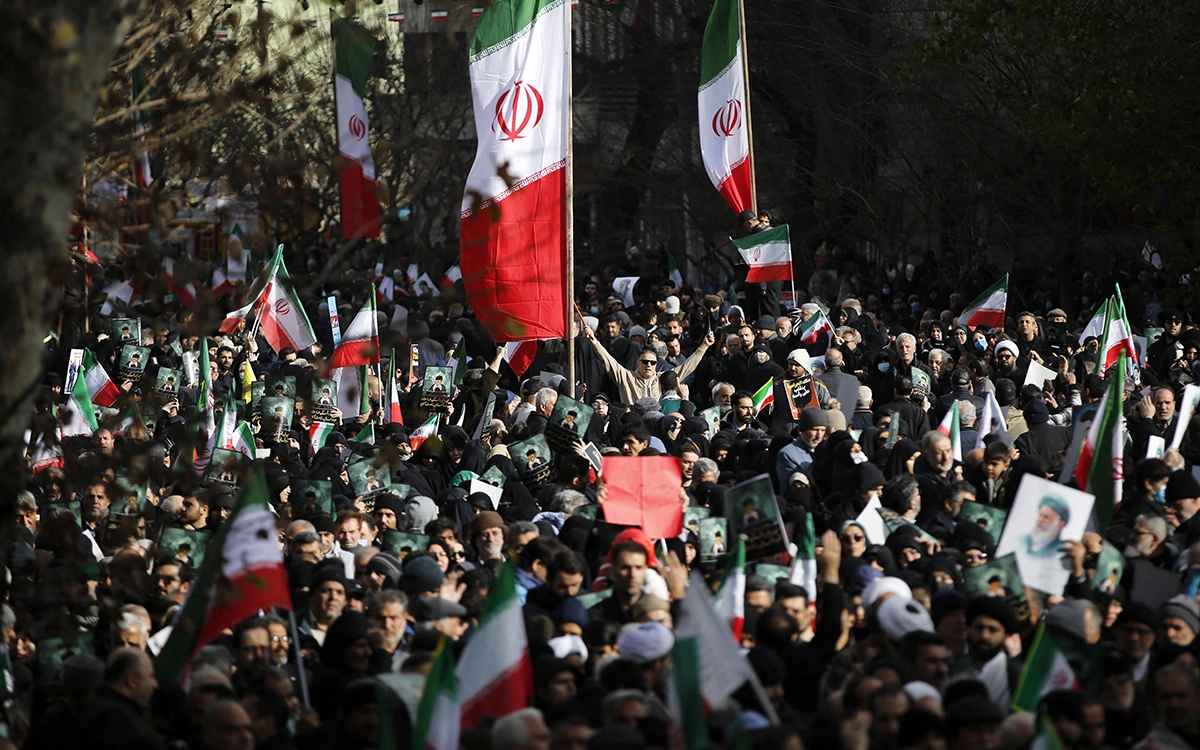
Despite the scale and persistence of dissent, Iran’s opposition remains organizationally fragmented and politically weak. Inside the country, protest movements are largely decentralized, lacking recognized leadership, a shared program, or institutional continuity. This horizontal structure enables tactical flexibility and localized mobilization, but it also limits the ability to formulate a viable political alternative or claim national representation.
The crisis has further exposed the impotence of Iran’s formal reformist camp. President Masoud Pezeshkian’s initial promises to acknowledge protesters’ grievances and curb abuses were swiftly overridden by the security apparatus. This reinforced a widespread perception that change within the existing constitutional framework is illusory. As a result, political expectations have shifted towards exiled figures and loosely connected grassroots actors, none of whom has yet managed to translate popular anger into a coherent transition project.
Exiled opposition groups—ranging from monarchists around Reza Pahlavi and secular republicans to Kurdish autonomy movements and diaspora-based student organizations—have struggled to build consensus or coordinate with actors inside Iran. Prolonged exile, ideological divergence, and unresolved personal rivalries have thus far prevented the emergence of a credible transitional coalition.
International actors, including the United States and parts of the EU, have engaged selectively with opposition figures, but without strategic consistency or sustained institutional backing. Western policymakers are reluctant to endorse any single leadership figure or movement, citing concerns over opposition fragmentation, regime retaliation, and limited resonance among the wider Iranian public.
The result is a vacuum of structured political representation and oppositional weakness despite the sustained erosion of the regime’s legitimacy. Any credible democratization scenario requires an opposition that can overcome structural limitations and articulate a minimal vision for a post-regime order. Without such a shift, the protest dynamic is likely to remain reactive and strategically decoupled from political transformation.
The protest dynamic is likely to remain reactive and strategically decoupled from political transformation
Given the combination of internal fragility, a fragmented opposition, and external hedging, four broad scenarios appear plausible, each with distinct risks and geopolitical consequences:
Escalation: The United States intensifies pressure; Tehran retaliates against U.S. forces or its regional allies; Israel intervenes militarily. The likely result would not be immediate full-scale war but a cascading escalation involving missile strikes, maritime incidents, and proxy attacks, with destabilizing effects across the Middle East.
Authoritarian restoration (Status quo): The regime survives the protest wave, recentralizes power, and permits limited technocratic adjustments while embedding itself more deeply within a security architecture backed by Russia and China. The system’s basic character remains intact, but at the cost of higher reliance on coercion and further erosion of legitimacy.
Uncontrolled collapse: State authority disintegrates; local militias and power brokers fill the vacuum; competing centers of authority emerge; external actors—China, Russia, Israel, Turkey, Arab states, and non-state groups—attempt to shape the new landscape. This would likely entail severe violence, fragmentation, and major regional spillover.
Gradual democratization: This scenario would require a controlled weakening of the security apparatus, a more cohesive opposition capable of articulating a minimal transitional program, and international support focused on institutions rather than individuals. Even under favorable conditions, it would be a fragile and contested process, but it cannot be excluded a priori.
In the short term, strategic tension is likely to persist without immediate large-scale escalation. Over the medium term, the risk of external miscalculation increases, particularly if Washington continues to rely on pressure and signaling without clearly defined objectives or realistic military options. Barring a major regional war, the most probable outcome is some form of authoritarian restoration. An uncontrolled collapse remains a high-impact but low-probability scenario with maximum regional spillover. Democratization, while structurally conceivable, remains the least likely outcome at present.