
Eagle Intelligence Reports
French efforts to extend nuclear deterrence into a broader European architecture introduce additional strategic capability into the Eastern Mediterranean, but they do not stabilize regional security. Instead, they redistribute operational risk across a theater already defined by dense military activity, overlapping jurisdictions, and weak escalation controls.
The Eastern Mediterranean does not function as an integrated security space, but as a fragmented environment. Littoral states such as Greece, Turkey, Cyprus, Egypt, and Israel, powers including France, the United States, and Russia, and alliances such as NATO and the EU operate in close proximity. Despite this, they do not function within unified command structures or aligned strategic objectives. Under such conditions, enhanced deterrence is more likely to complicate crisis dynamics than to impose strategic order.
The Eastern Mediterranean does not function as an integrated security space, but as a fragmented environment
France’s deterrence posture is built around an arsenal of approximately 290 nuclear warheads and supported by submarine-launched M51 ballistic missiles and air-delivered ASMPA cruise missiles. As of last month, President Emmanuel Macron unveiled a new nuclear doctrine, “forward deterrence.” While nuclear decision-making remains fully sovereign, this approach enables France to project deterrent effects through structured defense cooperation with selected European partners. In the Eastern Mediterranean, this shift is most clearly reflected in the deepening strategic relationship with Greece, which has become a key partner in France’s new deterrence framework.
This distinction is central to the regional security outlook. In the Eastern Mediterranean, where instability is driven less by strategic absence than by strategic congestion, the introduction of a French-led deterrence layer does not impose order on the theater. Instead, it adds another decision-making center to an already crowded environment in which local rivalries, alliance commitments, and external military presence intersect without a common framework for command, deconfliction, or escalation control. As a result, the expansion of deterrence may strengthen the security position of individual partners, but it is unlikely to reduce the broader risks of miscalculation or regional instability.
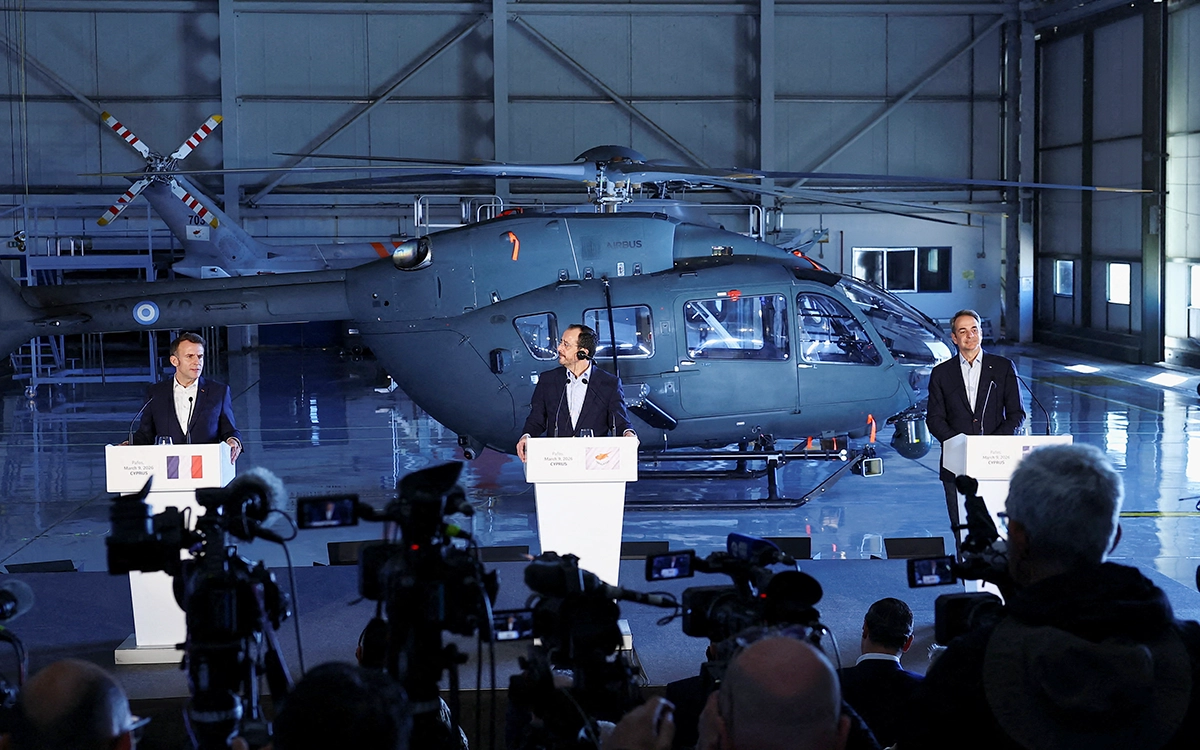
France projects deterrence into the Eastern Mediterranean through conventional deployments tied directly to its nuclear posture. This includes FREMM-class frigates such as Languedoc and Auvergne, as well as carrier strike group operations centered on the aircraft carrier Charles de Gaulle. Rafale fighter aircraft operate both from the carrier and through joint deployments with regional partners, including exercises staged from Souda Bay in Crete and facilities in mainland Greece.
France projects deterrence into the Eastern Mediterranean through conventional deployments tied directly to its nuclear posture
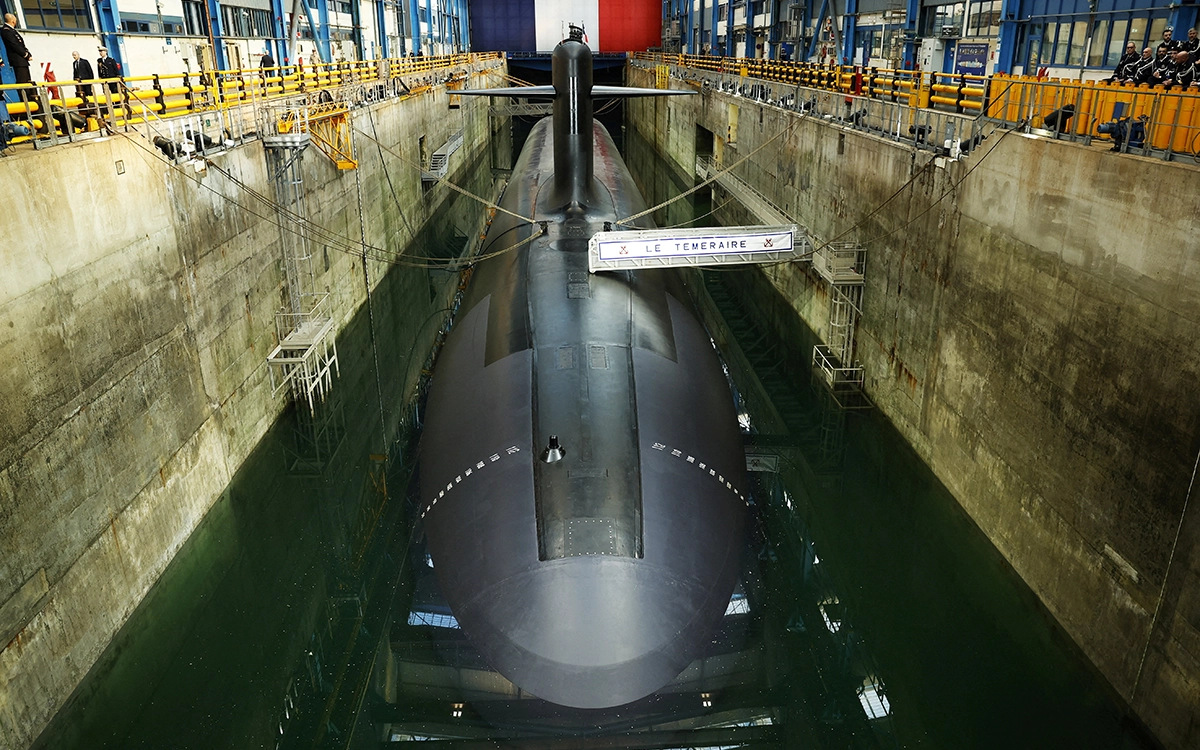
These deployments are supported by France’s nuclear force structure, which includes four Triomphant-class ballistic missile submarines, alongside an air-based component centered on Rafale aircraft capable of carrying ASMPA cruise missiles. This nuclear posture remains fully outside allied command structures. At the same time, conventional deployments linked to this posture are carried out with Greece through joint exercises, basing access, and force integration, allowing France to project nuclear-backed capability into the region without transferring nuclear authority.
In practice, this is visible in combined air drills, naval patrol coordination, and growing interoperability between French and Greek Rafale squadrons and naval units. Current discussions on command coordination, including the possibility of a joint operational structure, suggest movement beyond symbolic cooperation toward a more durable military arrangement. The arrangement also introduces extended nuclear deterrence under strict limits. European partners may join exercises and potentially host French nuclear-capable aircraft on a temporary basis, but planning, targeting, and launch authority remain exclusively French. There is no shared nuclear planning mechanism, no transfer of control, and no nuclear-sharing arrangements equivalent to NATO. What is being extended is not nuclear ownership, but nuclear-backed protection.
These deployments unfold alongside continuous Turkish naval and air activity in the Aegean and the wider Eastern Mediterranean. Rather than calming the environment, French presence strengthens the France–Greece axis while adding military weight to an already congested theater and increasing exposure to friction.
The Eastern Mediterranean security environment is structured around specific operational corridors in which military activity, energy interests, and political tensions intersect. The Eastern Aegean remains the primary interaction zone, particularly around the airspace and maritime areas near Lesvos, Chios, and Rhodes, where Greek and Turkish forces operate in close proximity. Further south, the waters off Cyprus—especially Exclusive Economic Zone Blocks 6 and 10—have become focal points where energy exploration overlaps with naval deployments. The Levantine Basin extends these dynamics toward the broader Middle East, linking the Eastern Mediterranean to developments in Syria, Israel, and Egypt.
NATO maintains a presence through Standing Maritime Group 2, which periodically operates in both the Aegean and Eastern Mediterranean. However, these deployments coexist with national operations under separate command structures. Forces from Greece and Turkey continue to operate independently, even within NATO frameworks, limiting coordination and reducing the effectiveness of alliance-level deconfliction. Additional layers of the regional structure are shaped by bilateral and minilateral arrangements. The France–Greece defense agreement anchors one axis of cooperation, while joint exercises involving Israel and coordination with Egypt contribute to parallel security alignments. The resulting architecture is layered rather than integrated.
The limits of this structure are most visible in day-to-day operational activity. In the Eastern Aegean, airspace violations and interceptions between Greece and Turkey occur on a sustained basis. These incidents require immediate response from air defense systems and leave little time for coordination beyond tactical decision-making. At sea, similar patterns emerge. Greek and Turkish naval units regularly conduct shadowing operations in disputed areas of the central and eastern Aegean, operating within close range and under conditions of limited separation. These interactions are not exceptional events but routine features of naval activity in contested waters.
South of Cyprus, energy exploration has intensified these dynamics. Drilling and survey operations in Exclusive Economic Zone Blocks 6 and 10 are typically accompanied by naval escorts, bringing multiple actors, including both national and commercial vessels, into confined operational zones, increasing the likelihood of friction.
Taken together, these patterns reflect a system in which interaction is continuous and proximity is constant. Tension is not episodic but embedded in routine operations. Forward deterrence enters this environment as an additional layer of capability without altering the underlying conditions that produce friction.
Forward deterrence enters this environment as an additional layer of capability without altering the underlying conditions that produce friction
This constant interaction directly shapes how command and control functions in practice. Sustained activity across air and maritime domains places continuous pressure on command and control. Naval and air units from Greece, Turkey, France, and NATO operate simultaneously across the Aegean and Eastern Mediterranean without unified command structures or harmonized rules of engagement.
These constraints are illustrated most clearly by airspace interceptions between Greek and Turkish aircraft, which require immediate decisions by pilots and command centers. NATO communication mechanisms provide channels for deconfliction, but they do not cover all interactions, particularly those conducted under national command. Operational infrastructure further concentrates activity. Souda Bay in Crete and RAF Akrotiri in Cyprus further increase the density of military activity in specific locations.
In this environment, deterrence affects strategic calculations without simplifying operational realities. Command remains distributed, coordination remains partial, and response timelines remain compressed. The system functions through constant adjustment rather than centralized control.
Under these conditions, escalation is more likely to build through repeated interaction than through a single decisive trigger. Naval maneuvering in the Aegean, airspace violations, and hybrid activity across maritime corridors combine to produce a multi-domain environment in which risk grows cumulatively through routine encounters.
Macron’s doctrine defines deterrence as an integrated nuclear-conventional system. Carrier strike groups, air patrols, and joint exercises with regional partners carry implicit nuclear backing, linking routine military activity to strategic signaling even when nuclear assets are not present.
At the same time, the framework preserves deliberate ambiguity. The absence of formal guarantees and the retention of exclusive French decision-making authority leave uncertainty around how deterrence would be applied in practice. This ambiguity complicates adversary calculations, but it also leaves Greece and other participating European states without clear operational expectations in a crisis.
Technological developments such as unmanned aerial systems and advanced ballistic missiles reinforce these dynamics, reducing reaction time and increasing uncertainty. Iran has demonstrated the ability to project such capabilities across maritime corridors, linking developments in the Arabian Gulf and the Red Sea (via proxies) to the Eastern Mediterranean.
Escalation unfolds through repeated localized interactions rather than singular decisive moments. Forward deterrence raises thresholds at the strategic level, but its influence over operational behavior remains indirect, uneven, and conditioned by an environment that France does not fully control.
In conclusion, French nuclear deterrence introduces meaningful strategic capabilities into the Eastern Mediterranean, but its effects are shaped by the structure of that regional system. Within this context, the France–Greece framework illustrates how deterrence is being translated into operational practice. Bilateral agreements, joint exercises, basing arrangements, and the potential forward deployment of nuclear-capable assets reflect a shift from declaratory policy to applied deterrence. At the same time, the framework remains deliberately constrained, as France retains exclusive authority over nuclear decision-making.
French nuclear deterrence introduces meaningful strategic capabilities into the Eastern Mediterranean, but its effects are shaped by the structure of that regional system
French forward deterrence, therefore, functions as a force multiplier for specific partners—most notably Greece—strengthening their strategic position and raising the cost of escalation for potential adversaries. However, it does not provide centralized control, nor does it resolve the structural fragmentation of the regional security environment. The result is a form of deterrence that strengthens positioning without consolidating control, adding capability to an active environment without reorganizing it. Fragmentation persists, coordination remains partial, and operational risk continues to circulate across air, maritime, and hybrid domains.
The new French deterrence posture complicates rather than simplifies risk in the Eastern Mediterranean. Despite the shift, the region will remain a managed rather than resolved security space. Stability, where it emerges, will continue to depend on constant adjustment and localized deconfliction rather than structural integration or lasting settlement.