
Eagle Intelligence Reports
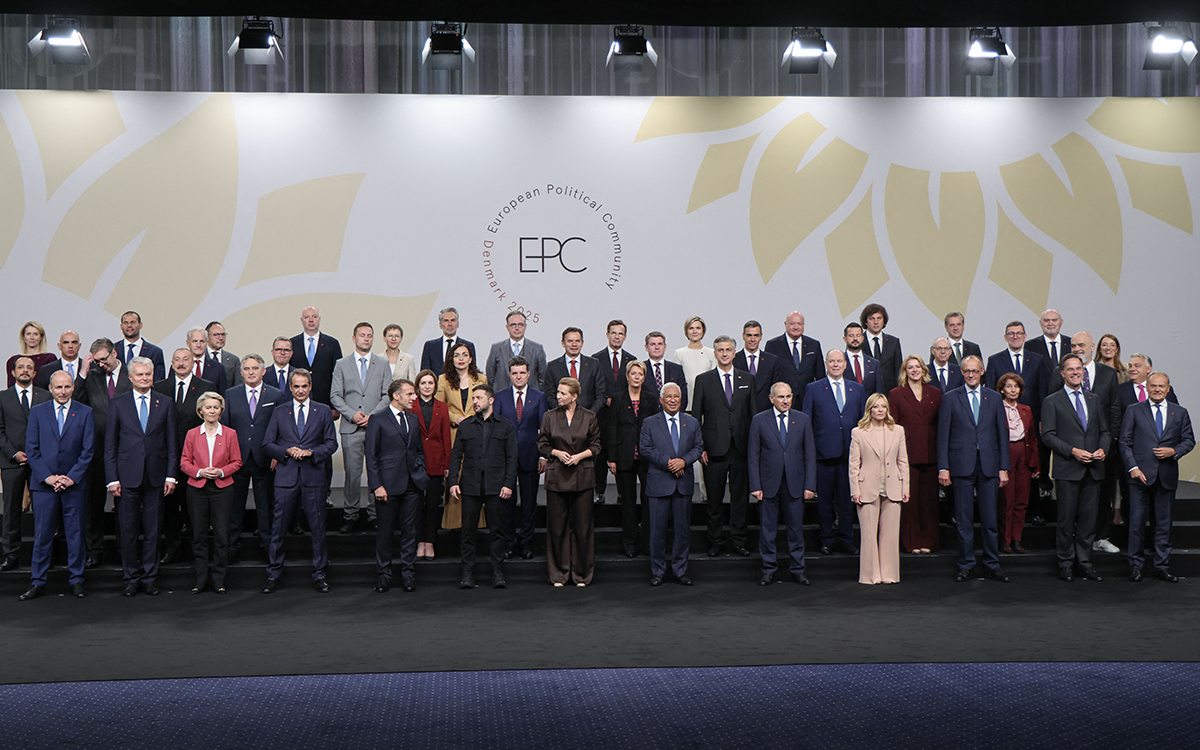
Russia’s full-scale invasion of Ukraine in February 2022 has actively reshaped Europe’s deterrence landscape. The political uncertainty surrounding and following Donald Trump’s return to the White House has renewed calls for European strategic autonomy and intensified doubts about the long-term reliability of US extended nuclear deterrence in European capitals.
As a result, the war has not merely accelerated but is actively driving a broader European effort to build a more layered and resilient deterrence architecture. The debate now extends well beyond the traditional role of British and French nuclear forces and ventures into long-range conventional strike options, integrated air and missile defense systems, and more robust command and control structures along NATO’s Eastern flank. This shift is likely to accelerate over the next 12–24 months, increasing both deterrence complexity and escalation risk in Europe’s eastern theater.
The timing of this shift is pivotal. Since 2022, Russia has not only widened its nuclear signaling but also announced plans to deploy tactical nuclear weapons to Belarus, revised its nuclear doctrine, and institutionalized a war economy geared towards long-term confrontation with the West. At the same time, Finland’s accession to NATO, growing debate over the durability of US security guarantees, and highly publicized discussions on nuclear-sharing arrangements have pushed issues that were once confined to expert circles into the center of European security politics. The so-called nuclear grey zone is therefore not a speculative construct, but an emerging reality that will shape deterrence choices in Europe over the coming years.
The so-called nuclear grey zone is not a speculative construct, but an emerging reality that will shape deterrence choices in Europe over the coming years
The Finnish Institute of International Affairs (FIIA) argues that Russia’s blend of grey-zone coercion, long-range conventional strike capabilities, and explicit nuclear threats compels NATO to rethink the defense of its “extended frontline” from the High North to the Black Sea. At the same time, recent analysis by SWP (German Institute for International and Security Affairs) outlines three potential trajectories for US extended deterrence in Europe, ranging from a manageable crisis of trust to a perceived strategic disengagement. Additionally, it shows how political confidence directly shapes the credibility and flexibility of allied response options.
Moscow, for its part, has deliberately broadened its nuclear signaling. Since 2022, Russia has repeatedly used explicit and implicit nuclear threats to deter direct NATO involvement, to constrain Western military support for Ukraine, and to frame the war as existential for the Russian state. The weaponization of nuclear ambiguity has become a core element of Russian statecraft.
Yet none of this has produced a classic nuclear arms race in Eastern Europe. Instead, a so-called nuclear grey zone is emerging. NATO continues to refrain from deploying nuclear weapons in new member states, and Poland, Finland, and Romania have become central to NATO’s nuclear-relevant planning, infrastructure, and long-range conventional enablers. These states remain fully compliant with the Non-Proliferation Treaty (NPT), yet their strategic significance has increased dramatically, placing them firmly within Russia’s nuclear calculus.
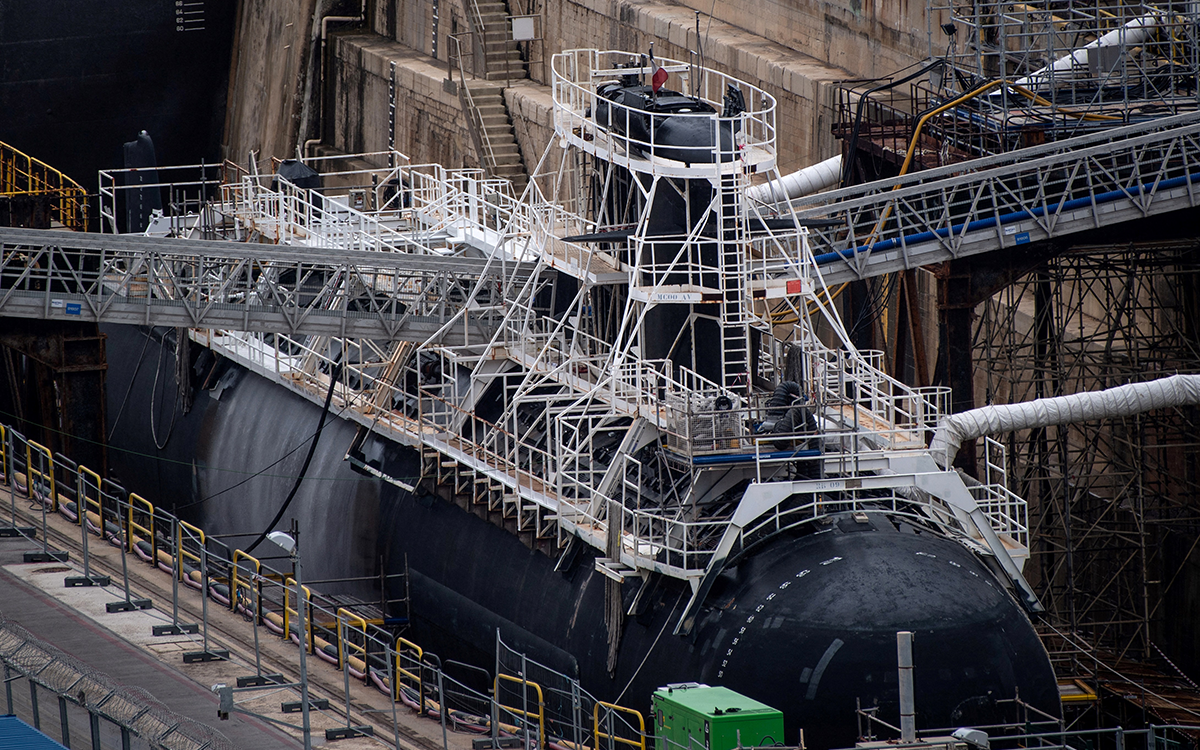
The evolving strategic environment has prompted an intense re-examination of Europe’s deterrence architecture. Academic and policy analyses, including that of SWP, underline that extended US nuclear deterrence remains the essential foundation of European security. These studies explore scenarios in which European states would be required to assume greater responsibility for their own defense, including a more prominent role for British and French nuclear forces, as well as the need for substantial investment in advanced conventional capabilities.
French President Emmanuel Macron has repeatedly encouraged Europeans to engage in a serious discussion about the role of France’s nuclear arsenal within a broader European security framework. In his 2020 address, he stressed that French nuclear doctrine already contains a “European dimension”. In 2025, amid heightened Russian nuclear signaling and lingering uncertainties over long-term US commitments, he renewed his call for structured dialogue on European nuclear deterrence. Media reporting notes that Poland and the Baltic states have cautiously welcomed these overtures, viewing them not as an alternative to the US umbrella but as a potential strategic complement.
Across recent debates, a common trajectory becomes visible. Europe is gradually, albeit unevenly, moving from a model of near-total dependence (on the US) toward a layered deterrence architecture. In this emerging framework, states along the Eastern flank assume a far more prominent role, not by hosting nuclear weapons, but by providing the infrastructure, capabilities, and geography that give the Alliance additional strategic depth.
For a layered deterrence architecture to succeed, it should deliver multiple steps almost simultaneously. It must raise the cost and lower the plausibility of Russian military options below the nuclear threshold. It has to preserve the political and operational conditions under which US extended nuclear deterrence remains credible, even if intra-alliance debates intensify over burden-sharing responsibilities. It should protect the non-proliferation regime by convincing exposed states that their deeper integration into allied deterrence structures is a safer and more effective option than pursuing national nuclear capabilities.
For a layered deterrence architecture to succeed, it should deliver multiple steps almost simultaneously
In practice, success will be measured by observable trends. Key indicators include whether Russia refrains from testing NATO’s red lines with direct kinetic probes; whether the Alliance can deploy and sustain long-range fires, air and missile defense assets and resilient command and control (C2) in Eastern Europe without paralyzing internal political controversy; and whether public debates in Poland, Finland and Romania remain focused on integration within NATO frameworks, rather than drifting toward calls for autonomous nuclear options.
The notion of a nuclear grey zone rests on an often-overlooked argument that extended nuclear deterrence is not determined by the physical location of warheads alone. It derives from the credibility, flexibility, and political cohesion of the entire deterrence posture, including non-nuclear components. As SWP’s recent study of US extended deterrence in Europe makes clear, the decisive variables are alliance unity and the breadth of credible response options, not the number of gravity bombs stored on European soil.
Research from the Center for Security Studies at ETH Zürich highlights an identical conceptual shift. European debates have moved away from warhead counting to managing escalation risks in an environment where nuclear, conventional, cyber, and space domains interact within integrated deterrence frameworks. The core question has become how to prevent inadvertent escalation in a crisis with Russia while preserving credible deterrence at every rung of the escalation ladder.
In this light, deep-precision conventional strike capabilities, integrated missile defense systems, and resilient C2 structures are no longer peripheral additions but integral elements of a credible deterrence posture. Recent work by the International Institute for Strategic Studies (IISS) shows how European militaries are investing in long-range fires to close the “capability gap” between conventional artillery and nuclear options, raising the costs of Russian aggression while keeping nuclear thresholds deliberately high.
Against this backdrop, the emerging nuclear grey zone can be understood as a space where states remain non-nuclear under the Non-Proliferation Treaty yet acquire high nuclear salience. Geography, infrastructure, and advanced conventional capabilities make them indispensable to NATO’s deterrence planning despite the absence of nuclear deployments. Their growing strategic relevance does not violate NPT commitments, but it does change the strategic balance in Europe in ways Russia cannot ignore.
Poland is perhaps the most striking example of a state that remains formally non-nuclear yet is becoming central to NATO’s nuclear-relevant posture. Politically, Warsaw has emerged as one of the strongest advocates of a more robust NATO nuclear-sharing arrangement. Senior Polish officials, including former President Andrzej Duda, have publicly argued that hosting US nuclear weapons would enhance deterrence and distribute strategic risks and responsibilities more equitably across the Alliance.
At the same time, Poland is investing heavily in deep-precision conventional strike capabilities. Recent IISS analysis and Paris-based think tank Ifri studies document Warsaw’s plans for long-range land-attack cruise missiles and enhanced rocket artillery capabilities, occasionally described as a “European Tomahawk”, that could hold high-value Russian targets at risk far beyond Polish territory. These developments coincide with substantial US reinforcement on Polish soil, including rotational troop deployments and pre-positioned equipment, which collectively transform Poland into a pivotal logistical and operational hub along NATO’s Eastern flank.
From Moscow’s perspective, the combination of potential future participation in NATO’s nuclear-sharing arrangements and rapidly expanding long-range conventional strike capabilities turns Poland into a critical node in the Alliance’s deterrence architecture, even in the complete absence of Polish nuclear warheads. NATO, however, views these developments as fully consistent with the NPT and as proportionate responses to Russia’s aggression, nuclear coercion, and persistent saber-rattling.
Finland’s accession to NATO in April 2023 fundamentally reshaped the strategic geometry of Northern Europe. As official Finnish documents outline, membership entails full alignment with NATO’s nuclear policy and broader deterrence posture, while Helsinki simultaneously reaffirms its commitment to NPT and its non-nuclear status. NATO, for its part, emphasizes that Finland’s integration concerns planning, exercises, and command-and-control arrangements, although not the deployment or transfer of nuclear weapons.
What has changed, however, is the Alliance’s options for deterrence and defense in the High North and the wider Baltic region. Finland contributes one of Europe’s most modern and combat-ready air forces, advanced intelligence gathering, surveillance, and reconnaissance (ISR) capabilities, and an exceptionally resilient national defense model. Together, these assets expand NATO’s potential basing, surveillance, transit, and reinforcement corridors in any crisis involving Russia. A recent briefing by the FIIA describes this development as the emergence of an extended frontline, with the Nordic states assuming a central role in counterbalancing Russian long-range strike capabilities and hybrid pressure.
For Moscow, Finland’s shift from long-standing military neutral status to full NATO membership alters the operational map almost overnight. Potential flight paths for NATO aircraft, the depth of surveillance coverage, and the speed of reinforcement all change in ways that Russian planners cannot ignore. Yet no nuclear weapons have moved north. Finland, therefore, exemplifies the nuclear grey zone. Helsinki’s integration into NATO’s nuclear consultations significantly increases its nuclear relevance, yet without altering its legal or political status as a non-nuclear state.
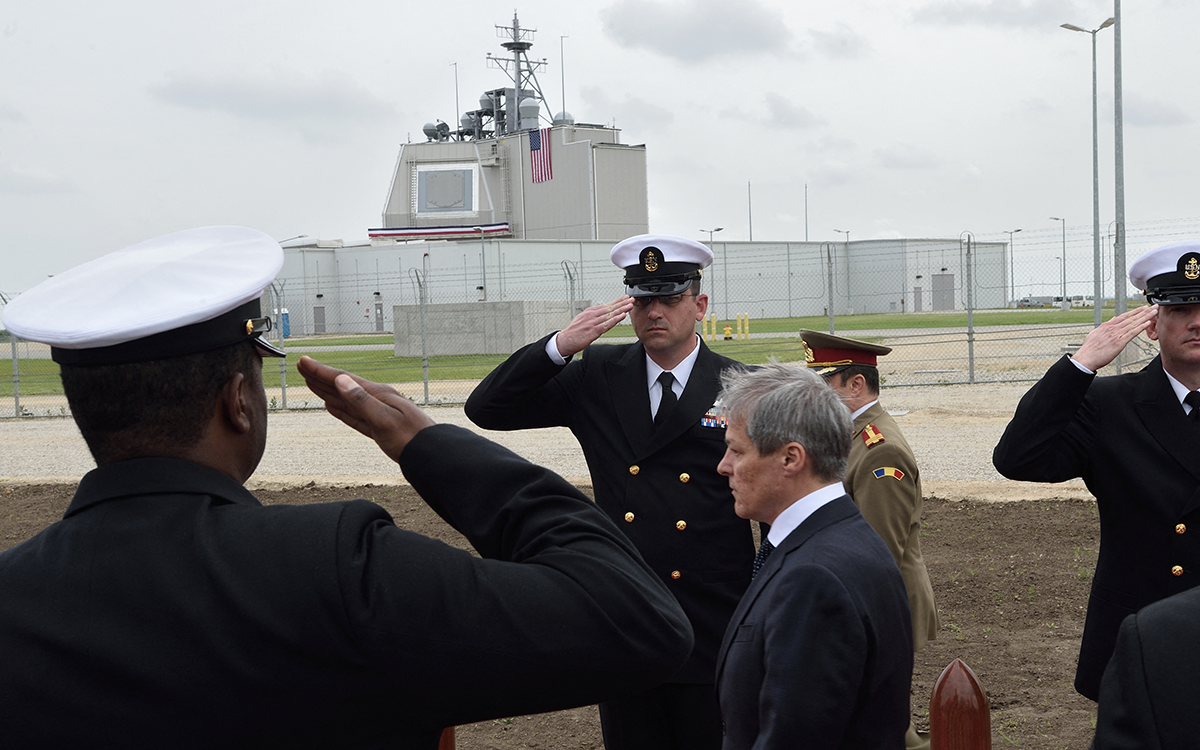
Romania constitutes the southern anchor of the emerging nuclear grey zone. The country hosts one of NATO’s most consequential ballistic missile defense assets: the US Aegis Ashore installation at Deveselu, an integral component of the Alliance’s layered ballistic missile defense (BMD) architecture. NATO’s official documentation explicitly identifies Romania as a key host nation and reiterates that the system is designed to counter limited ballistic missile threats originating from outside the Euro-Atlantic area, a formulation intended to underline its defensive character.
Nevertheless, the operationalization of Deveselu, together with Patriot batteries and a steadily expanding NATO presence, carries significant implications for Russia’s strategic calculus in the Black Sea region. Romania has repeatedly been affected by Russian drone and missile debris landing on its territory, underscoring how closely it is now linked to the immediate operational dynamics of the war in Ukraine.
Looking ahead, discussions on strengthening long-range conventional strike and air defense capabilities in South-Eastern Europe, including potential cruise missile or extended-range rocket systems, would further elevate Romania’s role as a critical platform within NATO’s deterrence posture. As in Poland and Finland, none of these steps involves any Romanian pursuit of nuclear weapons. Rather, Romania’s infrastructure, geography, and expanding military capabilities make it a central enabler of allied operations, increasing the cost and reducing the viability of Russian offensive options across the wider Black Sea theater. In doing so, Romania indirectly yet meaningfully influences Moscow’s nuclear risk calculations without ever departing from its strict non-nuclear status under the Non-Proliferation Treaty.
Russia’s revised 2024 Basic Principles on Nuclear Deterrence maintain the deliberate ambiguity of earlier versions and do not exclude nuclear use against non-nuclear states. Although the document reaffirms Russia’s commitment to the NPT, it explicitly allows nuclear employment in response to large-scale conventional aggression or threats to the “existence of the state”, regardless of the attacker’s nuclear status. This elasticity is central to Moscow’s coercive signaling, leaving significant room for political interpretation in a crisis. As a Swedish Defense Research Agency (FOI) analysis argues, the Basic Principles function simultaneously as an external signal to adversaries and an internal tool for managing elite expectations, providing a doctrinal framework that is sufficiently elastic to accommodate shifting political needs in a crisis.
In practice, Russia’s conduct during the war against Ukraine has tested and, in several respects, stretched this doctrinal framework. Studies by Ifri and Arms Control Today show that Moscow has employed nuclear signaling explicitly to deter direct NATO involvement, to limit the scale and sophistication of Western military assistance, and to frame the conflict as vital not merely to Russian security but to the state’s continued existence. The announced deployment of tactical nuclear weapons to Belarus, accompanied by recurrent references to potential demonstrative or limited nuclear use, further erodes the distinction between deterrence and coercive escalation.
The announced deployment of tactical nuclear weapons to Belarus erodes the distinction between deterrence and coercive escalation
From this perspective, the emergence of a nuclear grey zone in Eastern Europe is not the principal driver of Russia’s doctrinal evolution. Rather, Moscow has long relied on weaponizing nuclear ambiguity and integrating nuclear, conventional, and communication instruments into its broader concept of strategic deterrence. What the developments in Poland, Finland, and Romania do, however, is increase the operational and political cost of this approach. They render Russia’s coercive signaling less predictable and less effective, which explains why Kremlin rhetoric increasingly seeks to present NATO’s internal adjustments as inherently destabilizing.
The interaction between grey-zone pressure, long-range conventional strike, and nuclear signaling is best understood as an escalation ladder with several rungs.
At the lower end, Russia can intensify information operations, cyber intrusions, or deniable sabotage against critical infrastructure in Poland, Finland, or Romania.
A step higher, it can use long-range conventional strikes in and around Ukraine in ways that generate spillover effects on allied territory.
Above that, targeted conventional attacks on NATO assets involved in support to Ukraine, such as logistics hubs, would represent a major escalation, even if Moscow framed them as limited or “de-escalatory” moves.
The final rungs involve demonstrative nuclear signaling, such as exercises, deployments, or nuclear testing, and ultimately the threat or use of nuclear weapons.
The risks of inadvertent escalation are greatest at the intermediate rungs, where ambiguous cyber or conventional actions could be interpreted by one side as limited and controllable but by the other as precursors to more radical steps. It is precisely in this grey zone that clarity of signaling, internal alliance cohesion, and robust crisis communication mechanisms become critical.
The nuclear grey zone also creates asymmetric risks for non-nuclear states that have become central to NATO’s posture. Poland, Finland, and Romania are attractive targets for calibrated coercion precisely because they matter operationally yet remain formally non-nuclear. Russia can seek to impose costs on them through sustained disinformation operations designed to erode public confidence in NATO, by probing their cyber defenses or using deniable sabotage against energy, transport, or communications infrastructure.
Such actions are tailored to remain below the threshold of an unambiguous Article 5 case while still testing alliance cohesion and political will. This asymmetry is structurally difficult to eliminate. However, it can be mitigated if NATO signals clearly that attacks on nuclear-relevant nodes will not be treated as isolated incidents but as part of a broader pattern of coercion with consequences for the Alliance’s overall response posture. Making this link explicit is important to ensure that the nuclear grey zone does not become an environment where exposed allies face incremental pressure.
The emergence of a nuclear grey zone also amplifies the danger of misperception. From a Western perspective, investments in long-range conventional strike, missile defense, and hardened C2 are defensive, proportionate, and explicitly designed to keep the nuclear threshold high. From Moscow’s vantage point, the same measures can be portrayed as steps toward a more offensive posture, including the capability to threaten Russian strategic assets with non-nuclear means or to support rapid escalation in a crisis.
Organizational adjustments can be equally prone to misreading. Deepening nuclear consultations with non-nuclear allies, increasing the frequency of nuclear-related exercises, or integrating new domains, such as cyber and space, into deterrence planning may be intended to enhance predictability and control. Yet in a highly polarized informational environment, Russian elites may interpret them as precursors to more radical shifts, such as the forward deployment of additional nuclear assets or the loosening of employment thresholds.
Managing these signaling traps does not require concessions on substance. It does, however, demand deliberate communication strategies that explain the logic and limits of allied adaptations, backed by consistent political messaging, and where appropriate, technical transparency. Without such efforts, the nuclear grey zone risks becoming a cognitive, as much as an operational, space in which worst-case assumptions drive decision-making on both sides.
Furthermore, any credible deterrence concept in the nuclear grey zone has, therefore, to build in the “day after”. The Alliance cannot assume that a serious incident, whether a cyberattack on critical infrastructure, a lethal border incident, or a strike on an allied asset supporting Ukraine, can be avoided indefinitely. The real test will be whether NATO can respond firmly without locking itself into open-ended escalation.
Any credible deterrence concept in the nuclear grey zone has to build in the “day after”. The Alliance cannot assume that a serious incident can be avoided indefinitely
This requires pre-agreed principles for crisis management: a baseline for attributing hostile acts; a toolbox of calibrated conventional and non-military response options; and clear internal processes for aligning national red lines before a crisis. It also entails maintaining functioning channels of communication with Moscow, however strained, to reduce the risk that retaliatory steps are misread as preparations for a broader confrontation.
Normatively, the emergence of a nuclear grey zone in Eastern Europe raises difficult questions. Critics warn that deeper nuclear-related integration of non-nuclear states may erode the spirit of the Non-Proliferation Treaty, elevate the political salience of nuclear weapons in Europe, and reinforce Russian narratives of encirclement. Proponents counter that, given Russia’s aggression and persistent nuclear coercion, failing to adapt would be more dangerous, inviting strategic intimidation and, in the extreme, incentivizing individual states to contemplate their own nuclear options.
Strategically, the nuclear grey zone carries both risks and stabilizing potential. The principal risk stems from misperception and intra-alliance divergence. Russian planners may misread what are essentially conventional or organizational adjustments within NATO as steps toward nuclear deployment, thereby exaggerating the threat landscape. Within Europe, differing political attitudes toward nuclear weapons between more skeptical governments in Western Europe and threat-exposed states on the Eastern flank could complicate coherent signaling and weaken deterrence.
At the same time, the potential stabilizing effects are considerable. By strengthening long-range conventional strike, missile defense, and forward presence in Poland, Finland, and Romania, NATO can raise the costs and reduce the plausibility of Russian military options below the nuclear threshold. Coupled with clear communication that Eastern flank states remain fully non-nuclear and that any Russian nuclear use would trigger a unified and devastating allied response, the grey zone can help close dangerous gaps in Europe’s deterrence architecture without crossing into overt proliferation.
Over the next 30 days, a plausible scenario would involve a serious but deniable cyberattack against energy or transport infrastructure in one of the nuclear-relevant states, combined with intensified disinformation campaigns questioning the value of NATO guarantees. The immediate trigger could be a new allied decision on long-range strike deployments or a high-profile NATO exercise in Eastern Europe. In such a scenario, the key test for the Alliance would be whether it can jointly attribute the incident, coordinate a proportionate response, and communicate clearly that further probing will incur escalating costs.
A 90-day horizon could see a more sustained pattern of coercion. This might include repeated GPS interference affecting civilian aviation or shipping, unexplained damage to critical infrastructure, and the use of proxy actors to stage protests or provocations near military facilities. The trigger could be a combination of domestic political developments in exposed states and new steps in NATO’s deterrence posture. Here, the central question would be whether NATO can prevent a gradual normalization of such pressure, maintain public resilience in affected countries, and avoid internal splits over the appropriate balance between firmness and risk reduction.
These scenarios are stress tests. They illustrate where the nuclear grey zone is most likely to be contested in practice and what kinds of institutional and political resilience Europe will need if layered deterrence is to function under real-world pressure.
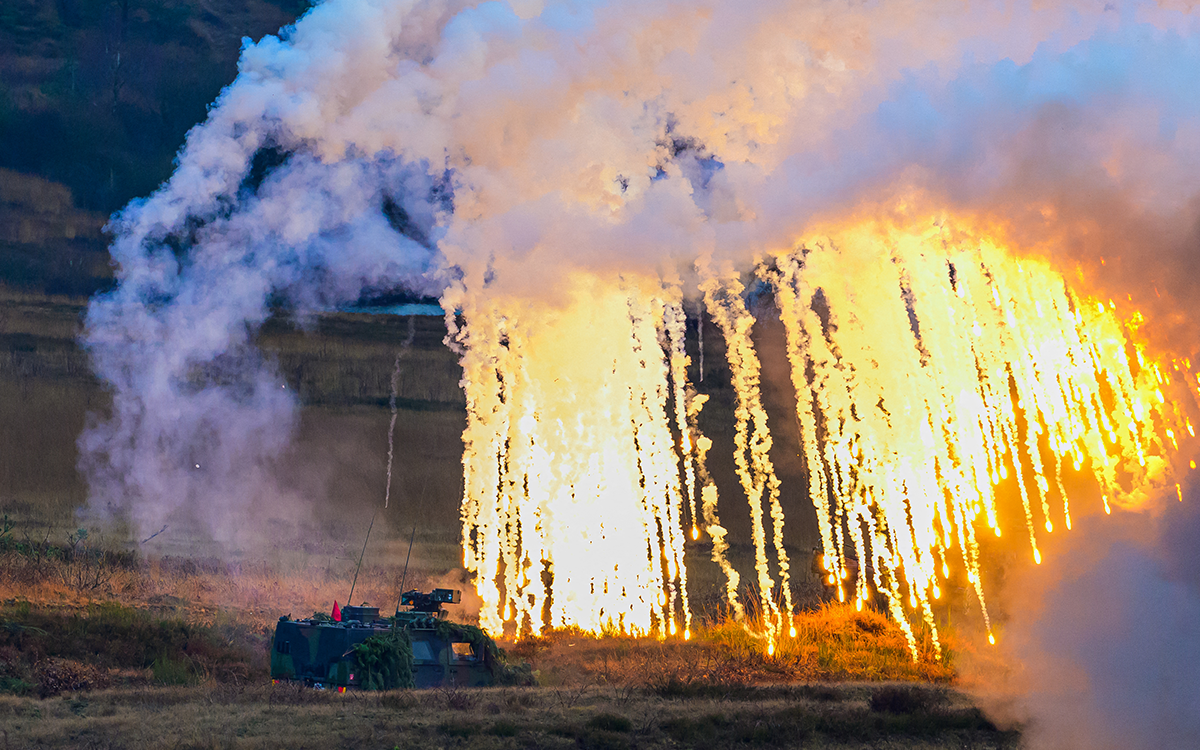
For 2026, three strategic implications stand out: First, the nuclear grey zone is not a marginal or temporary phenomenon but a structural feature of European security that will define how deterrence and non-proliferation interact along NATO’s Eastern flank.
Second, layered deterrence will only work if investments in long-range conventional capabilities, missile defense, and resilient C2 are matched by coherent political signaling, robust crisis management, and sustained alliance cohesion.
Third, the price of inaction is not stability but a growing permissive space for Russian coercion and an erosion of confidence in the non-proliferation regime. Therefore, the question is whether Europe will shape that space on its own terms or allow it to be defined by Moscow.
In this light, the nuclear grey zone is best understood not as a voluntary European experiment, but as a belated and still incomplete corrective to a strategic environment that Russia has already destabilized. It represents a test of whether Europe can construct a more resilient, layered deterrence system while upholding its long-standing non-proliferation commitments.
Failure to shape this space proactively is likely to leave NATO reacting to, rather than constraining, Russian escalation dynamics.