
Eagle Intelligence Reports
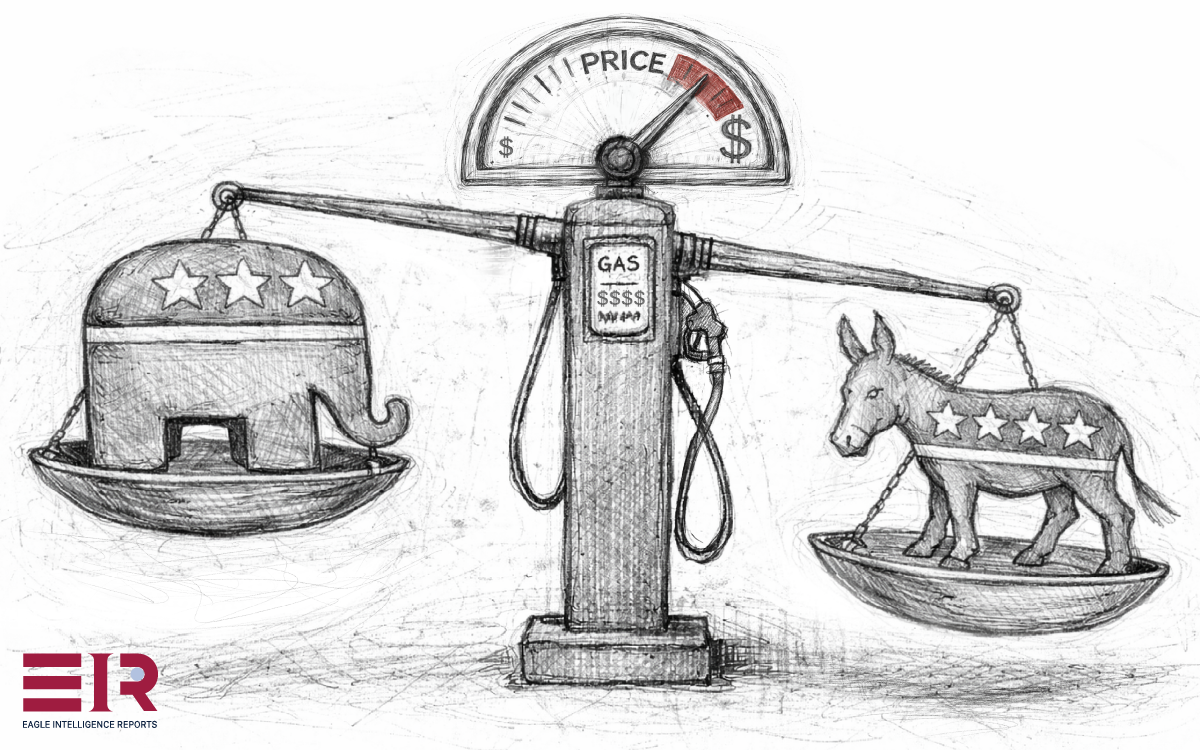
Nothing angers American voters more than rising gasoline prices. They are not only an economic burden but the most direct channel through which the costs of the war with Iran are passed to the American voter. Even with talk of a breakthrough in negotiations with Iran, that relief is not something voters feel right away. As gas prices rise, they push up the broader cost of living and become a barometer of voter anger. For weeks, Americans have been paying more at the pump, adjusting their spending, and absorbing higher costs across daily life—and those effects do not fade quickly. In practice, it often takes months for earlier increases in fuel prices to work their way through the economy. With prices now reaching more than $4 a gallon and inflation rising sharply, the price at the pump is no longer just an economic indicator; it is rapidly becoming a political liability. With midterm elections approaching, it is a political gauge flashing red for Donald Trump and the wider Republican Party.
The price at the pump is no longer just an economic indicator; it is rapidly becoming a political liability as midterm elections approach
The $4 a gallon milestone came not by way of a freak act of nature but as a direct and foreseeable result of a war that Trump started. It reflects a nearly 40 percent increase since the United States and Israel launched the war, with prices surging after Iran imposed a chokehold on the Strait of Hormuz, disrupting shipping routes and tightening energy supplies. Even if the situation begins to stabilize and negotiations move forward, the economic shock has already been delivered. Voters have seen how quickly prices can rise—and how exposed their cost of living is to sudden shifts in U.S. policy. That experience does not fade overnight, and it leaves behind a deeper concern: that what happened once can happen again.
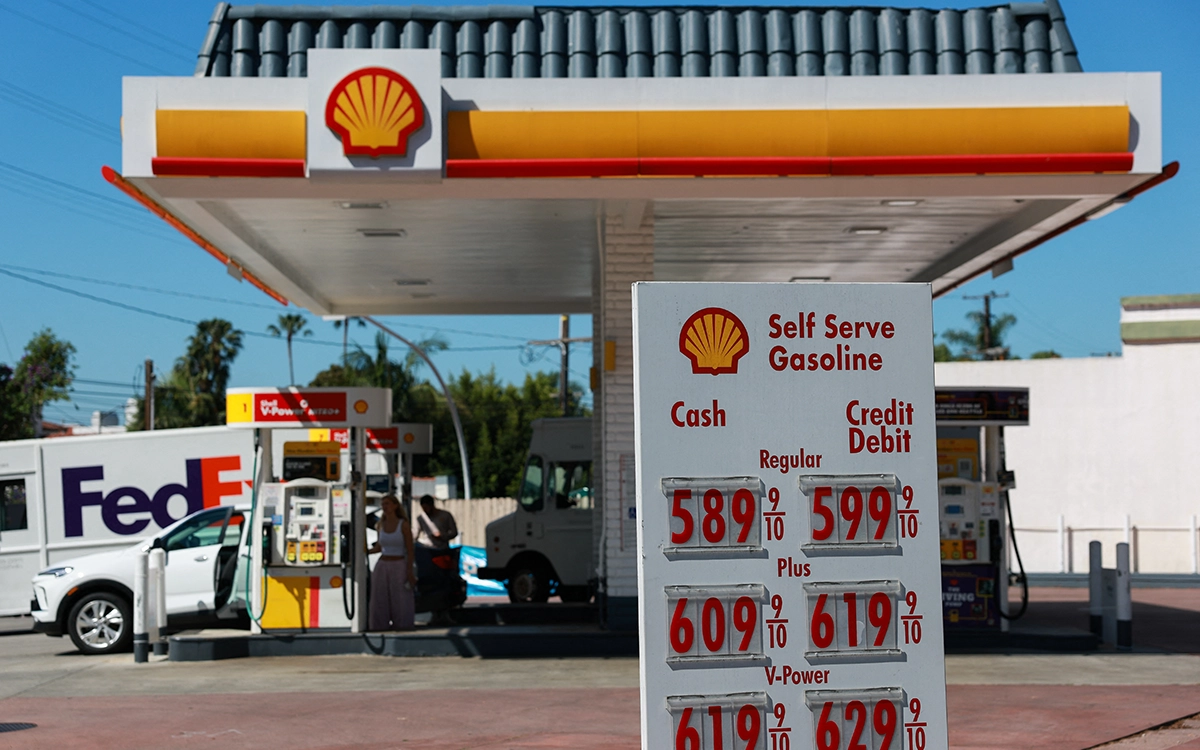
The numbers are undeniable and are reflected in recent reports that consumer inflation rose 3.3 percent year over year in March, up sharply from 2.4 percent in February, the largest monthly change since June 2022. Prices are not only rising; the pace of increase is accelerating, and gas prices are the most visible and immediate effect. It is therefore clear what the core question for the upcoming 2026 midterm elections will be: who will American voters blame for the return of inflation?
If the past is any indication, President Trump and his Republican allies who control Congress will have a hard time escaping responsibility for rising gas prices and the economic woes they generate. When economic conditions worsen and are tied to everyday expenses, voters tend to associate it with the party in power. Should Trump ultimately secure a deal with Iran and frame it as a political victory, voter memory is not so easily reset. The weeks of higher costs and financial strain are likely to linger, shaping perceptions long after the crisis itself begins to fade.
Midterm elections are usually referendums on the policies of the White House occupant. The GOP last controlled Congress and the White House during Trump’s first term in 2017, but lost control of the House when the Democrats won back the lower chamber in the 2018 midterms. It is not unusual for a party that controls both houses of Congress and the White House to lose its hold on power in midterm elections. That pattern becomes even more relevant when voters feel the direct economic effects of policy decisions in their daily lives.
Moreover, as Democrats turn up the political temperature on the issue of affordability, Trump and his allies are feeling the heat. Among Americans who express concerns about rising gas prices, 60 percent in a Yahoo/YouGov poll say Trump deserves most of the blame, far more than those who blame Iran (13 percent) or oil companies (12 percent). While those numbers may shift as conditions evolve, they reflect a broader pattern in how voters assign responsibility when costs rise. Other polls suggest that millions of Americans blame both Iran and Trump. As the President takes to his website telling the country that Iranians are deranged terrorists who attack oil tankers and disrupt global commerce, Americans are increasingly asking a more direct question: Why did Trump start the war in the first place?
Usually, voters turn against war because of casualties. However, the nature of the air war America waged in Iran kept the loss of life relatively low. Instead, the public has focused on the economic problems created by the fighting. As higher energy costs filter through transportation, goods, and services, they create a sustained cost-of-living pressure that is hard to ignore. With diplomatic efforts continuing and the possibility of a deal still on the table, many voters still see little evidence of a clear plan to address the economic fallout. The numbers paint an increasingly bleak picture for Trump, who faces elections in just seven months.
With diplomatic efforts continuing and the possibility of a deal still on the table, many voters still see little evidence of a clear plan to address the economic fallout
According to a Pew Research poll, 7 in 10 Americans believe Trump does not have a clear plan for addressing rising gas prices, and only 24 percent approve of his handling of the situation. That perception is unlikely to shift quickly, regardless of short-term changes in market conditions. It is not a great result for a President who entered a second term emphasizing his economic competence. He promised voters he would restore the purchasing power they had lost under President Joe Biden. Instead, he now presides over the largest monthly spike in gas prices since the government began collecting data on fuel prices in 1967.
The price jump comes amid a broader context of prior price increases linked to Trump’s tariff policies. Now about two-thirds of Americans say Trump‘s policies have made the economy worse—up 10 points since January. Only 27 percent say they approve of his management of inflation, down from 44 percent a year ago, according to SSRS, an independent research firm.
Trump is clearly frustrated by his inability to shift blame elsewhere. In his address to the nation on April 1, the President said, “Many Americans have been concerned to see the recent rise in gasoline prices here at home.” He attributed the increase entirely to Iranian attacks on commercial oil tankers. The administration argues that the war is a temporary disruption that will end once the Strait reopens. That assumption may prove overly optimistic. The effects of higher energy costs do not disappear as soon as supply conditions improve, and the economic impact tends to linger well beyond the initial shock.
Not everyone agrees that the price shock is a flash in the pan. Samuel Tombs, the chief economist at Pantheon Macroeconomics, told CNN that the timeline for “the energy price shock will take many months to play out to other parts of the economy. Goods prices won’t change immediately, but after three to six months, you tend to see energy price changes filter through to consumers.” In other words, the economic impact of today’s price surge is likely to be felt well into the election season. Even if fuel prices began to fall now, broader effects would likely persist up to and beyond the midterms.
The economic impact of today’s fuel price surge is likely to be felt well into the election season; broader effects would likely persist up to and beyond the midterms
One reason gas prices are such a sticky political issue is their frequency and visibility for ordinary people. The average American performs a routine fill-up an estimated 2 to 4 times a month, according to data compiled by Numerator, a Chicago research firm. Moreover, because petroleum is embedded in a wide range of goods and services, many other American products are affected by increases in its price, a factor that drives up overall consumer prices. This means that the effects of higher fuel costs extend far beyond the pump, reinforcing the sense of financial pressure long after prices themselves begin to stabilize.
The political problem is particularly sensitive in states such as Pennsylvania, Michigan, and Wisconsin. All three are political swing states that include significant rural populations, where people tend to drive more miles overall and often rely on larger vehicles that are more expensive to fuel. Rural states are also dependent on products such as fertilizer, which is closely tied to energy markets and vulnerable to fluctuations in flows through the Arabian Gulf. While shifts in global supply may ease some of that pressure over time, the financial strain already felt in these communities is unlikely to fade quickly.
All three swing states provided Trump with the crucial electoral votes he needed to win in 2024. But he secured those votes by promising to fix the economy and kill inflation, which had already begun to decline sharply from the elevated levels created by the Covid pandemic under President Biden. That promise now sits at the center of voter expectations, particularly in regions where rising costs are felt most directly.
Pennsylvania offers a clear case study of how these pressures are playing out politically for Trump and the Republicans. On a recent reporting trip, The Washington Post focused on the campaign of Democrat Janelle Stelson, who aims to oust Republican incumbent Rep. Scott Perry in a district that spans central Pennsylvania. Stelson campaigned in front of a Mobil gas station where the sign behind her read $4.24 for a gallon of regular unleaded and more than $6 for diesel.
Stelson hammered Perry directly for his support of Trump and the war. “The cost of living is crushing central Pennsylvania families, and our congressman, Scott Perry, is making it worse,” she said. “When you’re paying $4 or more to fill up your tank, you feel it. You feel it on the drive to work. You feel it when the school bus routes get cut, and you have to drive the kids yourself.”. Those kinds of experiences tend to linger in voters’ minds, even as broader economic conditions begin to shift.
The Perry race is a microcosm of the Republican dilemma. Perry ran ads in 2024 that knocked Biden over rising gas prices and touted how he “fought” the administration’s energy policy. Now he is the incumbent defending a President who has overseen the largest monthly gasoline price spike in nearly six decades. That kind of reversal is a dream come true for opposition researchers, and Democrats are not letting it go to waste. As J.J. Abbott, a Democratic strategist in Pennsylvania, put it, Republicans “all ran on this key thing that they were going to lower them (gas prices)—and that is the exact opposite of what’s happened.”
The voter reaction on the ground confirms what the polls suggest. Voters at gas stations in central Pennsylvania told reporters they were frustrated by rising prices. Some said their exasperation would make them less likely to vote at all in November, while many described feeling financially squeezed. Others reported altering their daily routines to avoid using more gas, a detail that matters. When circumstances force Americans to change how they live—avoiding errands or skipping drives—they are more than annoyed. They are making sacrifices, and they remember who made those sacrifices necessary. This is particularly important in midterms, where voter turnout is already reduced.
A similar story is unfolding in Michigan, though with an unusual twist. Abdul El-Sayed, a Democrat locked in a contentious Senate primary for an open seat, has been running ads about gas prices at the pump. “You know why gas is so expensive? Donald Trump’s $200 billion war with Iran,” El-Sayed says in one. Moreover, he is running these ads on video displays housed on gas pumps, the symbol of voter grievance, precisely when voters are filling a tank and watching the price soar.
The congressional map reflects the exposure across swing states. Newsweek’s analysis of AAA pricing data found that Republicans risk losing 34 seats where gas prices are rising most sharply. In Pennsylvania’s vulnerable congressional districts, prices now range from $4.08 to $4.10 a gallon, slightly above the national average. Wisconsin’s competitive districts show somewhat lower pump prices. Still, the broader statewide political damage of inflation and the war is real across the Midwest.
Republicans risk losing 34 seats where gas prices are rising most sharply
There’s also an agricultural factor in these swing states that is often overlooked. One campaign aide to a Midwestern Democrat facing a serious Republican challenger told Spotlight PA that the campaign plans to capitalize on the congressional spring recess to assess voters’ struggles with the cost of fertilizer and diesel. “If we had to boil it down to one thing, it is that life is becoming unaffordable,” the aide said. “A lot of people felt like President Trump and Republicans campaigned on affordability and then have done nothing to address it.” Diesel at $5 or $6 a gallon hits farmers on tractors at planting season just as hard as commuters in cars. Voters in Wisconsin and Michigan’s rural districts are often the voters Republicans must hold.
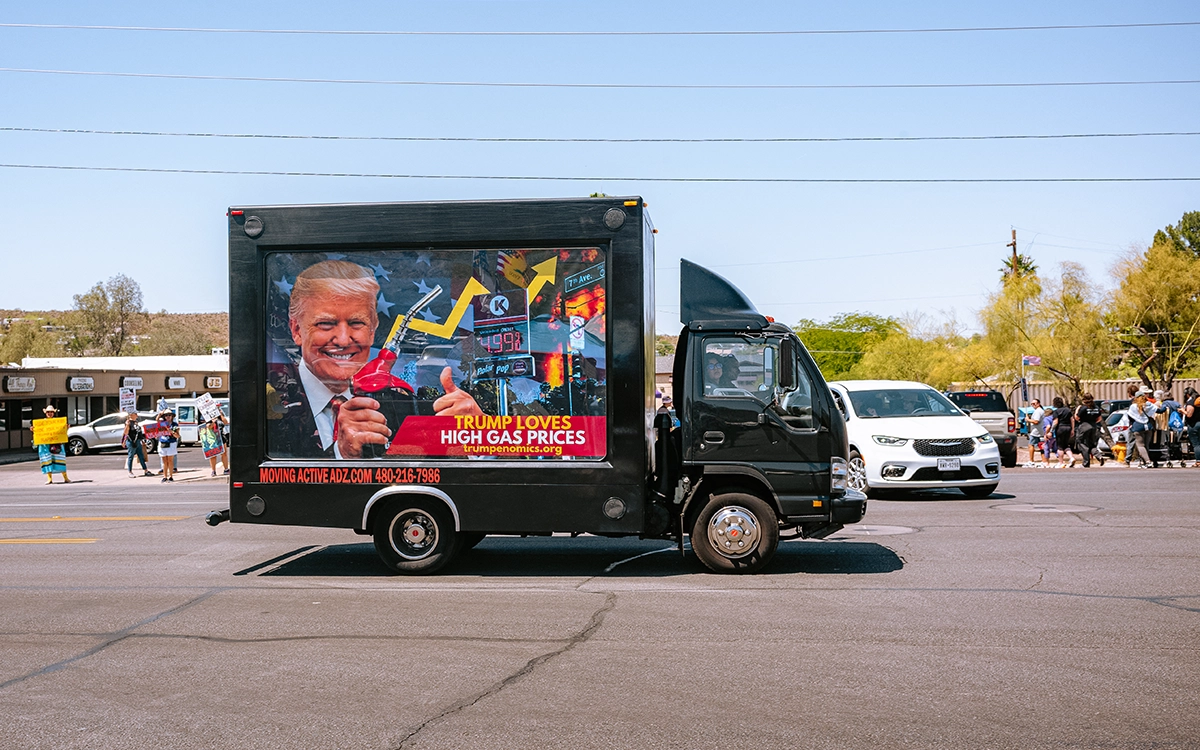
Among Republicans, a telling gap has emerged between support for Trump and perceptions of how he is handling the economy. Only 17 percent of Republicans told Yahoo News that they disapproved of Trump. Yet nearly twice as many disapprove of his handling of gas prices and the cost of living. Such a split exposes erosion that decisively affects turnout, especially in fragile midterm elections. Republican voters do not usually switch parties. They stay home. They lose enthusiasm. The political calculus of indifference is enormously relevant.
Trump’s overall approval on the economy has fallen to 31 percent—a career low, according to SSRS. Many voters who associate his presidency with rising prices blame his foreign policy. An irony buried in that approval rating should keep Republican strategists awake at night. Trump did not just start a war; he did so after systematically dismantling every domestic buffer that might have softened the blow. The EV tax credits, the clean energy subsidies, the fuel economy standards—all were rolled back in the first year of the second term on the premise that American fossil fuel production would keep prices low and stable. Then came the war. The buffer was gone. The shock hit full force. The reality that American prices do not rest solely on domestic oil and gas production levels has set in.
What makes the political situation particularly precarious for Republicans is that the traditional wartime effect—rallying around the flag—has not materialized. It is not providing the cover it once did. Instead, the story of the 2026 midterm elections is being written at the gas pump in central Pennsylvania, on the ads running on fuel dispensers in Michigan, in the quiet calculation of Wisconsin farmers staring at diesel prices at the start of planting season.
What makes the political situation particularly precarious for Republicans is that the traditional wartime effect—rallying around the flag—has not materialized. It is not providing the cover it once did
The question is whether Trump’s loss at the pump translates into a loss at the ballot box. History suggests it often does, but the outcome may depend on how voters judge the months leading up to Election Day. Trump promised he would make life cheaper. Life is more expensive. What matters now is not only where prices go next, but whether Americans feel that stability has truly returned. Voters will decide the midterms on the terrain between that promise and today’s reality.