
Eagle Intelligence Reports
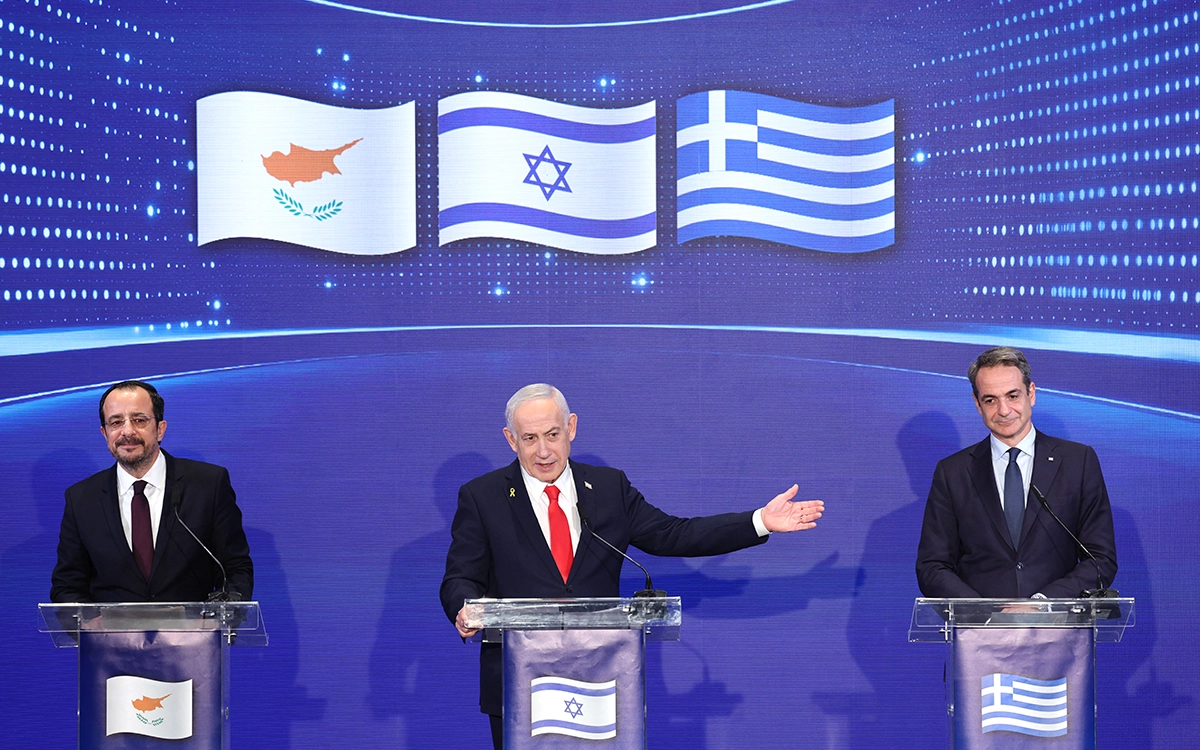
Turkey is not seeking to block Greece–Cyprus–Israel cooperation outright; it is working to ensure that this cooperation does not become the organizing framework defining Eastern Mediterranean power. Its success depends on Ankara’s ability to sustain political and operational contestation that delays trilateral consolidation as much as possible.
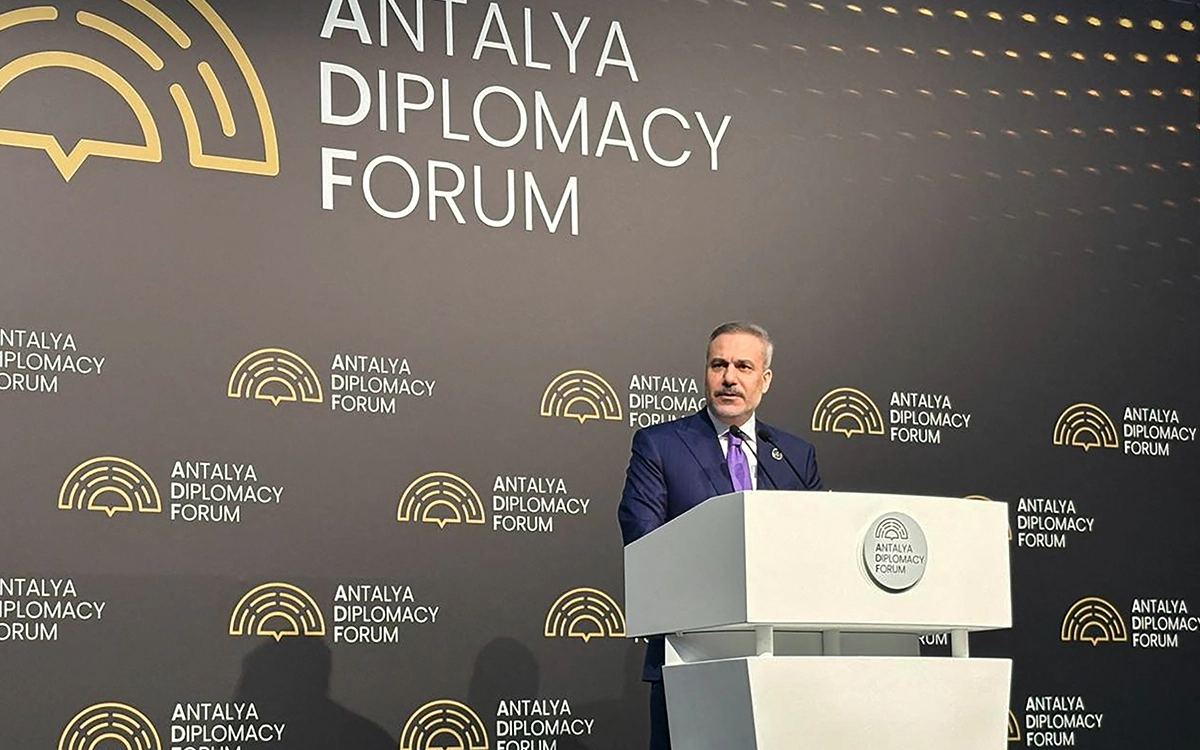
Turkey’s criticism of the trilateral is often described as diplomatic signaling. Turkish Foreign Minister Hakan Fidan’s recent remarks illustrate why. By describing the trilateral as an effort to “encircle” Turkey and arguing that it creates “more problems” and “leads to war,” Fidan did more than express opposition. He reframed the format as a source of insecurity rather than stability, thereby challenging the central claim advanced by Greece, Cyprus, and Israel: that their cooperation contributes to regional stability.
This is only the visible layer of Ankara’s strategy. The statement links political messaging to a broader effort to weaken the trilateral’s claim to be a stabilizing framework. Combined with Turkey’s maritime claims, naval deployments, and exploration activity in the Eastern Mediterranean, this signaling is part of a wider attempt to prevent Greece, Cyprus, and Israel from turning repeated cooperation into a stable regional framework. Fidan’s statement therefore does not stand alone. It operates alongside Turkey’s maritime activity and accompanying legal claims that contest the trilateral’s legitimacy and complicate its energy, security, and infrastructure agenda.
As trilateral cooperation deepens, Turkish responses increasingly target not only specific projects or meetings, but also the conditions that would allow the trilateral to become durable. Ankara therefore does not prevent cooperation itself. Instead, it seeks to keep the Greece–Cyprus–Israel framework incomplete, contested, and unable to define Eastern Mediterranean coordination on its own terms.
Ankara does not prevent cooperation itself. Instead, it seeks to keep the
Greece–Cyprus–Israel framework incomplete, contested, and unable to define Eastern Mediterranean coordination on its own terms
Yet trilateral cooperation has continued, and even deepened over several years, which highlights the limits of Turkey’s approach. Thus the trilateral framework advances even while its consolidation remains exposed to friction and strategic contestation.
To understand what Turkey is seeking to constrain, it is necessary to trace how the Greece–Cyprus–Israel format has evolved. What began as energy coordination has gradually expanded into a broader pattern of political, military, and diplomatic alignment, increasing its potential to function as a regional framework. The trilateral was initiated after offshore gas discoveries in the early 2010s. Israel’s Leviathan field and Cyprus’s Aphrodite field created incentives for cooperation in extraction and export planning. Thus, early discussions focused on infrastructure, particularly the EastMed pipeline.
From 2016 onward, the format became more regular. Leaders’ summits created recurring political consultation among Athens, Nicosia, and Tel Aviv. This was reinforced in 2019 through the “3+1” format with the United States, which expanded the agenda to energy security, infrastructure, and regional stability. Over the next five years, parallel initiatives strengthened this cooperation. The East Mediterranean Gas Forum gave overlapping energy cooperation a more institutional form. Exercises such as Noble Dina expanded in scope, while Greece and Israel deepened defense ties through the 2021 Kalamata training center agreement.
As cooperation deepened, its political framing became more explicit. Greece, Cyprus, and Israel increasingly present the trilateral as a stabilizing structure in the Eastern Mediterranean, describing it as a “strong strategic axis” and a factor of regional stability, while positioning it as a legitimate framework for energy, infrastructure, and security cooperation.
The trilateral is not a formal alliance. However, it has created repeated interaction across energy, diplomacy, and defense, giving the format greater weight in shaping Eastern Mediterranean cooperation. That is precisely what Turkey seeks to contest.
Turkey’s response reflects Ankara’s effort to preserve autonomy between Western and non-Western power centers. It remains a NATO member and maintains ties with the United States and Europe, while also cooperating with Russia in Syria and energy. This positioning allows Turkey to act as an autonomous pole rather than a fully aligned actor. In the Ukraine war, Ankara has maintained relations with both Kyiv and Moscow, facilitated agreements such as the Black Sea grain initiative, and avoided full alignment with Western sanctions. These choices show a consistent multi-alignment posture that retains influence across competing blocs instead of committing to one side.
This logic shapes Ankara’s view of the Eastern Mediterranean. Cooperation among Greece, Cyprus, Israel, and Western partners is not treated as neutral coordination, but rather as an alignment that could narrow Turkey’s room for maneuver in maritime disputes, energy planning, and regional security. The issue is not formal exclusion, since the trilateral is not a closed institution. Turkey’s concern lies in cumulative influence: repeated summits, exercises, and infrastructure initiatives may begin to shape regional practice even without formal institutionalization. If the format stabilizes, it may influence perceptions of legitimacy and feasibility without Turkish participation.
Turkey’s objective, therefore, is not simply to oppose individual initiatives. The aim is to prevent the Greece–Cyprus–Israel format from gaining authority and credibility as a regional framework in ways that limit Ankara’s autonomy. Turkish signaling often appears after exercises, defense agreements, or summits, and links Ankara’s messaging to concrete developments rather than general diplomatic opposition. In April 2026, Fidan criticized the framework following intensified Greece–Israel defense cooperation, framing that cooperation as strategically consequential. A similar sequence appeared in 2020 during debates over the EastMed pipeline, with Turkish officials describing the project as exclusionary.
Turkey’s objective is not simply to oppose individual initiatives. The aim is to prevent the Greece–Cyprus–Israel format from gaining authority and credibility as a regional framework in ways that limit Ankara’s autonomy
In both cases, Ankara responded to visible advances in the trilateral by challenging their meaning. The aim was not to halt cooperation immediately, but to reshape how specific initiatives were understood by a broader public. Activities presented by Greece, Cyprus, and Israel as technical, economic, or stabilizing were recast by Turkey as political in nature. The timing of Turkish statements matters. Turkish signaling targets moments when the Greece–Cyprus–Israel format gains visibility or strategic weight. Thus, Ankara’s messaging works to weaken the framework’s legitimacy before its initiatives become normalized. It also seeks to prevent additional states from joining the framework.
Turkish signaling is reinforced by actions that affect implementation. The 2019 maritime agreement between Turkey and Libya established a corridor across the Eastern Mediterranean, intersecting with Greek and Cypriot positions and proposed energy routes. The agreement introduced a competing maritime framework that affected regional planning. Infrastructure and energy projects linked to the trilateral had to account for overlapping claims, legal uncertainty, and the possibility of Turkish operational activity.
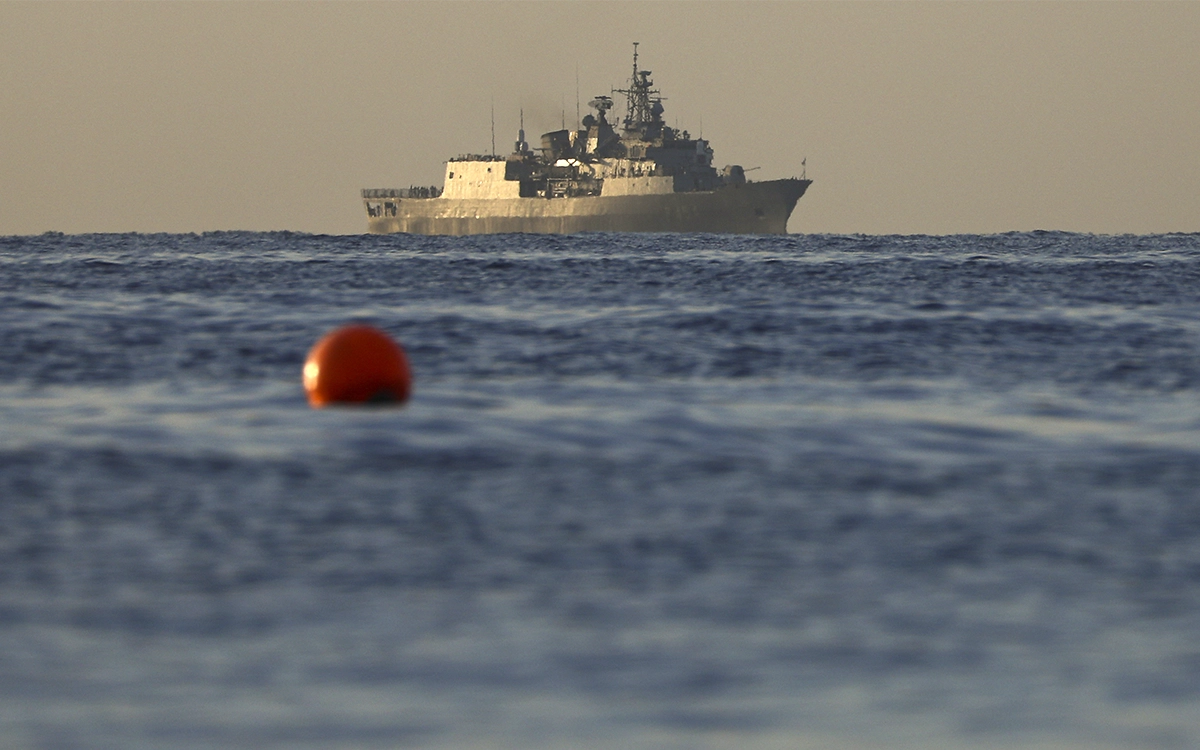
Turkey reinforced this position at sea. In 2020, the Oruç Reis conducted seismic surveys near the Greek island of Kastellorizo, escorted by Turkish naval units. The deployment showed how legal disagreement could become operational pressure. Turkish drilling vessels such as Yavuz and Fatih also operated in areas licensed by the Republic of Cyprus and contested by Turkey.
Yet such actions did not stop Greece–Cyprus–Israel cooperation; they merely changed the conditions under which projects could advance. Energy, infrastructure, and maritime initiatives could proceed, but not as uncontested or purely technical processes. Ankara’s material actions give practical force to its signaling. They help reduce the ability of trilateral initiatives to become stable regional outcomes without accounting for clear Turkish opposition.
The scope of the cooperation is no longer limited to energy development, infrastructure planning, or diplomatic coordination. Israel’s role increases the strategic weight of the trilateral by linking it to ongoing regional conflict. As confrontation with Iran escalated in 2026, the Eastern Mediterranean became more closely connected to active security dynamics across the wider Middle East.
This shift matters because Israel introduces military capabilities, operational requirements, and security priorities into the framework. Cooperation with Greece and Cyprus now intersects with issues of access, logistics, crisis response, and deterrence. For Turkey, this development raises the stakes. A framework connected to Israeli security requirements, U.S. activity, and regional conflict carries greater operational significance.
As the trilateral becomes more relevant to security, Turkish signaling becomes more consequential. Fidan’s characterization of the framework as destabilizing reflects Ankara’s concern that it may consolidate into a security-relevant regional structure. The Israeli military dimension therefore reinforces the logic behind Turkey’s response. As the trilateral becomes more closely linked to active security developments, Ankara’s incentives to challenge its legitimacy and limit its consolidation only grow stronger.
As the trilateral becomes more relevant to security, Turkish signaling becomes more consequential. Fidan’s characterization of the framework as destabilizing reflects Ankara’s concern that it may consolidate into a security-relevant regional structure
External actors further increase the weight of Greece–Cyprus–Israel cooperation. U.S. engagement through the “3+1” format provides political backing and links the framework to broader Western planning in the Eastern Mediterranean. In light of the Ukraine war, European support for energy diversification and related infrastructure projects adds another layer of relevance. Additional actors contribute to this expansion. France has deepened involvement through defense cooperation with Greece and Cyprus, while Egypt plays a role in energy coordination and regional diplomacy, particularly within the East Mediterranean Gas Forum. These connections extend the trilateral beyond a narrow three-party arrangement.
For Turkey, external involvement alters how the framework is understood. The trilateral no longer appears as a limited regional initiative, but as part of a broader alignment involving Western and regional actors. This increases its credibility, while also raising its strategic sensitivity from Ankara’s perspective. Thus, external support for trilateral cooperation produces a dual effect. It strengthens the framework’s political and operational significance, while also making it a more direct target of Turkish responses. As more actors become involved, Ankara has stronger incentives to contest the trilateral’s legitimacy and constrain its consolidation.
These dynamics unfold in an environment where legal disputes, military activity, and energy development overlap. In the Eastern Mediterranean and the Aegean, routine actions can take on strategic significance because they occur within contested spaces. In the Aegean, Greek and Turkish aircraft regularly conduct interceptions around islands such as Lesvos, Chios, and Rhodes. At sea, naval units operate in close proximity in areas contested by Turkey. While these interactions are not directly caused by the trilateral, they shape the broader environment in which Turkish contestation takes place.
South of Cyprus, energy exploration involves international companies supported by external actors. Parallel Turkish operations in areas licensed by the Republic of Cyprus introduce uncertainty and reinforce competing claims. As a result, energy development remains exposed to both political disagreement and operational risk. This environment gives Turkish signaling practical impact, as political statements frame the trilateral as destabilizing, while maritime and naval activity affects the practical implementation of projects. The result is a consistent pattern: Greece–Cyprus–Israel cooperation continues to advance, but Turkish responses prevent it from proceeding uncontested.
Turkey’s approach has produced limited but tangible effects. Greece–Cyprus–Israel cooperation has expanded across energy, diplomacy, and defense, yet it has not stabilized into a framework capable of producing uncontested outcomes. Projects remain exposed to operational friction and Turkish opposition. On the other hand, Turkey has not halted the trilateral, and this marks a clear limit of Ankara’s current strategy. Despite its efforts, the framework continues to deepen over time, and the participation of external actors has increased its political weight. At the same time, Ankara has affected the conditions under which this cooperation develops.
Success, in this context, does not mean preventing cooperation altogether. It means introducing operational and political constraints that complicate efforts to translate repeated interaction into stable, rule-setting authority in the Eastern Mediterranean. The likely trajectory is continued interaction shaped by competing pressures rather than linear consolidation. As trilateral cooperation deepens, Turkish responses are likely to persist through political messaging, maritime claims, and operational activity. But these responses alone will not determine whether the trilateral consolidates.
As trilateral cooperation deepens, Turkish responses are likely to persist through political messaging, maritime claims, and operational activity. But these responses alone will not determine whether the trilateral consolidates
Stronger U.S. support could increase the trilateral’s political weight and facilitate deeper coordination. From a realist perspective, however, greater U.S. involvement is also likely to reinforce Turkey’s perception that the framework constitutes a balancing alignment. This would intensify contestation, as Ankara would likely respond through political and operational countermeasures.
The Eastern Mediterranean is therefore likely to remain marked by continued Greece–Cyprus–Israel cooperation alongside persistent Turkish contestation. The trilateral may deepen further, especially in defense and infrastructure. But its development will continue to face political and operational limits that prevent it from becoming the defining framework of the Eastern Mediterranean.