
Eagle Intelligence Reports
For the Kremlin, the Iran war is not primarily a Middle East crisis but rather a critical opportunity to capitalize on the strategic exhaustion of the Western coalition sustaining Ukraine. Despite Moscow’s deep ties with Tehran, the conflict is a chance to test the West’s capacity. But it also unfolds under conditions beyond Russia’s control, making any strategic advantage contingent rather than guaranteed.
Project Freedom, Washington’s attempt to restore escorted transit through the strait, showed how costly even limited maritime access had become. Before the war, roughly 120 vessels passed daily. The action has tested Iran’s capacity to maintain deterrence in the strait. On May 4, U.S. destroyers escorting vessels near the Strait of Hormuz fired interceptors at incoming Iranian cruise missiles, while U.S. forces also struck Iranian small boats. For Kyiv, the episode is yet another reminder of a larger material problem: every interceptor fired in the Gulf comes from a production base Ukraine also depends on. For Moscow, the longer the Middle East crisis persists, the more favorable its strategic position in Ukraine becomes.
Every interceptor fired in the Gulf comes from a production base Ukraine also depends on. For Moscow, the longer the Middle East crisis persists, the more favorable its strategic position in Ukraine becomes
Moscow did not start the Iran war. It does not control the conflict and has avoided direct military involvement. Still, the crisis matters a great deal for Russia’s war in Ukraine. The Kremlin is watching what follows from it: Western stockpiles under pressure, slower decisions in Washington, higher energy prices, and an American agenda in which Ukraine is no longer the most urgent file.
Whether Moscow can turn the temporary strategic advantage into something more durable depends on how long the strain on Western stocks and decision-making lasts. A prolonged Gulf crisis would keep absorbing interceptors and production capacity, giving Russia more room to intensify pressure in Ukraine. On the other hand, a quick stabilization would leave Moscow with a useful but limited windfall.
Ukraine remains Moscow’s central priority. The Iran conflict is useful because it imposes serious costs on the West while requiring little from Russia. On the day the strikes began, government officials in Moscow said the United States would become preoccupied with Iran and “forget” Ukraine. That was probably closer to the Kremlin’s actual expectation than any official display of concern for Tehran.
Moscow’s conduct has since followed that logic. It condemned U.S.–Israeli strikes while reportedly supporting Iran with satellite data on U.S. military movements. Likewise, it has done little to dispel reports of possible drone transfers. At the same time, Russia has avoided commitments that would draw resources away from Ukraine. Its abstention at the UN Security Council over a resolution condemning Iranian attacks on Gulf states also fits the pattern.
Moscow’s hedging has served a practical purpose. It has allowed Russia to benefit from U.S. overstretch while keeping room for negotiation with Washington on Ukraine. Russian Foreign Minister Sergey Lavrov made the connection between the theaters explicit on March 5, claiming that the United States and Israel intended to draw the Gulf states into conflict “just as the West allegedly drew Ukraine into conflict with Russia.” This was more than just a propaganda line. It folded the Gulf crisis into Moscow’s broader argument that U.S. policy creates conflicts, then lacks the capacity to manage them.
A quick Israeli–American success would shift Western attention back to Ukraine. A severely weakened Iran would also reduce the value of one of Russia’s wartime partners. The Institute for the Study of War has assessed that Russia’s war in Ukraine directly constrains its ability to support Iran militarily. Moscow issued formal condemnations of the strikes but could not shield its partner from them, an asymmetry that Tehran likely finds difficult to ignore. Russia is using a crisis it did not create. But this also means that the Kremlin does not have control over the conditions working in its favor, making any advantage unstable.
Moscow issued formal condemnations of the strikes but could not shield its partner from them, an asymmetry that Tehran likely finds difficult to ignore
The immediate benefit for Russia is economic. Russia’s oil export earnings had reached about $760 million per day after the outbreak of hostilities, while monthly oil and gas sales were expected to rise sharply. Urals prices climbed well above the $59 per barrel assumed in Moscow’s 2026 budget. In March 2026, China and India accounted for almost 90 percent of Russia’s crude exports. The selective opening of the Strait of Hormuz for ships from China, Russia, India, Iraq, and Pakistan reduced the immediate risk to Russian-linked trade.
Yet Russia still sells at a discount, shadow-fleet logistics remain expensive, and sanctions continue to reduce net margins. Furthermore, much of the benefit depends on circumstances Moscow cannot control: disruption in the Gulf, Asian demand, and temporary Western flexibility on sanctions enforcement.
Higher revenues make it easier for Putin to persist with an attrition strategy designed to outlast Western political will, giving Moscow more confidence that it can keep pressing. But they do not remove Russia’s deeper constraints, including manpower costs, pressure on precision-guided munitions, and the limits of import substitution at scale.
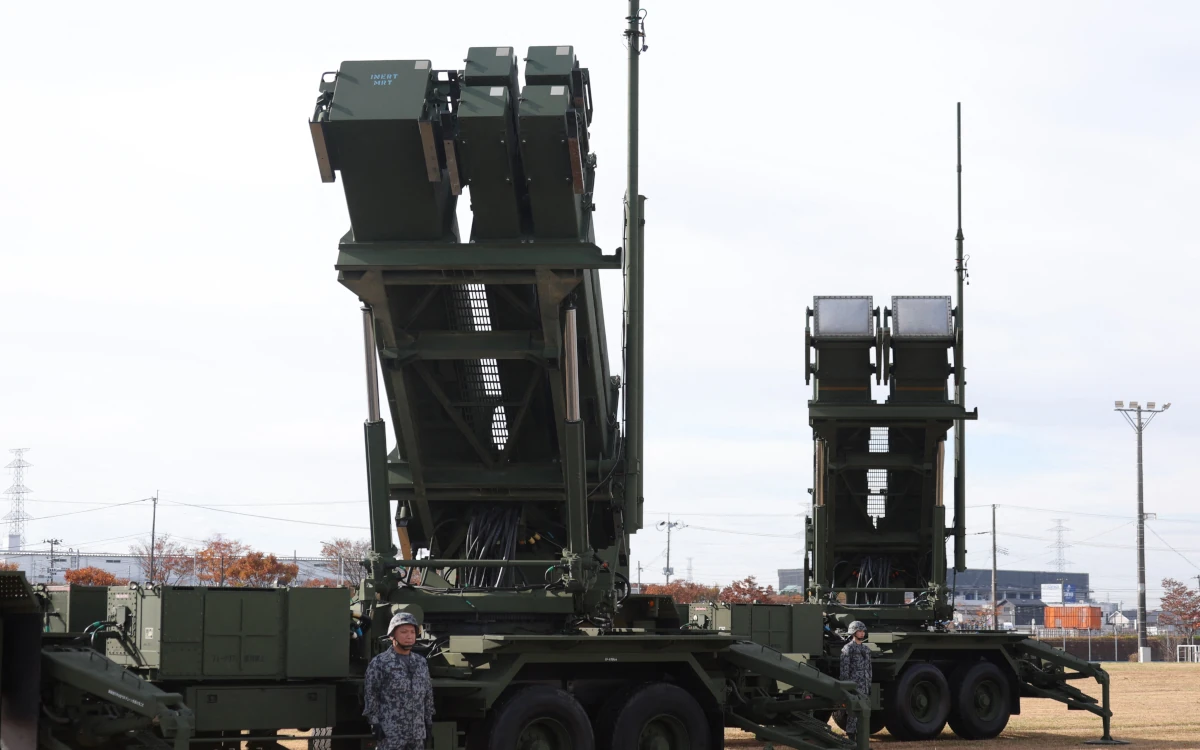
The strain becomes most concrete in air defense, where the Iran war has burned through stocks at a speed that can only worsen Ukraine’s allocation problem. American media reported in early May that the United States may have consumed up to half of its estimated 2,300 Patriot interceptor inventory since February 28. Harvard Kennedy School researcher Linda Bilmes calculated that the United States fired more Patriot missiles in the first four days of the Iran war than it had provided to Ukraine over four years. Volodymyr Zelenskyy also claimed that more Patriot interceptors were used in three days of Middle Eastern combat than Ukraine had received since 2022.
Production cannot absorb this quickly. Lockheed Martin produced around 620 PAC-3 MSE interceptors in 2025 and has announced a seven-year effort to raise annual production toward roughly 2,000. That expansion matters, but it does little for the immediate depletion problem. European GEM-T deliveries from the Schrobenhausen facility will not arrive at scale before 2028. MBDA’s Aster 30 production for the SAMP/T system runs at an estimated 300 per year, against a stated European requirement of 2,000.
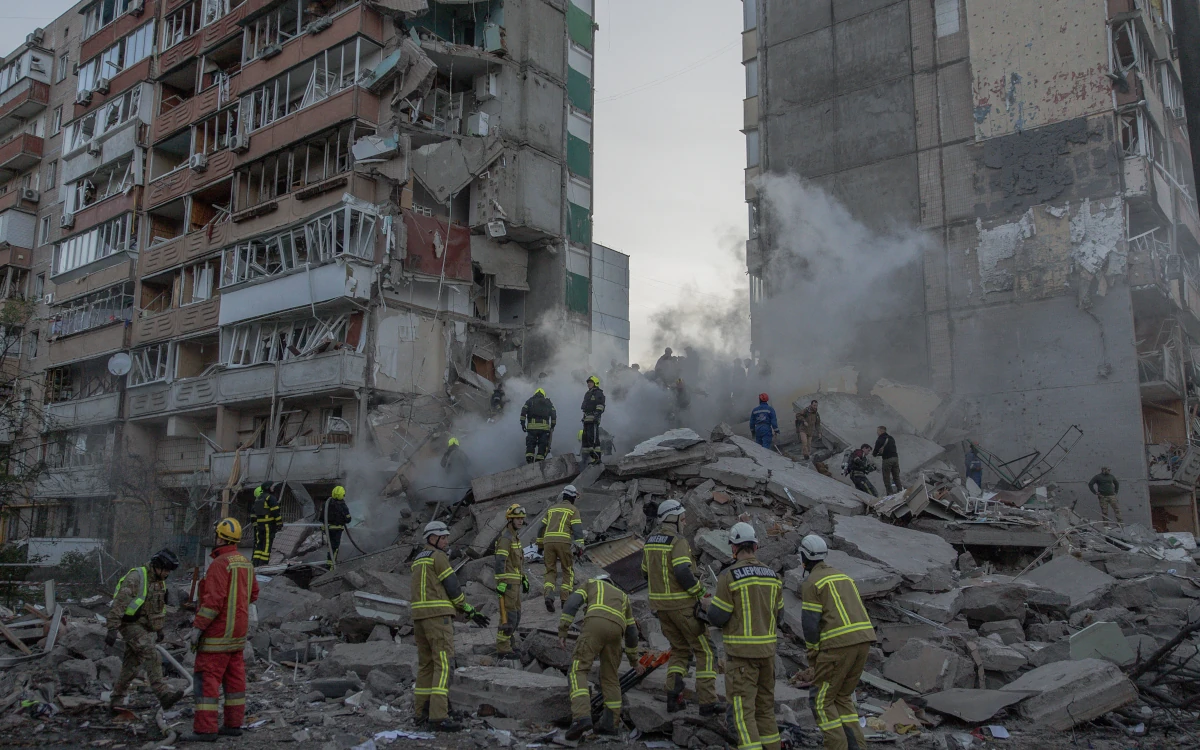
Russia’s strike campaign already works against this weakness. CSIS has shown that Russian strike packages have normalized massed salvos exceeding 700 munitions, often only days apart. In mid-April, Russian forces launched 659 drones and 44 missiles in a single 24-hour period. Ukrainian intelligence estimates a tempo of up to seven large-scale attacks per month. At the same time, the intercept rate against ballistic missiles has fallen to roughly 25 percent. Each salvo forces Ukraine to reserve its best interceptors for the most dangerous threats, so other targets are left exposed.
Moscow does not have to maximize penetration rates in every strike. It can also gain value by forcing Ukraine into punishing allocation choices. A ballistic missile aimed at critical infrastructure may consume interceptors worth several million dollars each. Under sustained strike conditions, successful defense itself becomes too expensive. And the more often Ukraine must make such choices, the more dire the air-defense situation becomes.
Over time, the overall pressure increases within the system. Every interceptor spent against a ballistic salvo is unavailable for cruise-missile defense over energy infrastructure or logistics hubs. If Moscow raises ballistic strike frequency from sporadic to sustained, the allocation problem tightens across several defensive layers at once. The logic does not require a breakthrough but rather sustained pressure to be effective against Ukraine’s air defense. And Europe cannot quickly close that gap. In March, Germany and several NATO partners organized a delivery of 35 PAC-3 interceptors to Ukraine against an estimated minimum requirement of more than 60 PAC-3 interceptors per month. The political will to underwrite Ukraine exists, but the European production base to deliver at the required pace does not.
The political will to underwrite Ukraine exists, but the European production base to deliver at the required pace does not
The air-defense bottleneck is the clearest example, but Russia has also widened its target set. Since autumn 2025, much of Ukraine’s power-generation capacity has been destroyed, damaged, or occupied. Western military officials estimate the figure at roughly two-thirds. Recent strikes have hit power plants, substations, and grid infrastructure across several Ukrainian regions. Since April, Russian targeting has also moved toward water systems and railway logistics. The timing is not incidental: repairs are harder, civilian pressure rises, and military logistics become more fragile.
The effect accumulates across sectors. Energy damage strains cities and industry, while water disruption weakens civilian endurance. Railway attacks interfere with military movement, repair cycles, and the distribution of critical supplies. None of these effects has to be decisive on its own. But together, they raise the cost of holding the line. Ukraine’s domestic drone production helps against lower-tier threats. It also clarifies the remaining dependency. But the hardest gap is still high-end interception—exactly where the Gulf war now competes for supply.
The Iran war is unlikely to push Russia into a major escalation beyond its current pattern. Moscow has room to intensify its efforts in Ukraine, but its own constraints remain visible. Precision-guided munitions are being used heavily, and manpower has become more expensive and scarcer. Defense production can sustain the current war effort, though not an open-ended expansion across every category. Import substitution has reduced some vulnerabilities, but often at higher cost and lower quality. Security Council Deputy Chairperson Dmitri Medvedev’s public acknowledgment on February 23 that “the price of victory matters” was notable in a system that usually insists on limitless resolve. It suggested awareness of social cost, even if it did not alter the Kremlin’s course.
The more likely path is a gradual increase in pressure—larger layered strikes, more attacks on energy and water infrastructure, continued probing of air-defense gaps, and a stronger information campaign around Western exhaustion. This fits Russia’s current position. Moscow does not need a sudden breakthrough if Ukrainian defense becomes more expensive month by month. The Oreshnik strike on Lviv in January also fits this pattern. Its military value was limited. But its political value lay in signaling that Russia still has escalation reserves. Moscow uses such strikes to shape perception while keeping the war inside an attritional framework.
The Iran war also disrupted the diplomatic environment around Ukraine. The January 2026 Abu Dhabi trilateral talks—the first substantive U.S.–mediated progress since the early months of the war—appear to have lost momentum as Washington’s attention shifted toward the Gulf crisis. Kremlin spokesman Dmitri Peskov insisted that Moscow remained “interested” in Trump-brokered talks, preserving a posture of diplomatic availability while the conditions for negotiation deteriorated. By March, Chepa had shifted register: operations in Iran were “unlikely to fully derail negotiations,” but Washington could no longer be trusted as an “impartial and honest” mediator. Moscow was not walking away from formal diplomacy but rather rhetorically weakening the credibility of the mediator.
The Iran war also disrupted the diplomatic environment around Ukraine. The January 2026 Abu Dhabi trilateral talks appear to have lost momentum as Washington’s attention shifted toward the Gulf crisis
Statements from Washington have reinforced the Kremlin’s reading. Trump threatened in late March to halt military deliveries to Europe unless it joined a coalition to reopen the Strait of Hormuz. Vice President JD Vance declared in mid-April that ending direct taxpayer dollars for arms for Ukraine was one of the White House actions of which he was “proudest.” Pentagon policy chief Elbridge Colby told Ukraine’s military supporters that Washington’s assistance “must not rely on significant U.S.” resources. Secretary of State Marco Rubio was the most direct: “If we need something for America, we’re going to keep it for America first.”
For Moscow, such statements confirm a long-standing assumption: Western support is finite not only materially, but politically.
Moscow may still be reading too much into the temporary imbalance. The Gulf war could stabilize more quickly than the Kremlin expects, or the conflict could trigger Washington to move replenishment higher up the priority list. Europe could pool air-defense assets, accelerate joint procurement, and reduce some of the fragmentation that has slowed its response so far. Ukraine may also expand domestic substitutes faster than expected. None of this removes the immediate pressure on Kyiv, but it limits how confidently Moscow can extrapolate from the first phase of the crisis.
A weakened Iran could hurt Moscow as well. Tehran has been useful because it supplies capabilities, creates pressure on the West in another theater, and complicates Western planning. If the war leaves Iran badly degraded, Russia loses part of that external pressure. It would still benefit from short-term Western distraction, but one of its regional partners would be less valuable.
The combined pressure of the Russo-Ukrainian war and the Gulf crisis may also force industrial prioritization that Western governments had previously delayed. What Moscow reads as Western overstretch could, over time, produce shorter procurement cycles, expanded missile production, and a more integrated European defense-industrial response. If the crisis becomes evidence of industrial inadequacy, the political case for rearmament becomes easier to make.
For now, the Kremlin’s window of opportunity is real. Moscow can exploit the imbalance while it lasts, but it is not in a position to directly affect its duration. Russia does not need Iran to win in the Gulf. It needs enough Western depletion to make Ukraine pay the price. In a war of attrition, time itself becomes a strategic resource. For now, Putin still believes it is on his side.
Russia does not need Iran to win in the Gulf. It needs enough Western depletion to make Ukraine pay the price