
Eagle Intelligence Reports
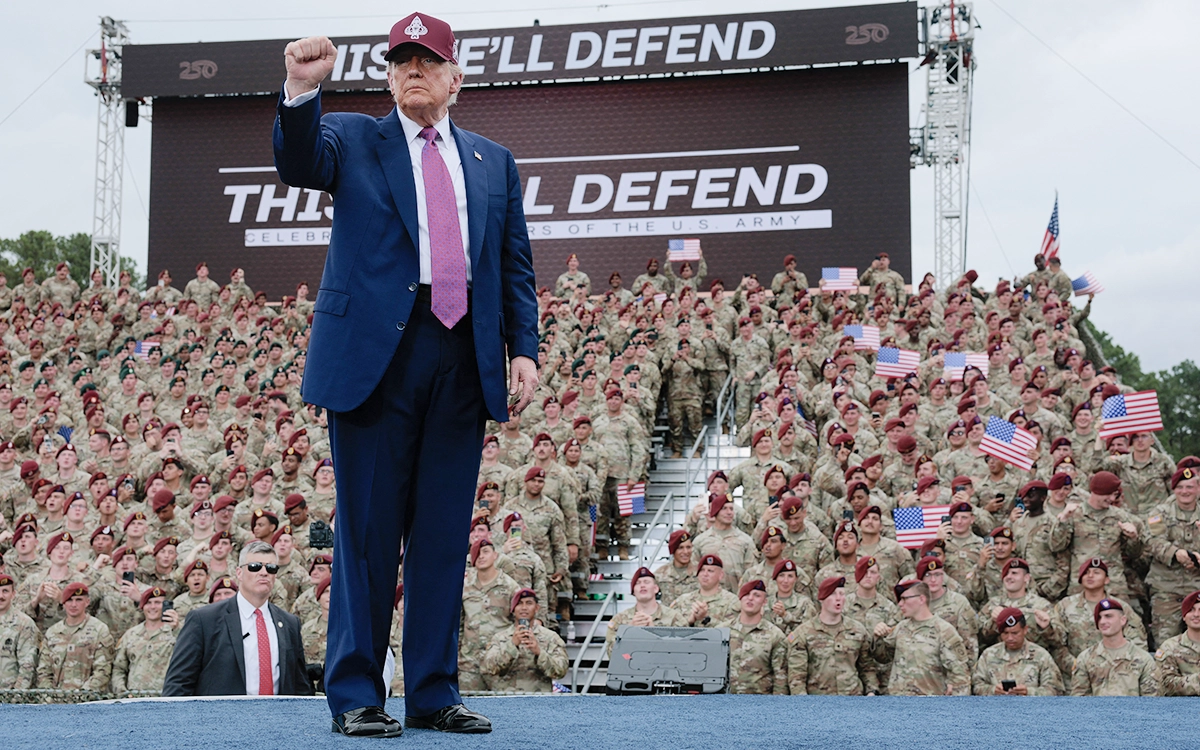
The United States does not suffer from a lack of power, but from a growing inability to convert military superiority into lasting credibility across multiple theaters at once. The gap between the ability to hit and the ability to shape outcomes has become structural, emerging wherever American commitments come under sustained pressure.
Iran, Ukraine, and the Indo-Pacific illustrate this constraint in different ways. In the Middle East, the issue is whether military success can produce a stable political result. In Ukraine, it is whether long-term support can be sustained without a clear end-state. In East Asia, it is whether deterrence remains credible when American power is already stretched elsewhere. Together, these theaters test the coherence of U.S. strategy.
Credibility does not rest on force alone. It depends on the ability to connect action to a durable political outcome, sustain the costs of commitment, and draw limits before escalation turns into overreach. Burden-sharing and cross-theater strain are central constraints. The United States must remain able to act decisively, yet it cannot sustain open-ended commitments in every theater without weakening the very credibility it seeks to uphold. This is the central dilemma that runs through the current U.S. strategic posture.
The United States cannot sustain open-ended commitments in every theater without weakening its credibility. This is the central dilemma that runs through the current U.S. strategic posture
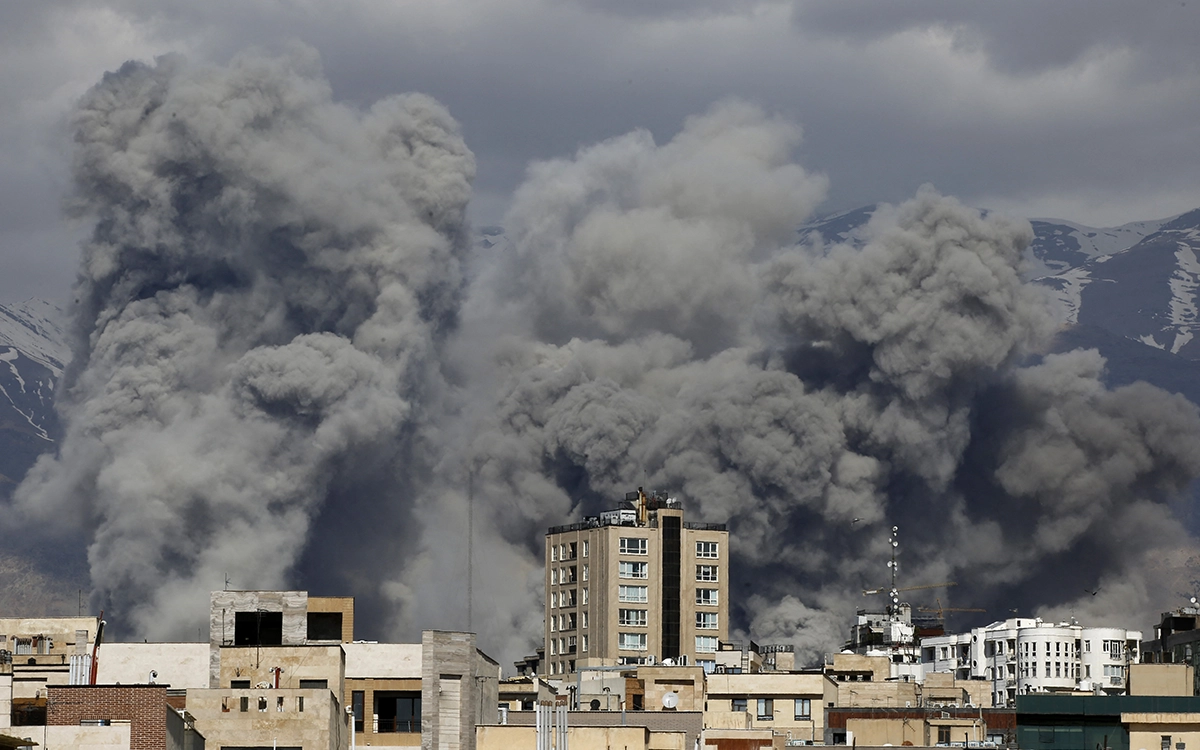
The Iran case most clearly exposes the limits of kinetic superiority when it is not matched by a viable political strategy. Even a successful strike campaign against nuclear facilities, command nodes, or missile infrastructure would not by itself solve the underlying problem or guarantee a stable strategic outcome.
This is precisely where the problem begins. Tehran retains multiple instruments of asymmetric retaliation that are difficult to suppress through airpower alone. Its ability to threaten maritime traffic, raise insurance and transport costs, activate regional proxies, and impose persistent instability across the Gulf means that tactical gains can quickly be offset by wider strategic friction. The Strait of Hormuz is only the most obvious pressure point. The broader problem is that Iran does not need to win a conventional confrontation to impose costs. It only needs to keep the region unstable enough to deny the United States a politically convertible outcome.
This is why the real credibility risk in Iran is not restraint, but incomplete conversion. A United States that can destroy targets yet cannot stabilize the political and strategic environment that follows does not project control. On the contrary, repeated action without a sustainable political result risks reinforcing the perception that Washington is strategically unable to translate military power into a stable post-war order.
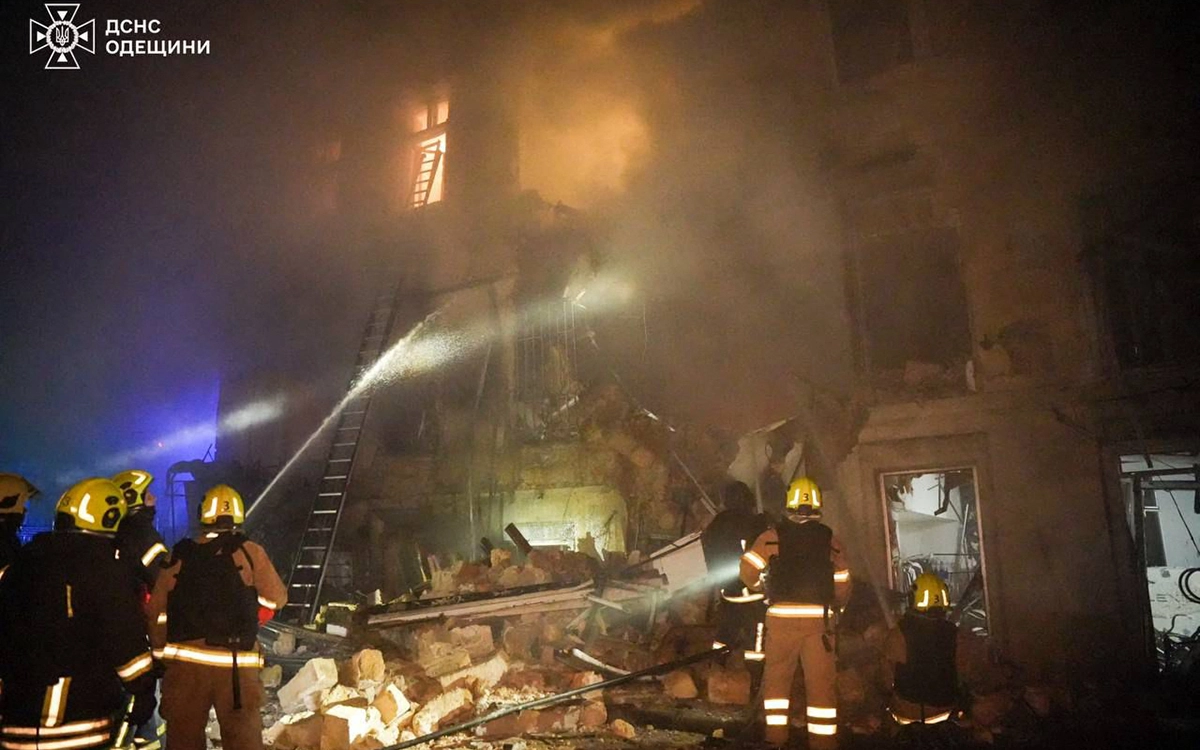
Ukraine reveals a similar structural problem related to whether long-term commitment can be translated into a credible political end-state. The United States has shown it can mobilize and sustain large-scale support over time—financially, militarily, and institutionally. What remains unresolved is the harder question: support for what outcome, under what conditions, and on what timeline?
More than four years into the war, no convincing theory of termination has taken shape. Washington has helped Ukraine prevent defeat, regain initiative at key moments, and raise the costs of Russian aggression. But preventing collapse is not the same as defining a durable settlement. The gap between sustaining resistance and articulating a plausible end-state has become a central weakness of Western strategy.
For European allies, this creates a double uncertainty. They remain dependent on American power yet cannot be certain how long it will be sustained, at what level, or toward which political objective. That uncertainty complicates European planning and weakens deterrence by making U.S. support appear contingent, reactive, and politically reversible.
For Moscow, by contrast, this ambiguity is an opportunity. The Kremlin does not need a decisive battlefield victory to claim strategic advantage. It only needs to outlast a coalition whose military assistance exceeds its political definition of success. In that logic, time itself becomes a weapon. Attrition is not merely a military method, but a political strategy aimed at exhausting Western patience, testing allied cohesion, and exploiting uncertainty where Russian offensives fall short.
That is why credibility in Ukraine erodes through indeterminacy. Support that is real, costly, and operationally significant can still lose strategic effect when its political horizon remains undefined. This is precisely what an attritional adversary like Russia is most likely to interpret as a strategic opportunity.
Credibility in Ukraine erodes through indeterminacy. Support that is real, costly, and operationally significant can still lose strategic effect when its political horizon remains undefined
The Indo-Pacific is where the pressures visible in Iran and Ukraine converge into a broader test of American strategy. In East Asia, deterrence does not rest simply on the superiority of military assets. It is based on the belief that Washington can act with strategic discipline across several theaters at once, distinguishing between core and secondary priorities, defining limits before crises escalate uncontrollably, and sustaining commitments without appearing politically overextended.
That is why Iran and Ukraine matter far beyond their immediate geography. They are read across Asia as indicators of how Washington manages pressure, risk, and strategic sequencing. In Taipei, Tokyo, and Seoul, the question is not merely whether the United States retains overwhelming force. It is whether that force is embedded in a recognizable strategic logic.
If U.S. conduct appears coordinated and disciplined, deterrence in East Asia is reinforced even before any crisis breaks out. But if the situation in Iran suggests action without political conversion, and the war in Ukraine suggests commitment without a defined end-state, the effect is larger than either case alone. The problem is no longer confined to one war or one region. It becomes a question about the reliability of American strategic judgment itself.
For deterrence in the Indo-Pacific, that distinction is critical. East Asian allies do not assess U.S. power only by counting ships, missiles, or bases. They also assess whether Washington appears capable of prioritization, restraint, and follow-through under simultaneous pressure. Once the impression takes hold that American actions across theaters are reactive, uncoordinated, or politically open-ended, deterrence begins to erode at the level that matters most: not material capability, but confidence in how that capability will be used.
In that sense, it will be the Indo-Pacific theater where the global meaning of American conduct elsewhere is ultimately judged. Deterrence against China depends not only on what Washington says or fields in East Asia, but on what its behavior in Iran and Ukraine communicates about its capacity to turn military advantage into durable strategic stability. If that wider pattern appears unstable, even overwhelming military superiority will not fully compensate.
It will be the Indo-Pacific theater where the global meaning of American conduct elsewhere is ultimately judged
Different actors draw different conclusions from the same pattern of American conduct. Yet all focus on the same underlying variable: whether U.S. power follows a coherent logic. In Europe, the central question is whether American commitments remain politically stable enough to support long-term security planning. The result is a gradual search for hedging options, greater autonomous capacity, and fallback arrangements in case Washington’s attention, priorities, or domestic political will shift again.
In the Middle East, the concern is more immediate and operational. Regional partners are less interested in abstract debates about grand strategy than in whether Washington can impose limits on escalation without setting off a wider conflict it may then struggle to contain.
Russia and China draw a different lesson. They are not primarily measuring American force but testing whether simultaneous engagement across multiple theaters produces strategic fragmentation rather than effective control. For Moscow, this means probing whether Western unity can be worn down through attrition, delay, and political exhaustion. For Beijing, it means watching whether U.S. commitments elsewhere reduce Washington’s ability to prioritize, sequence, and sustain deterrence in East Asia.
Across these actors, the core issue is coherence: whether U.S. power is applied within a recognizable strategic logic, whether commitments are bounded by credible priorities, and whether action in one theater reinforces rather than undermines credibility in another.
There is, however, a credible counter-reading of the same evidence. From Washington’s perspective, the absence of a single, publicly articulated grand strategy across theaters is not necessarily a sign of incoherence. It may reflect a deliberate preference for strategic flexibility—the ability to calibrate commitments, shift resources, and adjust political objectives as conditions evolve without being locked into rigid frameworks. What external observers interpret as drift or fragmentation may instead be an adaptive posture suited to a world in which threats are simultaneous, fluid, and resistant to doctrinal solutions. American policymakers may argue that preserving room for maneuver across Iran, Ukraine, and the Indo-Pacific is itself a form of strategic discipline. Flexibility, in this view, helps avoid premature overcommitment and preserves escalation options.
That argument has force, but it also carries a structural risk. Flexibility that is not communicated as intentional becomes indistinguishable from indecision in the eyes of allies and adversaries alike. For this argument to hold, the United States would need to do several things it has so far struggled to do: distinguish clearly between vital and secondary interests; communicate not only the extent of its commitments but also their limits; define political end-states more clearly; and structure burden-sharing arrangements in advance rather than under pressure.
Without these steps, strategic flexibility risks becoming a retrospective justification for what is, in practice, reactive policymaking, and the American credibility gap would continue to widen.
Strategic flexibility risks becoming a retrospective justification for what is, in practice, reactive policymaking, and the American credibility gap would continue to widen
Four scenarios appear plausible. They differ not in military capability but rather strategic intelligibility.
In this scenario, the United States aligns military power with clearly defined political objectives across theaters. Action in one arena no longer undermines credibility in another because priorities are set, limits are communicated, and escalation is managed within a recognizable framework. Iran is contained without sliding into open-ended regional disorder. Support for Ukraine is tied to a clearer end goal. Deterrence in the Indo-Pacific benefits from the impression that Washington still knows how to sequence power rather than merely exercise it. Under those conditions, U.S. credibility strengthens, as allies and adversaries alike see that American force remains embedded in strategic discipline rather than reactive activism.
This scenario represents the ideal but least likely outcome, as it would require a degree of strategic alignment across theaters that Washington has not recently demonstrated. Its value lies less in its probability than in the benchmark it provides. It defines what effective American grand strategy would look like if political will, institutional capacity, and allied coordination were all functioning at their highest level.
This is the most plausible near-term trajectory. The United States continues to act effectively within individual theaters—striking where necessary, supporting partners at scale, and maintaining deterrent postures in Asia. Yet these actions remain insufficiently integrated into a single strategic logic. The result is not failure, but cumulative ambiguity. Washington appears capable, but not always politically directional. It can still manage crises but struggles to convert separate efforts into a coherent order. In such a scenario, credibility does not collapse, but neither does it consolidate. Its strength is uneven—holding firm in the limited military domain but becoming more vulnerable in the wider political arena. Partners continue to depend on Washington, but concern about its staying power grows. Rivals remain cautious but are not fully discouraged from probing vulnerabilities.
This scenario is most consistent with present trends and therefore the most useful baseline for planning. Credibility is neither decisively lost nor firmly restored. The result is a prolonged period in which allies hedge, adversaries probe, and American influence becomes more contested even as U.S. military dominance persists.
In this trajectory, America’s adversaries increasingly exploit simultaneity itself as a strategic weapon. The problem is not that the United States suddenly becomes weak. It is that constant engagement across several theaters produces political exhaustion, fiscal strain, alliance friction, and declining clarity of purpose. Russia continues to wager on endurance over defeat, China tests the outer limits of U.S. bandwidth and prioritization, and regional crises in the Middle East consume attention without producing durable closure. The accumulation of these factors is damaging. Political benefits are outpaced by rising costs, strategic exhaustion begins to affect decisions, and credibility erodes not from a single failure but from repeated exposure without a decisive outcome. In this scenario, American power, though still formidable, becomes less able to reassure allies, constrain adversaries, and manage expectations across regions.
The danger lies in its gradual nature: there is no single moment at which the erosion becomes unmistakable, making it difficult for policymakers to recognize or reverse the trend in time. It is the scenario most favorable to adversaries pursuing attritional strategies, as it rewards patience and penalizes the kind of sustained, politically costly commitment that democratic coalitions find hardest to maintain.
This scenario does not necessarily imply retreat in the crude sense. It assumes that Washington reduces exposure in selected theaters while presenting that reduction as a deliberate act of strategic prioritization rather than a forced response to overextension. Done well, such disengagement could preserve credibility by signaling discipline, hierarchy, and a willingness to distinguish between essential and secondary commitments. Done poorly, it would appear as retrenchment under pressure and accelerate doubt about U.S. reliability. Its success therefore depends less on the material fact of reduced exposure than on the political meaning attached to it. If both allies and adversaries view the limitations as intentional, credibility can be maintained. If they interpret them as reactive, credibility erodes even without a formal defeat.
This is where narrative control matters most. The difference between perceived retrenchment and prioritization depends largely on diplomatic framing and allied buy-in. For European and Indo-Pacific partners, the critical question would be whether disengagement elsewhere is accompanied by credible reinforcement of remaining commitments or signals a broader pattern of withdrawal.
The central dividing line across all four scenarios is clear: the future of U.S. credibility will be determined less by the existence of American power than by whether that power operates within a coherent logic of priorities, limits, and political conversion.
The future of U.S. credibility will be determined less by the existence of American power than by whether that power operates within a coherent logic of priorities, limits, and political conversion
Across Iran, Ukraine, and the Indo-Pacific, the same pattern is visible. Washington can act—and often effectively. What remains far less certain is whether those actions can be translated into stable political outcomes that reinforce rather than dilute strategic credibility.
American power is unlikely to fail dramatically in any single theater. The greater danger is that tactical effectiveness continues without being integrated into a coherent strategic framework. In that case, credibility does not break at a single point. It erodes gradually—through cumulative inconsistency, unclear priorities, and the widening gap between what the United States can do militarily and what it can translate into a durable political outcome.