
Eagle Intelligence Reports
The West’s long retreat from industrial sovereignty was not accidental. Rather, it was the product of sustained faith in market forces and global integration. China, by contrast, has pursued disciplined, long-horizon strategic planning to achieve sectoral dominance across critical industries. The West’s recent response marks a break with market orthodoxy. Yet without institutional durability, comprehensive integration, and long-term strategic coherence, industrial sovereignty will remain an aspiration rather than a structural reality.
For much of the past four decades, Western industrial policy rested on faith in market efficiency. This shift was underpinned by a post-Cold War consensus that embraced market fundamentalism and shareholder value maximization. Influenced by neoliberal economic thought, policymakers viewed state intervention as inefficient “protectionism,” trusting that globalized supply chains and free trade would naturally deliver prosperity and security. Governments and firms cheered the offshoring of production, trusting private capital and global suppliers to deliver minerals and components at the lowest prices. By contrast, Beijing pursued a coherent industrial strategy that integrated mining, processing, fabrication, and export controls into a state-guided economic architecture. The result is a highly asymmetric industrial landscape: China now controls more than 90 percent of global rare earths processing capacity and about 87 percent of permanent magnet fabrication, while accounting for roughly 70 percent of rare earth mining itself.
This dominance extends far beyond minerals. China’s state-led financing has fostered massive capacity in battery materials, photovoltaics, and semiconductor tooling. These are sectors now seen as strategic by Western capitals precisely because Beijing has shown a willingness to weaponize the supply chains that underpin them. China controls over 80 percent of global lithium-ion battery production and 60 percent of semiconductor manufacturing equipment. The strategic vulnerabilities exposed by pandemic disruptions and intensifying Sino-American tensions triggered a policy inversion in Washington and Brussels. Both now frame industrial policy around supply-chain security and industrial sovereignty, aiming to ensure they have the material base and supply chains required for economic strength and military power projection.
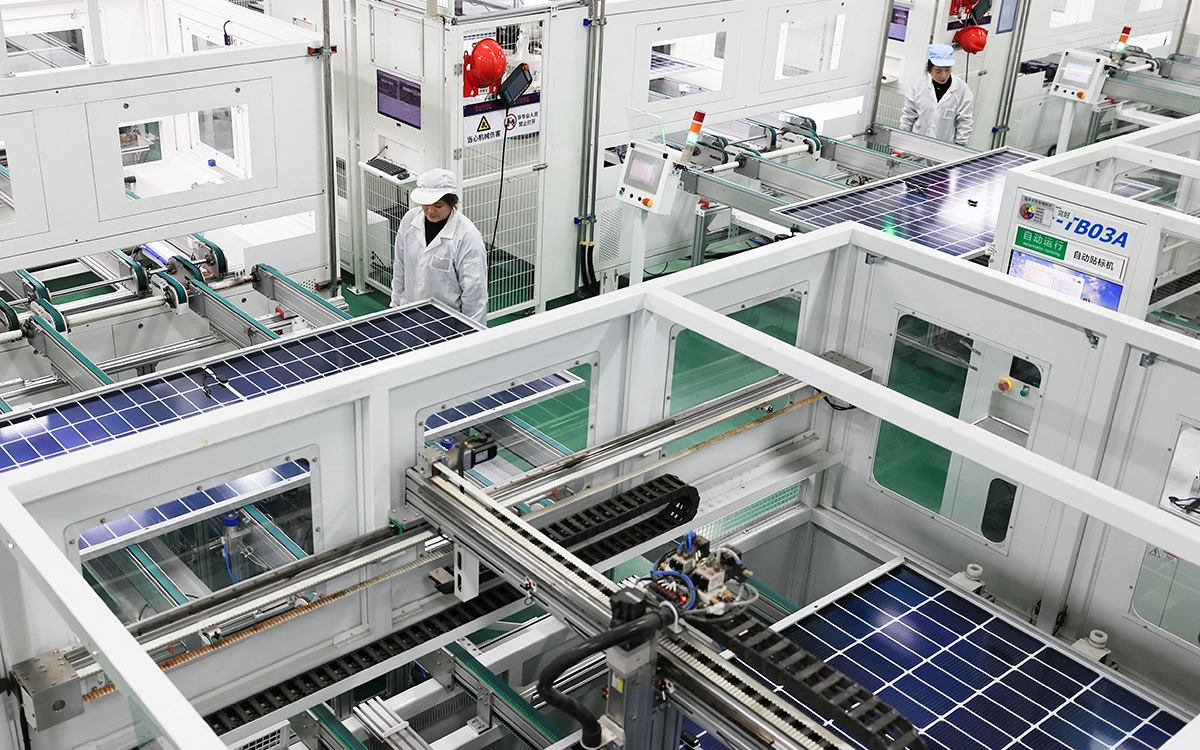
The West’s industrial credo increasingly resembles a “China-light” model: deliberate state intervention to cultivate capacity; targeted subsidies for midstream and downstream fabrication; strategic stockpiling; and government-backed risk-sharing. The difference is not merely semantic—such policies represent a departure from the long-held belief that markets alone could guarantee industrial resilience. Yet the emerging Western industrial base template borrows heavily from the Beijing playbook.
The West’s industrial credo increasingly resembles a “China-light” model
China’s industrial ascent was intentionally engineered, and Western societies were complicit in enabling this long-term strategic play by Beijing. For decades, China deployed credit windows, state-owned enterprise (SOE) financing, and preferential procurement to build vertically integrated supply chains for critical materials and technologies. Rare earth processing, historically capital-intensive and environmentally detrimental, became concentrated under state coordination. This drove down costs, absorbed market volatility, and locked in downstream linkages to magnets, batteries, and technology components essential to modern economies.
The geopolitical leverage embedded in this architecture was laid bare in October 2025, when Beijing tightened export controls on rare earths and related technologies and mandated that foreign firms obtain special permits for exports of products containing Chinese-sourced elements—including those processed outside China. These measures built on April restrictions on targeted items like holmium, impacting the manufacturing of U.S. military systems. Such moves underscored China’s willingness to use industrial clout as geopolitical leverage, something Western policymakers no longer treat as hypothetical. They also help explain Europe’s increasing trade diversification away from the United States.
China’s choice to prioritize processing and fabrication over simple extraction meant that Western mining output—even where it exists—could not easily translate into sovereign industrial capacity. For example, U.S. rare earth reserves held at Mountain Pass in California, which once accounted for a significant share of global production, now require years of reinvestment and capability building to support fully domestic upstream and midstream supply chains.
Faced with Beijing’s industrial depth, Western governments have pivoted toward policies that would have been dismissed as heretical only a decade ago. The United States has issued successive executive orders on critical mineral sourcing, committed billions of dollars in direct incentives, and rebuilt strategic stockpiles. Europe, meanwhile, has launched a “$1 trillion race to rebuild its defense and industrial base.” Taken together, these efforts signal a quiet but consequential shift toward a China-light model: selective state intervention aimed at rebuilding capacity that markets alone failed to sustain.
Western efforts signal a quiet but consequential shift toward a China-light model: selective state intervention aimed at rebuilding capacity
In the United States, this shift is most visible in the growing willingness to deploy public capital directly into industrial nodes that were once left to private risk tolerance. In July, the U.S. Department of Defense became a major shareholder in MP Materials, the operator of the Mountain Pass rare earth mine, in an effort to preserve domestic supply-chain infrastructure. In December 2025, the U.S. Department of Energy followed with an additional $134 million to strengthen rare earth element processing and downstream capacity. Yet even with defense backing and price-support mechanisms, vertically integrated processing and magnet fabrication remain multi-year undertakings constrained by permitting timelines, workforce shortages, and fragile sub-tier suppliers.
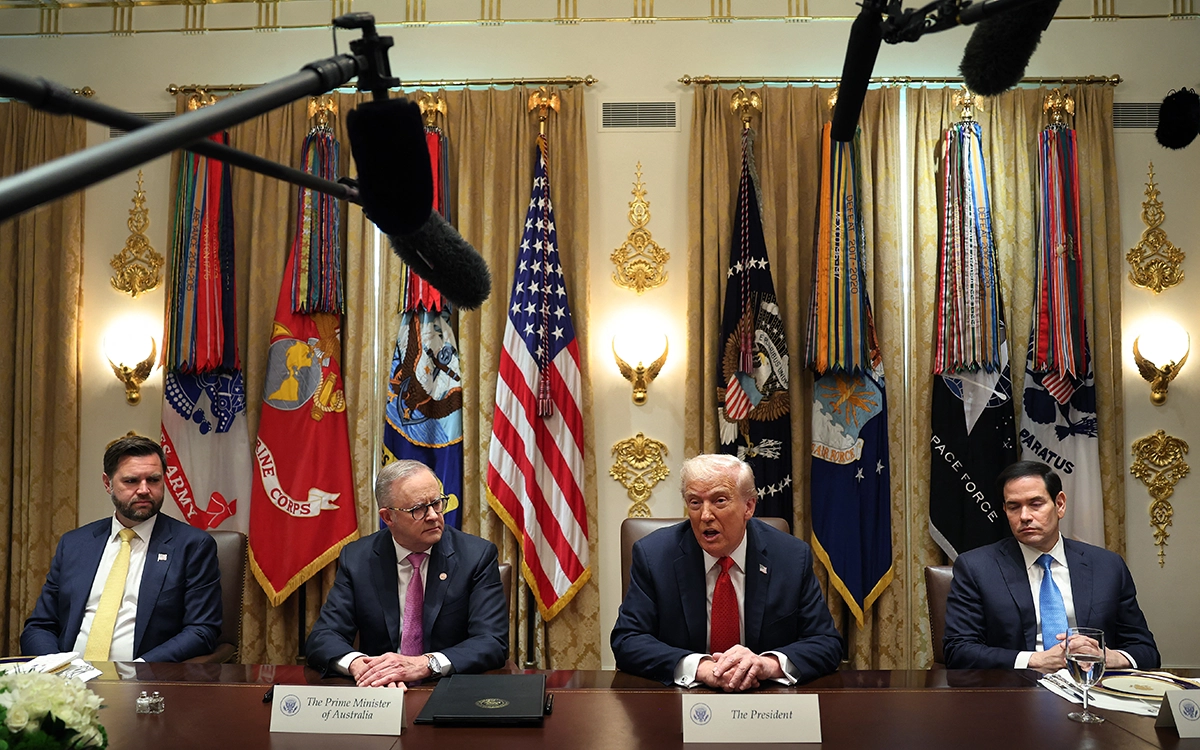
Washington has also leaned heavily on allied cooperation to compensate for domestic gaps. Partnerships with Australia—a major lithium producer and rare earth reserve holder—and other like-minded states are channeling capital into processing capacity outside China through long-term offtake agreements, co-investments, and risk guarantees. These arrangements reflect a growing recognition that industrial resilience cannot be rebuilt through national capacity alone, but must instead be built across trusted, politically aligned networks.
Europe has moved in parallel, but with a more explicitly regulatory edge. The European Union’s ReSourceEU strategy, launched in December 2025, allocates €3 billion to diversify away from Chinese dependencies. It mandates minimum sourcing thresholds for non-Chinese purchases and establishes joint procurement platforms for critical materials. The framework also includes litigation powers to compel diversification, signaling a willingness to move beyond soft incentives toward more durable and enforceable forms of industrial discipline.
Yet despite this surge of activity, critical gaps remain. Western policy remains episodic and politically constrained, lacking the integrated institutional architecture that underpins China’s long-term planning. Subsidy programs often treat mining, processing, and fabrication as discrete interventions rather than as interdependent layers of a single industrial ecosystem. The result is a piecemeal revival of capacity rather than a coherent project of industrial sovereignty.
The scale of the challenge underscores this mismatch. In 2025, the United States produced roughly 45,000 metric tons of rare earths, while China exceeded 270,000 metric tons. China’s reserve base—estimated at 44 million metric tons—dwarfs the U.S. total of approximately 1.9 million metric tons. These disparities are the product of decades of divergent investment horizons and institutional commitments.
Analysts estimate that even under aggressive policy intervention, building independent rare earth supply chains requires roughly ten years to develop new mines and an additional five years to establish full refining capacity—a timeline that could stretch to 15 years for meaningful resilience. This temporal reality exposes the central tension of the West’s China-light approach: it has adopted the tools of industrial strategy without fully embracing the long-horizon governance model that made them effective in the first place.
Building independent rare earth supply chains requires roughly ten years to develop new mines and an additional five years to establish full refining capacity
A China-light industrial policy may reduce dependence, but without strategic coherence it cannot deliver true industrial, mineral, and supply chain sovereignty. Subsidies, stockpiles, and selective reshoring can blunt risk at the margins, yet they cannot substitute for an integrated strategy that treats capacity as a system rather than a collection of discrete projects. The danger is not policy failure but policy mimicry: adopting the outward tools of industrial strategy without the institutional depth that made them effective elsewhere.
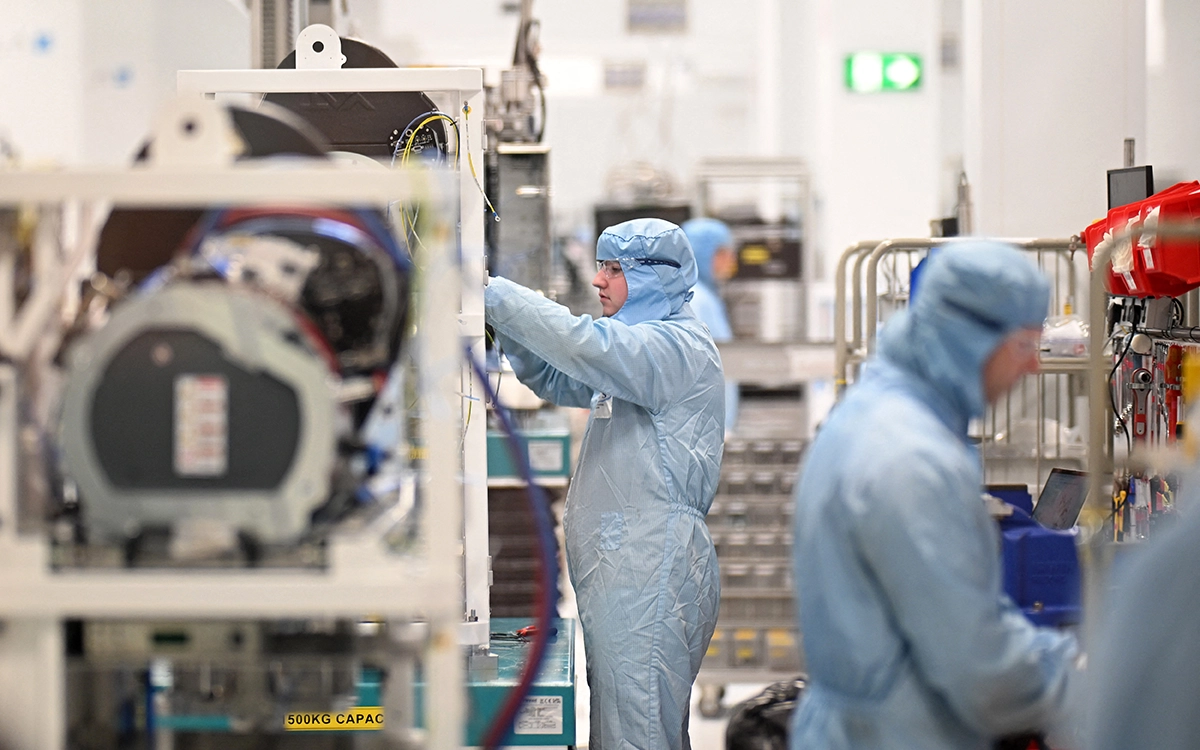
To outcompete China, Western industrial strategy must mature along several dimensions simultaneously. Planning must be integrated across borders, with shared forecasting, harmonized standards, and pooled investment frameworks that allow allied economies to scale demand and stabilize supply. Mining and refining must be tied directly to end-use fabrication through long-term offtake agreements and demand aggregation, ensuring that feedstock translates into industrial output rather than stranded capacity.
At the same time, long-horizon investment vehicles such as sovereign funds or public development banks must absorb the risks that private capital avoids, particularly in midstream processing. None of this is sustainable without institutionalized industrial governance: permanent councils, interagency coordination, and legally durable diversification targets capable of surviving electoral cycles.
Reclaiming industrial sovereignty requires abandoning residual faith in market self-correction, aligning political and investment time horizons, and exercising state capacity
Reclaiming industrial sovereignty will not be easy. It requires abandoning residual faith in market self-correction, aligning political and investment time horizons, and exercising state capacity with consistency rather than improvisation. The stakes, however, are unmistakable. Industrial depth now underwrites technological leadership, economic resilience, military power, and geopolitical autonomy. The West can continue to pursue a China-light approach, or it can build an industrial strategy of its own in substance. The choice will determine whether industrial policy becomes a bridge to sovereignty or merely a slogan.