
Eagle Intelligence Reports
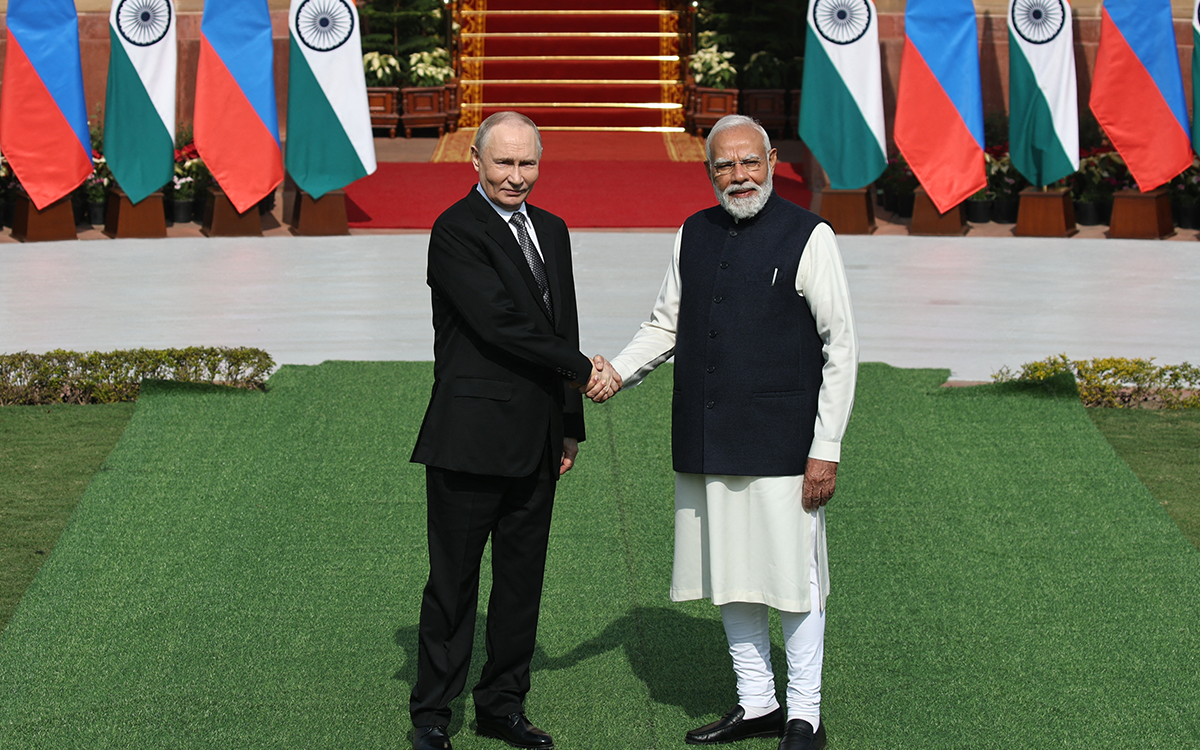
An unanticipated consequence of Russia’s invasion of Ukraine has been the strengthening of ties between Moscow and New Delhi, particularly in the energy domain. The India–Russia axis has been one of the world’s most enduring great-power partnerships. On December 4, Prime Minister Narendra Modi personally greeted President Vladimir Putin at the Indira Gandhi International Airport, marking Putin’s first visit to India in four years. This gesture underscored the political significance of the 23rd bilateral summit between the two leaders.
Putin launched the India-Russia summit process 25 years ago, and all recent Indian and Russian governments have prioritized maintaining healthy bilateral relations. However, New Delhi and Moscow face substantial challenges in converting their recent war-boosted ties into a sustained long-term partnership, resembling the much stronger Sino-Russian alignment.
New Delhi and Moscow face substantial challenges in converting their recent war-boosted ties into a sustained long-term partnership, resembling the much stronger Sino-Russian alignment
Moscow’s invasion of Ukraine ruptured Russia’s energy relations with the West. The resulting boycotts, sanctions, and complications compelled Russia to seek new oil importers and offer hefty discounts. India seized the opportunity to acquire more oil at substantially reduced cost. Russian crude sales to India jumped from $2.3 billion in 2021 to $52.7 billion three years later. As a result, the Russian government received financing for its war efforts, and some Indian refineries made lucrative deals re-exporting this oil as refined petroleum products to European and other foreign clients.
Meanwhile, the recent energy boost has supercharged bilateral commerce, which had stagnated at around $10 billion annually for years. Indian-Russian trade now exceeds $65 billion a year and could reach triple digits by the decade’s end if growth trajectories continue.
Russian analysts see India, with a population ten times Russia’s and an economy twice as large, as a critical pillar of a more multipolar world; a worldview harmonious, but not identical with that of the Indian leadership. Russians also appreciate that New Delhi has never supported Western sanctions against Moscow despite its military aggression in Afghanistan, Georgia, and Ukraine. In his recent meetings with Putin, Modi has endorsed a peaceful resolution for the Russia-Ukraine war while declining to press for any particular solution.
India needs Russia to maintain its large arsenal of previously purchased Soviet and Russian weapons. India’s growing economy makes it an extraordinarily lucrative market for Russian arms. Russian geopoliticians also want to diversify their Asian partnerships to hedge against overdependence on Beijing.
US pressure on India both encourages and constrains the India-Russia partnership. During his first term, Trump followed the contours of all post-Cold War US presidents and sought to strengthen ties. For example, his administration facilitated Indian purchases of high-tech US products and signed major defense cooperation agreements.
But during his second term, though, India’s trade imbalance with the United States, its purchases of Russian oil, and other issues precipitated the most severe crisis in India-US relations in decades. Not only did the administration impose tariffs on India at an extraordinary 50% rate, but Washington also applied secondary sanctions on entities supplying Russian oil to India.
The US tariffs have impeded direct Indian goods sales to the United States. They have also discouraged Western investors aspiring to use India as a re-export platform to circumvent tariffs on China. Meanwhile, during Trump’s second administration, unlike his first, US relations with Pakistan have substantially improved.
Trump’s unexpectedly harsh treatment of India has transformed the debate among the country’s foreign policy experts. Previously, many questioned the wisdom of remaining so close to Russia, a declining yet troublesome power. On top of Moscow’s unwillingness or inability to balance China, India’s refusal to confront Russia over Ukraine antagonized Western governments.
But Washington’s abrupt singling out of India for punishment has genuinely irritated and confused Indians. Some media sources attribute Trump’s treatment to pique over Modi’s refusal to support Trump’s claim of having averted a potential nuclear war between India and Pakistan in May.
Those Indian experts who accept at face value Trump’s stated justification for the tariffs (India’s large imports of Russian oil) complain bitterly that US sanctions on Iranian oil during the first Trump administration led them to substitute Russian deliveries for Iranian supplies, even as China boosted its Iranian energy imports. They also castigate US policies as hypocritical, citing Washington’s tolerance of China’s imports of Russian oil and US imports of Russian uranium for reactor fuel.
Yet, these developments not only drive Indians away from the United States but also make New Delhi cautious about further alienating Washington by deepening ties with Moscow, especially at a time when India is negotiating tariff reduction with the United States.
Yet, these developments not only drive Indians away from the United States but also make New Delhi cautious about deepening ties with Moscow
Indian-Russian commerce may have surged in recent years, but one critical fact remains unchanged: their trade is incredibly imbalanced. While India spends over $60 billion annually on Russian imports, Russia buys a meager $5 billion worth of Indian goods each year. A compounding problem has been Western sanctions barring Russian-related transactions from using Western financial systems. The resulting forced use of their national currencies has given Russia an enormous stockpile of Indian rupees that is unusable in non-Indian markets.
Russian investment in India also lags far behind bilateral hopes. Although India has received billions of dollars of inward investment in recent years, Russia’s share of this FDI has lagged far behind that of the United States, European countries, and Japan.
It is hard to imagine how India and Russia can overcome these imbalances. Modi and Putin discussed expanding investment opportunities, especially in advanced technologies, but these would benefit Russia in disposing of its surplus Indian currency. They also advocated loosening visa requirements and giving skilled Indian scientists and engineers more opportunities to work in Russia, given that their employment prospects in the US have dimmed.
But Russian oligarchs, dozens of whom accompanied Putin, will find it challenging to engage with an Indian economy transitioning from dominance of a few large state-run enterprises, as in Russia, to a complex network of small private businesses. Meanwhile, Indian entrepreneurs often lack the resources to exploit potential trade and investment opportunities in the opaque and corrupt Russian market.
Though both governments want to increase Indian exports to Russia, projects for critical mineral joint ventures or a free trade agreement with the Moscow-led Eurasian Economic Union are embryonic. High costs and adverse geopolitics continue to stymie Indians’ use of Russia’s Northern Sea Route through the Arctic, the Chennai-Vladivostok Maritime Corridor, the proposed International North-South Transport Corridor, and possible energy pipelines connecting India and Russia through Central Asia or the South Caucasus.
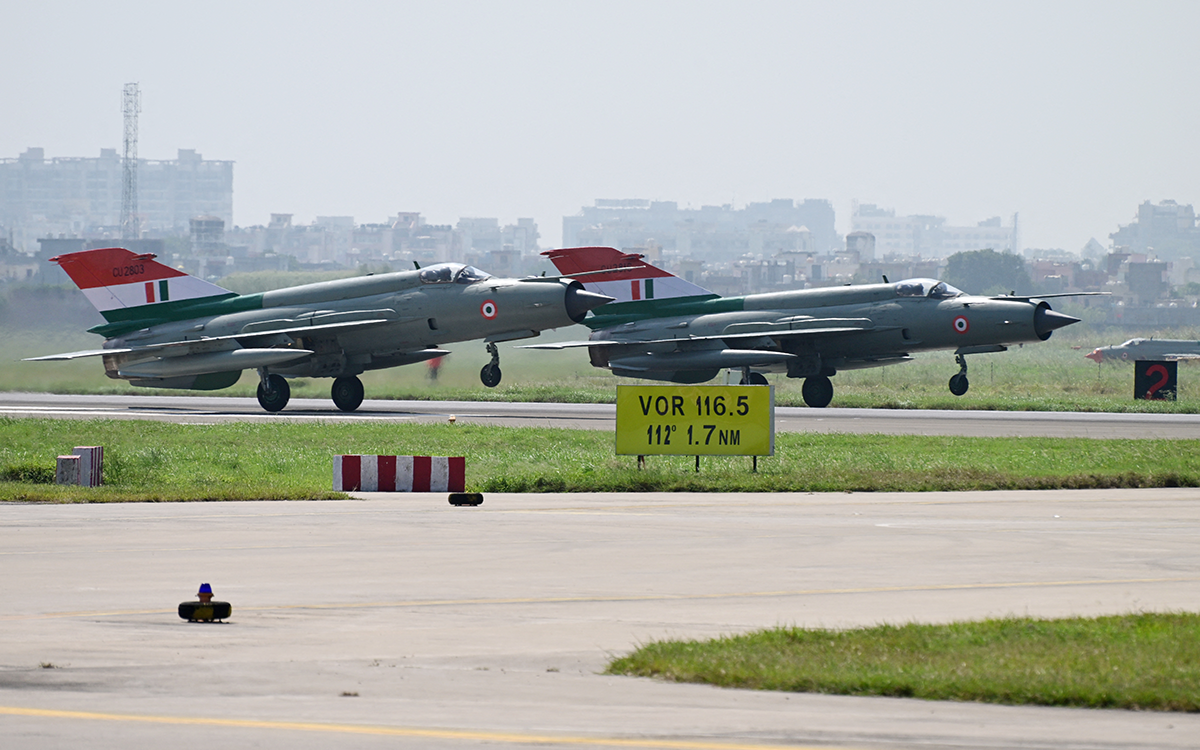
Russia’s share in the Indian defense market continues to decline. During the Cold War, India purchased almost all of its arms from the Soviet Union, either through “turnkey” deliveries or licensed production. The large number of weapons Moscow has sold to New Delhi over the years has sustained substantial Indian purchases of spare parts, upgrades, and maintenance contracts. In addition, India has continued to purchase select Russian platforms that offer a good price-performance ratio, i.e., when they cost less than competing Western systems but perform almost on par.
Moreover, since the Cold War, India has diversified its arms suppliers to include Israel, European countries, and the United States. The growing Indian economy has enabled New Delhi to buy the best weapons available, and Western arms suppliers have become more willing to provide it with sophisticated military hardware. For example, the Indian decision this summer to purchase German diesel-powered submarines will transform India’s conventional submarine fleet from its Soviet origins to NATO standards.
Moreover, India has encountered recurring defects, delays, and cost overruns with its Russian weapons contracts. Despite Russian arms suppliers’ pledges to share more military technologies and support local employment and manufacturing by Indian sub-contractors, Russian performance often lags behind Russian promises.
Similarly, Russia’s demanding war in Ukraine has decreased the arms Moscow can make available for Indian defense procurement. Moscow’s poor military performance in Ukraine has also amplified Indian concerns about Russian defense technologies. These considerations might explain why the recent Modi-Putin summit failed to announce any new arms deals.
Indians remain concerned that Moscow’s close ties with China will further disadvantage New Delhi. Russians are similarly wary of growing Indo-US security ties. Ironically, these anxieties help drive the New Delhi-Moscow partnership. They both fear losing the other partner.
Indians remain concerned that Moscow’s close ties with China will further disadvantage New Delhi. Russians are similarly wary of growing Indo-US security ties
Meanwhile, Sino-Indian tensions, New Delhi’s concerns about antagonizing Washington, and the growing gap between Russia’s unbalanced relations with India and its deeper alignment with China have stymied Moscow’s efforts to create a robust Russia-India-China troika.
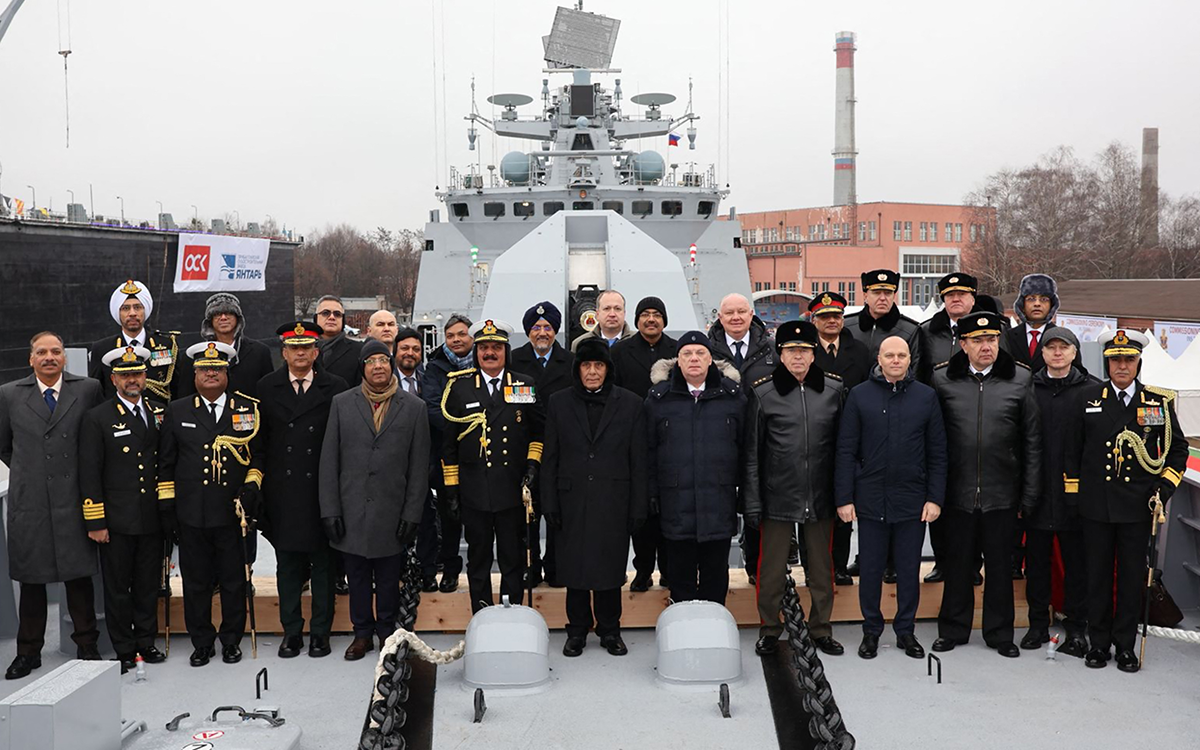
Though India buys more Russian oil than China, the PRC has provided more comprehensive economic support for Russia, including transferring technologies and dual-use goods that substitute for Russia’s out-of-reach Western imports. Russian and PRC diplomats regularly issue joint declarations supporting Moscow’s position on global issues. In the security domain, China has become Russia’s favorite exercise partner. Russia’s military engagements with the PRC are larger, more varied, and more frequent than its modest drills with India. In recent years, the Indian military has held more exercises with the United States than with Russia.
Indo-Russian relations could widen and deepen if they overcome these obstacles. Ties could also stabilize at current levels, given confounding variables and how both countries prioritize strategic autonomy. Most likely, India and the United States will continue to compartmentalize their security cooperation with Russia and economic competition with China.
India’s strained relations with the Trump administration may lead New Delhi to pursue closer ties with both Beijing and Moscow, directly and through multilateral structures such as the BRICS and the Shanghai Cooperation Organization, to hedge against a sustained rupture with Washington. For instance, the three governments might agree on trilateral trade liberalization, joint Chinese-Russian ventures in India, or Russian-supported military confidence measures along the Sino-Indian border.
Many variables could constrain the significant progress of Russian-Indian ties. Geoeconomic concerns may compel New Delhi to decrease its Russian oil imports. Reduced dependence on sanctioned Russian defense technologies would also expand opportunities for the Indian defense sector. Additionally, the PRC may exploit its leverage over Russia to compel Moscow to decrease weapons sales to India.
Similarly, other variables could ease India-US strains. The US Supreme Court or Congress may curtail Trump’s tariff powers. A comprehensive Russian-US or Iranian-US reconciliation could end the US sanctions on Indian oil imports from these countries. Modi could regain favor with Trump if he nominates the US president for a Nobel Peace Prize.
So far, the leadership and trade tensions between New Delhi and Washington have not disrupted their robust arms sales, joint exercises, or other military interactions. If this bifurcation continues, US-India defense ties, supplemented by Indo-European and Indo-Israeli military cooperation, could channel New Delhi’s alignment toward Russia primarily in the economic domain.
Europeans can play a crucial stabilizing role by helping keep India from moving too close to Russia and too far from the West. The French, German, and UK ambassadors published an unprecedented op-ed highly critical of Putin in The Times of India, shortly before he arrived in New Delhi. Yet, many European countries want India’s refined petroleum products, arms sales, and investment. In return, Europe offers Indians advanced technologies and educational opportunities.
Europeans can play a crucial stabilizing role by helping keep India from moving too close to Russia and too far from the West
In this multi-alignment scenario, the balance of power in South Asia would persist, with India sustaining close ties with Russia, but also de facto helping Washington balance China.
India’s central challenge lies in managing asymmetric dependencies while maximizing its gains and autonomy, a task made more complex by Russia’s strategic constraints.