
Eagle Intelligence Reports
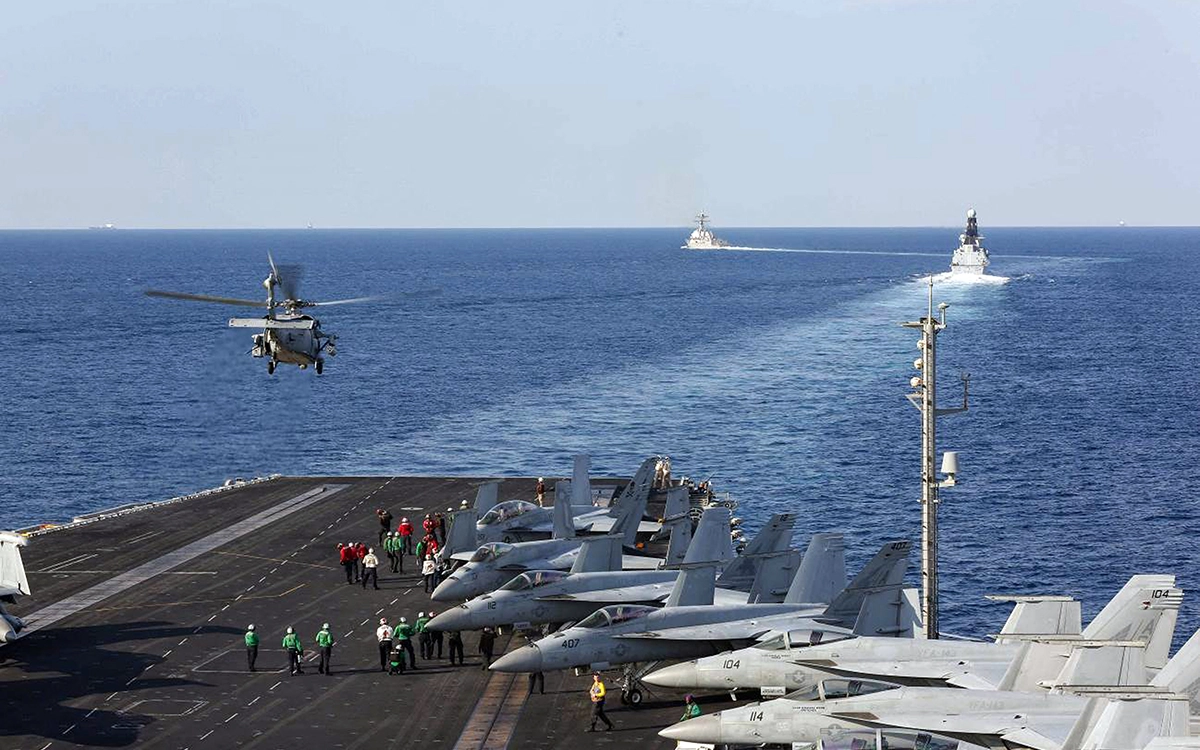
The deployment of a U.S. “massive armada” to the Middle East is an instrument of coercive diplomacy designed to deter Iranian aggression while creating leverage for negotiations. President Trump has underscored this by emphasizing his desire to make a deal, a pattern consistent with his historical use of visible force deployments as instruments of leverage rather than as linear precursors to war.
Yet, the more important question to ask is not the size of the force, but whether it is operationally actionable. The publicly observable force composition suggests a posture optimized for signaling and coercive pressure. It appears deliberately bounded by design, lacking the complex architecture required to wage a sustained strike-and-occupy campaign. While the deployment offers a potent “day one” capability against Iran, it lacks the critical elements of logistics, intelligence, and electronic warfare necessary for a military campaign lasting weeks or months.
The U.S. naval force composition suggests a posture optimized for signaling and coercive pressure. It appears deliberately bounded by design, lacking the complex architecture required to wage a sustained strike-and-occupy campaign
The current buildup is, by design, highly visible. The arrival of the USS Abraham Lincoln carrier strike group in the Arabian Gulf region serves as the centerpiece of a deliberate show of force. Paired with official statements about expanding military options, the deployment generates undeniable coercive leverage. This posture serves a dual purpose: it reassures regional partners of American commitment while forcing Tehran into a difficult strategic calculus. Diplomatic messaging runs in parallel to this military signaling. Iran’s leadership has signaled a conditional openness to “fair” talks, while rejecting negotiations conducted “under the shadow of threats.” This is a classic response in a coercive bargaining contest.
However, this visible posture is primarily defensive and politically calibrated. The reinforcement of regional air and missile defenses, for instance, is oriented toward absorbing potential retaliation rather than enabling offensive escalation. This is a necessary step for both genuine readiness and credible coercion. Furthermore, warnings from regional partners about the risk of spillover further constrain U.S. decision-making. Regional governments understand that Iranian retaliation would likely target U.S. forces and associated infrastructure on their territory. This dynamic forces Washington to weigh the sustainability of any military operation against the political cohesion of its regional coalition, reinforcing the conclusion that the current posture functions as a political instrument, not just a military one.
More broadly, the current posture reflects binding political and alliance constraints that limit the United States’ ability to translate raw military capability into sustained action. Regional basing access is politically contingent, and host governments face domestic and economic risks should escalation trigger Iranian retaliation. Energy markets remain acutely sensitive to Gulf instability, while disruptions to maritime traffic would impose global economic costs that Washington would be forced to manage. Coalition cohesion thus becomes an operational variable. In this context, the visible buildup appears intentionally bounded—large enough to impose risk and signal resolve, but calibrated to avoid forcing partners into early commitments to a prolonged conflict they did not choose. The posture is probably best understood as constrained by design, not merely transitional.
The visible buildup appears intentionally bounded—large enough to impose risk and signal resolve, but calibrated to avoid forcing partners into early commitments to a prolonged conflict they did not choose
A credible strike capability requires far more than warships and aircraft; it depends on a complex architecture of systems and enablers that are conspicuously absent from the public record. Whether the objective is a limited punitive strike, a sustained degradation campaign, or a counterproliferation effort against hardened targets, all would hinge on three critical areas in which the current U.S. posture appears deficient.
First there is a gap in command, control, and intelligence integration. A recent readiness exercise in the region tested the dispersal and sustainment of airpower, but this points more toward defensive preparation than offensive integration. A posture ready for imminent action would require substantial numbers of Intelligence, Surveillance, and Reconnaissance (ISR) aircraft dedicated to target development, pattern-of-life analysis, and battle damage assessment planning. While some specialized surveillance aircraft have arrived, these deployments do not yet approach the scale required for a complex, multi-day air campaign against Iranian air defenses and targets of interest.
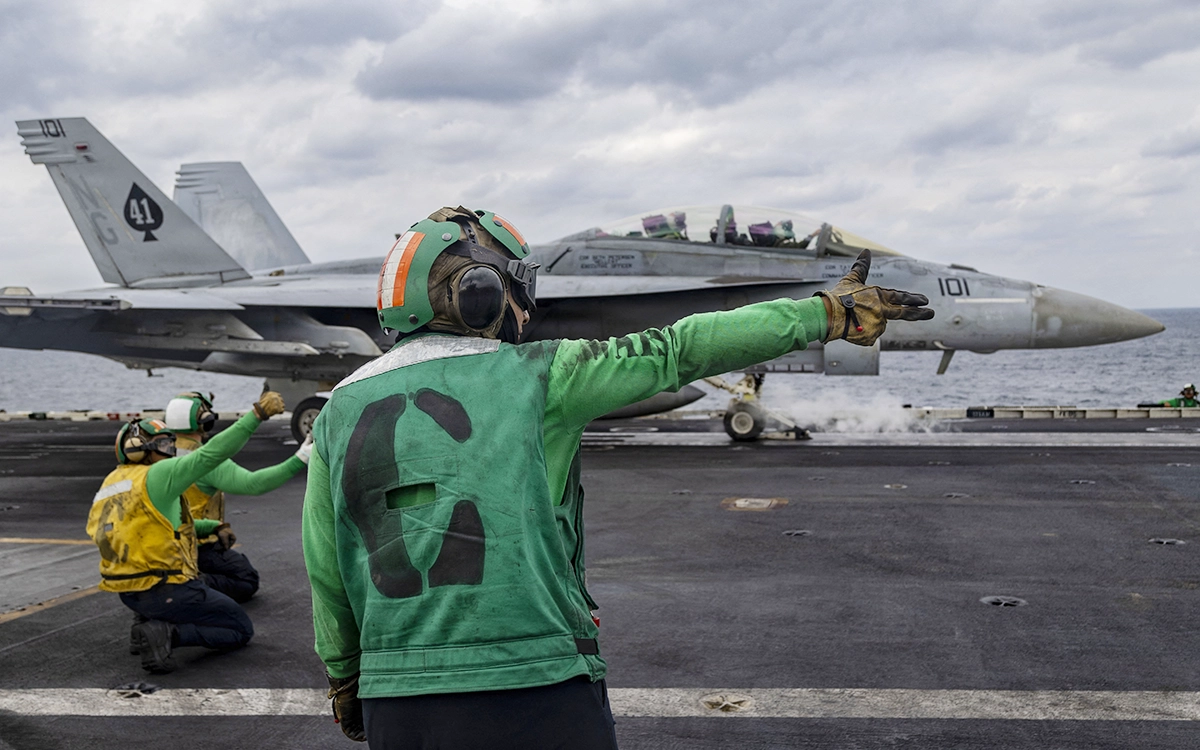
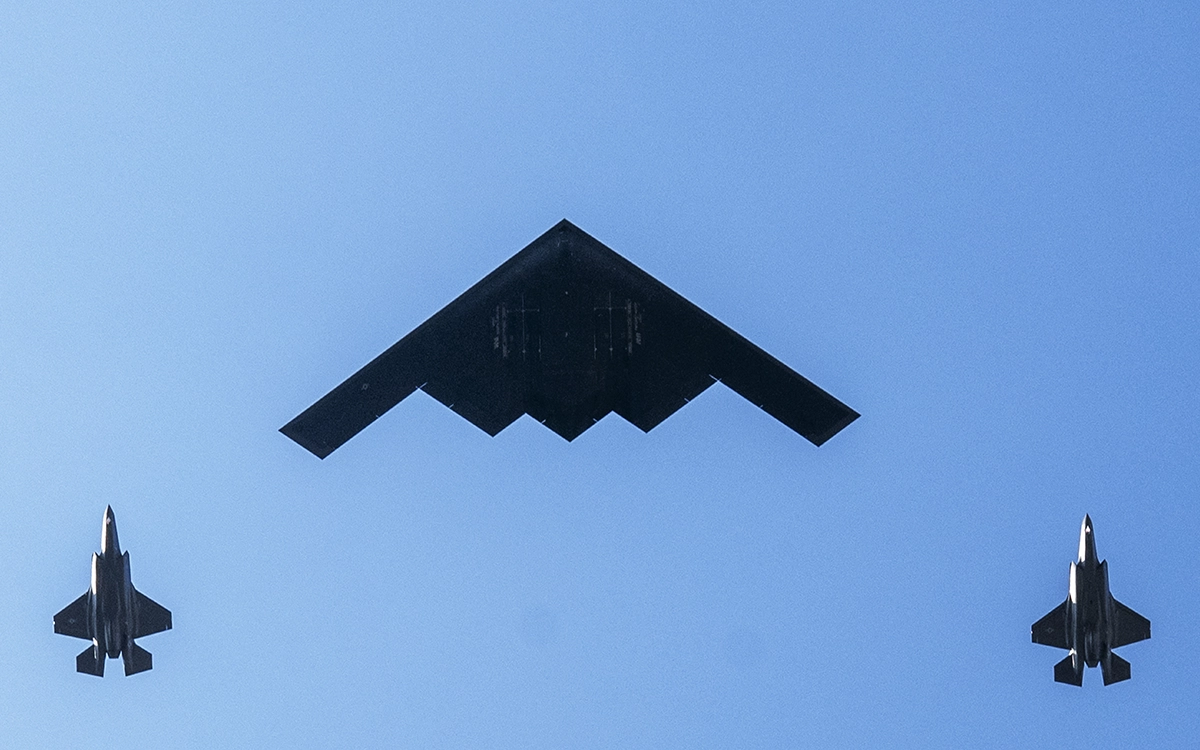
Second, the deployed U.S. force lacks the logistical depth for a sustained offensive. Aerial refueling capacity is the most critical and telling indicator. Carrier-based aircraft have limited range and payload without tanker support, and any sustained air operation against Iran would depend heavily on a surge of aerial refueling aircraft. Given a lack of reports about tanker deployments to the region, U.S. strike capacity remains limited to short-duration sorties rather than sustained operations. Similarly, there is no public evidence of a pre-positioned surge in the specialized munitions required to attack hardened or buried targets, including facilities associated with Iran’s nuclear program or regime leadership bunkers. This omission does not preclude the use of long-range assets such as B-2 stealth bombers, which are capable of flying a 37-hour strike mission from Missouri to Iran and back to Missouri. But it does underscore the lack of assets optimized for sustained combat.
Third, the current posture appears to lack specialized offensive enablers. Any strike beyond a symbolic volley of standoff missiles would require a dedicated Suppression/Destruction of Enemy Air Defenses package—known as “SEAD” and “DEAD”—to neutralize Iran’s integrated air defense systems. While some electronic warfare assets are present, there would need to be a deployment of EA-18G Growlers and F-16 Wild Weasels at the outset of any major air campaign. Absent these dedicated packages, risks to U.S. and allied aircrews would be substantial, rendering a large-scale offensive risky.
The U.S. buildup in the region clearly appears deficient in three critical areas: a gap in command, control, and intelligence integration; a lack of logistical depth; and the absence of specialized offensive enablers
Iranian retaliation would likely unfold along three response pathways, each with direct implications for U.S. operations. First, direct military responses—including ballistic and cruise missile attacks on regional bases and infrastructure—would test U.S. force-protection capabilities and strain host-nation tolerance for continued operations. Second, indirect and proxy-based actions, ranging from militia attacks to cyber operations and maritime harassment using drones and mines, would create new regional friction points and impose costs. Third, regional economic pressure via shipping disruption and sustained low-level escalation would become a difficult burden for Washington and its partners to absorb. Each pathway exploits coalition vulnerability rather than U.S. military tactical weaknesses, reinforcing why sustainability and political cohesion are just as operationally decisive as the strike package enterprise itself.
The more consequential asymmetry, however, lies in endurance. The United States bears higher political, economic, and alliance-management costs as a crisis lengthens, particularly if regional bases and shipping lanes stay under sustained threat. Iran, by contrast, has historically demonstrated a greater tolerance for protracted pressure, economic disruption, and indirect conflict. This imbalance incentivizes Tehran to extend crises rather than resolve them quickly, imposing cumulative strategic and political strain on Washington by keeping confrontation unresolved.
Iran has historically demonstrated a greater tolerance for protracted pressure, economic disruption, and indirect conflict
The distinction between the current coercive posture and a genuine move toward major military action lies in the absence—or sudden appearance—of key enablers. The indicators apparent thus far—highly visible naval movements, defensive reinforcements, and readiness-focused exercises—are all consistent with a strategy of deterrence and, at most, limited punitive strikes against Iranian regime targets. The current deployment of U.S. forces in the region creates a credible threat of force that generates diplomatic leverage while preserving off-ramps for de-escalation.
A reassessment would require at least four decisive changes to the American military posture. First, a surge in aerial refueling deployments to the region would signal the establishment of the operational architecture needed to sustain and enable air operations beyond the short term. Second, a significant increase in ISR assets would indicate a shift from monitoring and observation to active campaign preparation. Third, the visible integration of dedicated electronic warfare platforms would suggest preparations to dismantle Iran’s air defense systems and command-and-control nodes in advance of a defined strike scenario. Finally, observable movements of specialized munitions would clarify intent and objective, distinguishing a limited punitive strike from a more ambitious campaign to degrade and destroy a substantial number of regime sites.
This assessment does not imply reduced risk. Coercive postures of this scale compress decision timelines, increase the likelihood of misinterpretation, and elevate the danger of unintended escalation, even when war is not the intended outcome. The absence of key enablers does not preclude their rapid deployment tomorrow. Moreover, signaling shapes how adversaries interpret intent and choose to respond. As such, the current buildup should be understood as a tool of leverage for potential punishment. The warning condition is that coercion, when misread, can harden into an outbreak of uncontrollable hostilities faster than political intent would suggest.
Until these indicators materialize, the U.S. military buildup remains a demonstration of power rather than a prelude to imminent war. It is an instrument of political coercion, not yet a force package designed for sustained conflict. Washington has preserved multiple options and has officially put Tehran on notice, but the essential components of a sustained, effective military campaign remain just over the horizon. The American armada is delivering a message—but it is not configured to deliver a major war.
The essential components of a sustained, effective military campaign remain just over the horizon. The American armada is delivering a message—but it is not configured to deliver a major war