
Eagle Intelligence Reports
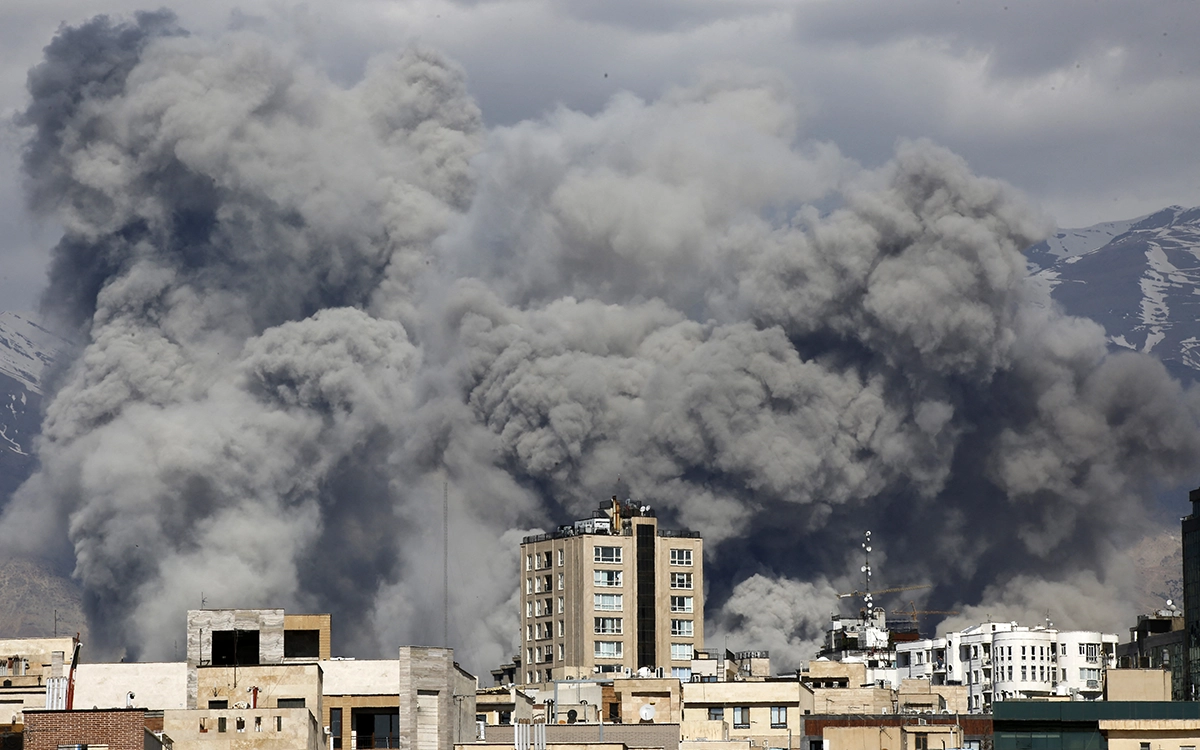
The bombs are falling on Tehran, Natanz, and Fordow. Missiles threaten oil tankers trying to navigate the Strait of Hormuz. The headlines tout the deadly sorties and missile attacks by Washington and Tel Aviv while Iran retaliates against neighboring states hosting U.S. assets. But when the dust settles over the smoldering remains of Iran’s crippled nuclear program, the country likely to win the war in the Middle East will be one that has not joined the fight: China.
Beijing’s long-term goal in relation to the U.S.–Israeli war is not complex. Nothing forces China to pursue any intervention or take any strategic risks designed to capitalize on the war. Instead, it patiently observes as air and sea battles generate geopolitical fallout across the region and indeed the globe. Wartime developments play almost faultlessly into Beijing’s hands, as the conflict exposes American vulnerabilities, strains its resources, and reshapes its regional relationships. The war in the Middle East delivered to China something the Americans never intended—the opportunity to observe, study, and exploit U.S. military power. In effect, the conflict offers China strategic insight into America’s material, intelligence, and diplomatic vulnerabilities at little to no cost.
The Iran conflict offers China strategic insight into America’s material, intelligence, and diplomatic vulnerabilities at little to no cost
The strategic advantages for China in energy markets are clear as well. For years, Iran has been a major supplier of discounted crude to China, despite poorly enforced U.S. sanctions. Much of the trade runs through a shadow fleet of tankers that Washington has nominally sanctioned and Beijing has quietly ignored. A postwar Iran—its economy shattered and desperate for revenue—will likely have no choice but to deepen these ties, selling oil to China at distressed prices. In return, Beijing will likely provide needed capital for reconstruction via state-owned enterprises operating outside the American dollar. The result could make China Tehran’s indispensable patron. The war is likely to strengthen these ties, not disrupt them.
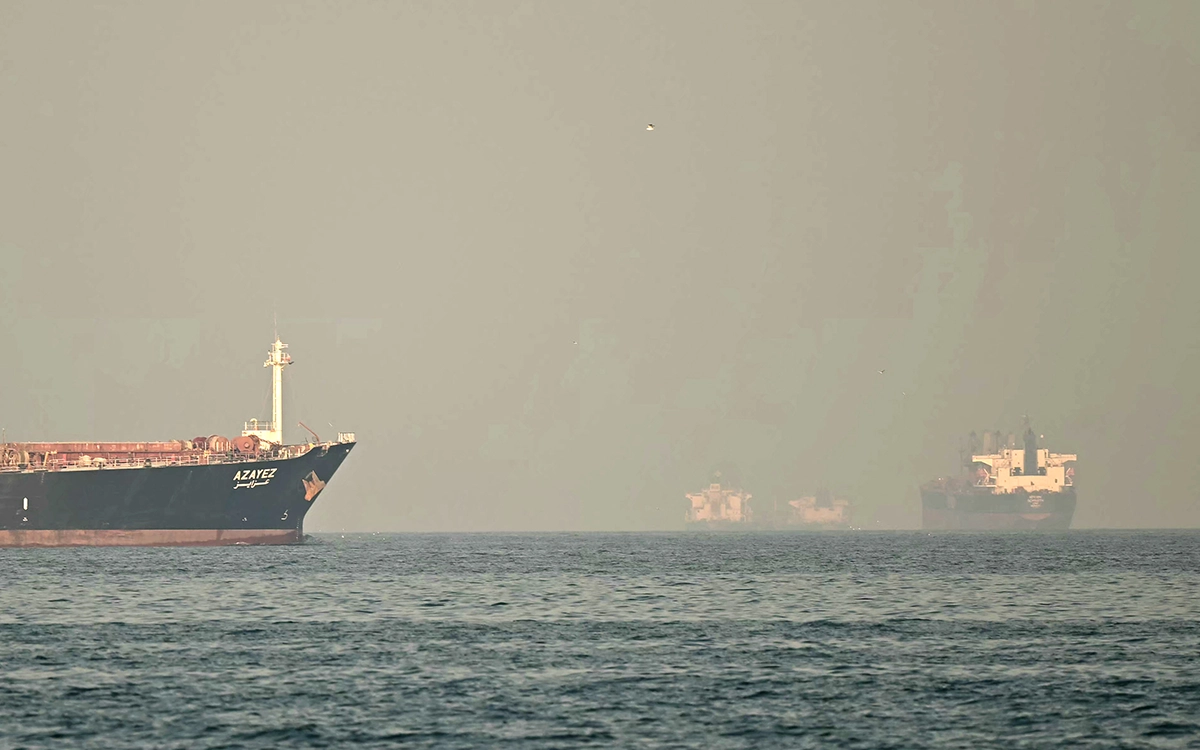
The oil equation extends beyond Iran. A prolonged or even sporadic war in the Arabian Gulf threatens global supply chains, disproportionately impacting U.S. allies in Europe and Asia. Iran is blocking tankers by restricting access to the Strait of Hormuz, where 20 percent of the world’s oil passes. In contrast, China has spent two decades diversifying its energy sources through vast state subsidy programs and state-guided investment, while also building oil reserves in preparation for a crisis. Disruption of global oil flows hurts everyone, to be sure.
But China is better positioned than many of its trade partners to weather oil market uncertainty. The turmoil also provides China with another subtle strategic advantage. Higher energy prices strengthen China’s push to price energy in its currency, the renminbi, rather than dollars. One war will not dethrone the dollar, but disruptions at the core of petrodollar model are sure to erode its durability. China is demonstrating that it knows how to play the long game: strategic endurance and long-term planning for systemic advantage rather than active intervention and disruption.
One war will not dethrone the dollar, but disruptions at the core of petrodollar model are sure to erode its durability
China’s advantages in critical materials underpin its ambitions to compete with the petrodollar. The war is rapidly depleting the Pentagon’s inventory of expensive precision-guided munitions and advanced strike systems. Analysts estimate it will take years to replenish these supplies. The Center for Strategic and International Studies (CSIS) estimates that the U.S. military spent $3.7 billion in the first 100 hours of the war alone, much of it on munitions. The replenishment challenge involves more than industrial muscle. It is also a strategic problem that once again plays to China’s dominance in critical materials—a consequential advantage it has recently demonstrated it is prepared to weaponize.
Many American precision weapons depend on rare and strategic metals and advanced electronics produced through supply chains dominated by China. Systems ranging from cruise missile guidance units to warhead penetrators use materials such as tungsten and gallium. In 2024, China produced roughly 67,000 of the world’s 81,000 metric tons of tungsten and holds about 52 percent of global reserves. It also supplies approximately 98 percent of the world’s gallium, an essential semiconductor material used in advanced electronics and missile targeting systems.
The U.S. military needs these materials, and the Iran war exposes acquisition challenges for the Pentagon. The United States has acknowledged this vulnerability in congressional testimony, and recent studies have highlighted how dependence on Chinese-controlled materials could slow the replenishment of U.S. munitions stockpiles. The Pentagon has since curtailed its ties with CSIS as part of broader policy changes affecting research groups that challenge the administration’s policy. Still, few doubt that the Iran war has worsened the munitions predicament.
Beijing has already demonstrated its willingness to use control over strategic materials for political leverage. It has imposed export limits on crucial materials, most recently on graphite last October, showing its grip on U.S. coveted supply chains. With each month of the ongoing war, the gap widens between American munitions use and replacement.
When these concerns became impossible for the Pentagon to ignore, Defense Secretary Pete Hegseth and Admiral Brad Cooper, commander of U.S. Central Command in the Gulf, authorized a shift toward less expensive munitions and gravity bombs after U.S. forces had achieved air dominance. They said the decision showed that the Pentagon’s process works: professional military leadership—not civilian bureaucrats—are determining when and how America conserves weaponry for future conflicts.
Yet the shift was reactive and came after concerns had clearly emerged. Rather than resolving the core issue, the shift underscores a deeper strategic constraint on American power: China still controls the materials needed to replenish the American inventory, which potentially places the timeline under Beijing’s control. President Trump will no doubt take up the issue if he meets Xi Jinping sometime in the next few months.
China still controls the materials needed to replenish the American inventory, which potentially places the timeline under Beijing’s control
Pentagon analysts regularly model munitions timelines for potential scenarios, including a Taiwan contingency. Whether senior commanders in Hegseth’s Pentagon are receptive to this guidance is unclear. In a 60 Minutes interview, Hegseth claimed U.S. munitions projections exceed requirements. However, his post-inauguration purge of military officials fostered a culture that discouraged frank assessments. A November New York Times piece described a Pentagon plagued by anxiety, distrust, and chaos. Moreover, the 2026 National Defense Strategy, which does not mention Taiwan, has divided analysts over whether it softened the administration’s China posture.
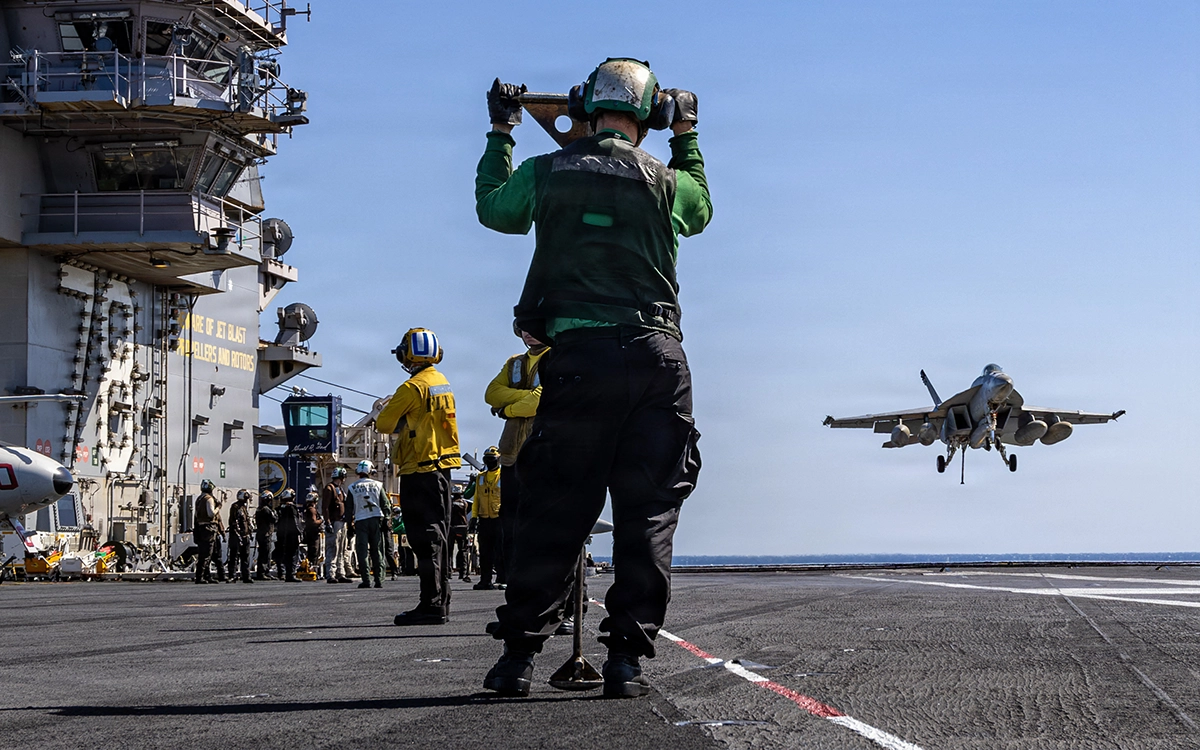
The intelligence benefits generated by the war cut two ways. Chinese analysts can observe the American military at full operational capacity during a sustained air campaign. They collect granular data that is typically difficult to obtain through conventional spy craft: the durability of logistical chains, sortie rates, and the ammunition, supplies, and gear needed to sustain combat operations. They can also assess aircraft carrier vulnerability windows by tracking refueling and replenishment over time and at scale. Chinese analysts can thus assess both the strength and limits of a U.S. air war, information they could use in a future confrontation with their global rival. This considerably modifies the nature of Chinese contingency planning related to a potential forced takeover of Taiwan and the U.S. response it would likely produce.
Although the war benefits China, it is also strategically important for the United States. It not only enables U.S. military analysts to identify flaws in American execution and logistical approach. It also allows them to assess shortcomings in Chinese and Russian defense systems used by Iran. Each degraded Iranian air defense or inadequate Chinese electronic warfare system provides data to U.S. war planners that can be integrated into strategic planning for Pacific scenarios. The United States learns about Chinese hardware; China observes American capabilities. Yet, in the contest that matters most—preparing for a potential conflict over Taiwan—it is unclear if this exchange favors Washington.
Diplomatic benefits show a similar pattern of interests. America has spent years telling the Global South that U.S. leadership means a rules-based order, stability, and respect for sovereignty. China has courted the same countries, exploiting instability from U.S. interventions like Afghanistan and the clear inconsistencies between American rhetoric and action. In efforts to influence the developing world, both sides have had recent ups and downs. But the Iran war is different. It is an overpowering attack on a regional power without UN authorization, in a region where U.S. credibility was already eroding.
The conditions for sustained, positive diplomatic gains that favor Beijing are now more visible than at any point since the Cold War. China has been cultivating a cautious alternative to American global leadership for years, especially in the developing world. The war in Iran hands the nation a potent opportunity to reinforce its framework. As Washington fires missiles, Beijing points to its Belt and Road Initiative, which offers construction financing, often on terms that benefit China if trouble surfaces. In contrast to Washington’s actions, which often bring regional instability and refugee flows, Beijing promotes its own framework of China-led economic development. China seeks to present itself as a partner for peace, focused not on sanctions and military intervention but rather stability and development. If Xi Jinping needed a narrative of Chinese ascent and American overreach, today he finds one delivered at no cost in the situation in Iran.
If Xi Jinping needed a narrative of Chinese ascent and American overreach, today he finds one delivered at no cost in the situation in Iran
Yet the outcome is not predetermined. The Iran war could generate different results. Many countries in the Global South have become adept at balancing relationships with both powers, courting investment from China while maintaining relationships with the United States. But Trump’s America differs from the nation of the recent past. For better or worse, it demands more from its erstwhile allies, in part to satisfy Trump’s U.S. political base, which ironically tends to be wary about overseas military interventions.
The war reinforces a narrative useful to China’s leadership. For years, Xi has argued that the American-led international system is entering a period of crisis and instability. The war in Iran reinforces that narrative: America is an unstable leader, a hegemon prone to violence, unable to stick to commitments it demands of others while increasingly depending on supply chains it no longer controls.
The irony is that, despite its success in battle, the American military machine has repeatedly created opportunities for China’s strategic advance. The United States fights the wars, but China seems to win the peace. Indeed, when assessments of the Iran war are written a decade or two hence, historians may well say that the U.S. and Israel decisively won a narrow military objective. They may also conclude, however, that this victory quietly handed China a generation of strategic advantage for a price that Beijing never had to pay.