
Eagle Intelligence Reports
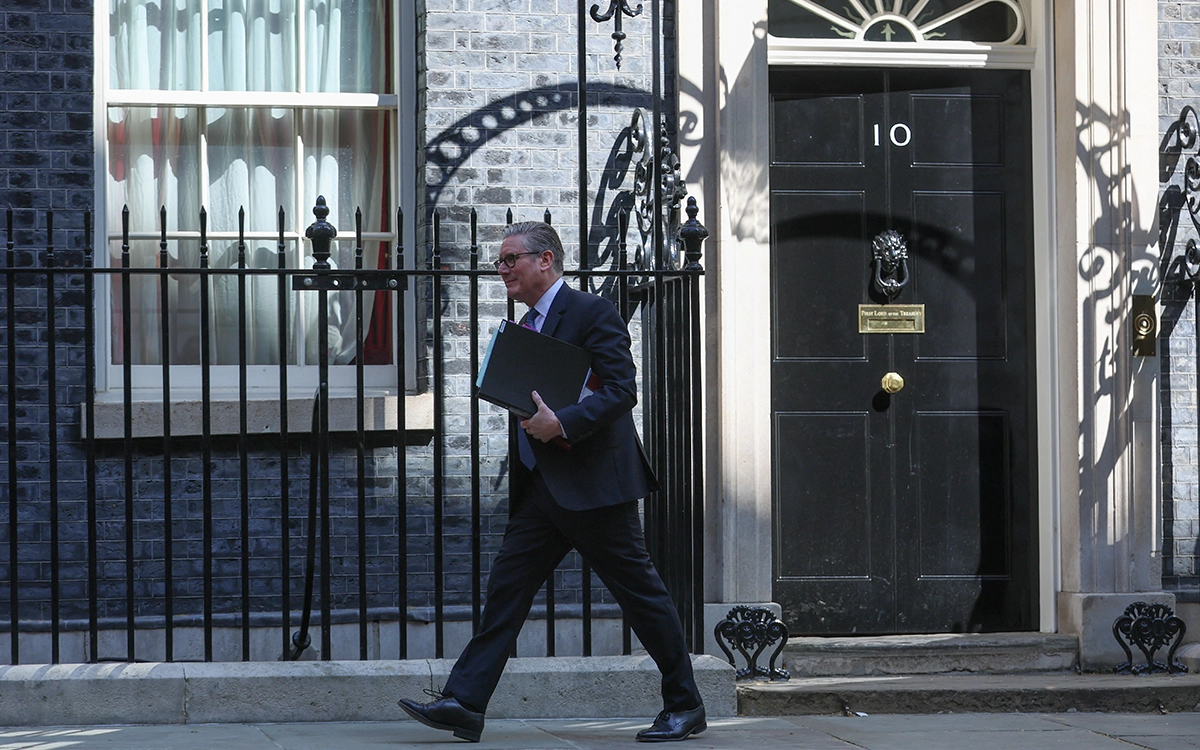
Keir Starmer’s problem is not that Labour lost votes. It is that it lost them for different reasons, to different parties, and in different parts of the country. That is what makes the local election results more than a temporary electoral setback. The coalition of voters behind Labour’s 2024 landslide are not merely disappointed. They are disaggregating in multiple directions simultaneously.
The elections are not an automatic predictor of the UK’s political future. Local elections operate under distinct political incentives and protest voting often plays an outsized role. However, they do reveal that the major parties are now facing multi-directional coalition fragmentation under conditions of economic stagnation and five-party dispersal. Whether the result will ultimately amount to a sealed verdict in 2029 will depend on conditions that remain unresolved.
Taken alongside the Senedd and Scottish Parliament elections held on the same day, the results point toward an ongoing structural decomposition of the two-party system of British politics. Reform UK gained 1,453 council seats—an increase of 1,451—while Labour lost 1,496 and ceded control of 38 councils. Reform won 27 percent of the English local vote, while most other parties clustered between 15 and 20 percent. The vote lays the basis for a new normal in which no major party commands broad and stable public backing. The result indicates not simply a competitive landscape but a dispersed one. And Britain’s electoral architecture was never designed to manage such fragmentation.
UK GDP grew by only 0.1 percent in the fourth quarter of 2025. Business investment has contracted and services continue to stagnate in an economy disproportionately dependent on finance and asset inflation rather than broad-based productive expansion for stable GDP growth. The economy ended the year near stagnant, leaving households feeling stuck even where headline figures avoided outright contraction.
But the deeper problem is generational rather than cyclical. Today’s working-age population is the first since the industrial revolution to be less well-off than their parents. Real wages have grown at a fraction of the pace recorded in previous decades, while productivity gains have increasingly been absorbed by upper-income brackets rather than the working or middle class. It is now a structural condition, and voters are holding governments responsible for it. The same frustrations drove both the Reform surge in Tameside and the Green surge in Hackney. Different political languages, the same material root. Voters increasingly believe that the existing political and economic model no longer offers credible long-term improvement. They want an alternative.
Voters increasingly believe that the existing political and economic model no longer offers credible long-term improvement. They want an alternative
Labour’s electoral problem cannot be reduced to a single directional loss. For more than a year, Downing Street chased Farage’s voters: tougher rhetoric on borders, welfare, and small boats, with Starmer leaning into his working-class upbringing. Labour’s calculation was that the right flank was its most exposed. They were wrong. In fact, Labour faces a two-front war: pressure from Reform on the populist right and from the Greens on the progressive left—pressures that cannot be resolved by the same political response.
Labour assembled its 2024 coalition from incompatible components, unified by opposition to the Conservatives rather than shared programmatic identity. Its governing choices have exposed those incompatibilities. Every rightward signal on immigration—every marginal appeasement of populist demands—alienated progressive voters. Every spending constraint conceded to the right alarmed those expecting a break from austerity. Between the Greens and Labour, a common enemy had kept the contradictions concealed; actual governance has made them visible.
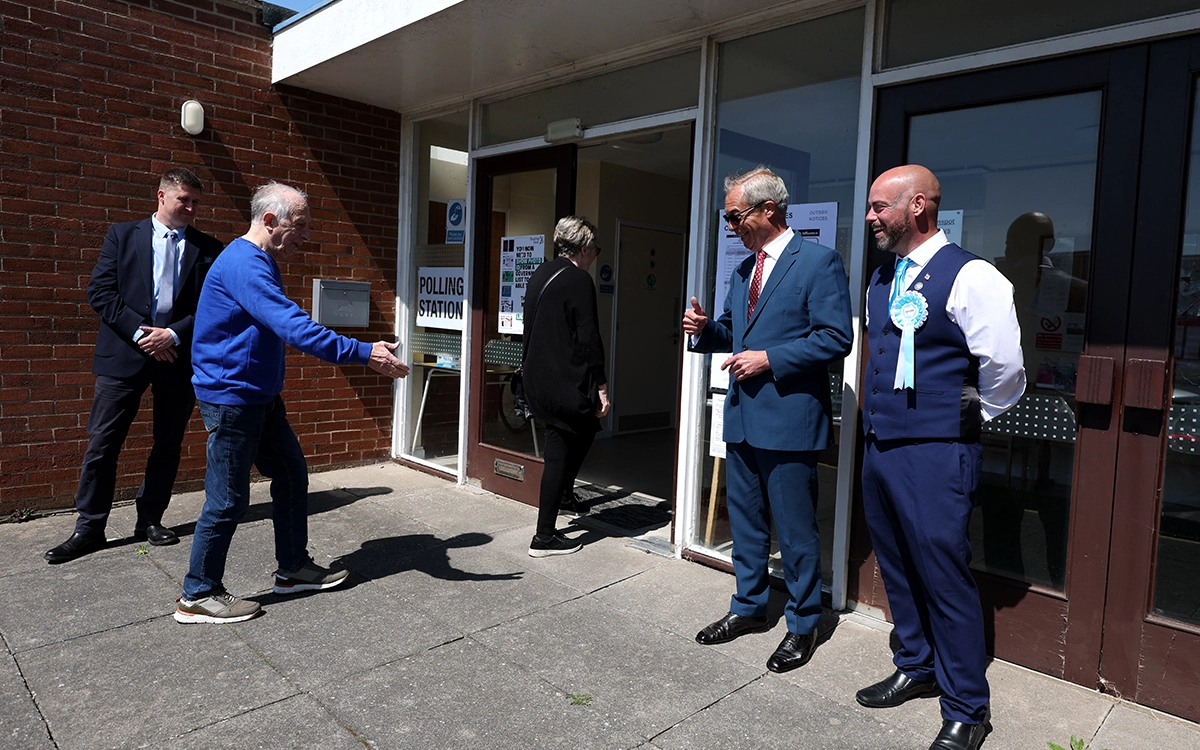
The voters that Reform absorbed in post-industrial northern England had not primarily defected from Labour in 2024. Many had already drifted away during the Brexit realignment between 2016 and 2019, when populist causes had overtaken a traditional loyalty to Labour. Labour recaptured some of these tactically in 2024 through a rally around anti-Conservative sentiment. But Reform’s 2026 gains represent the consolidation of latent anti-establishment sentiment in those communities—not fresh defection from a stable base. Many had already left Labour through abstention or voting Tory. Now they have moved on to Reform.
The political investment those voters now have in Reform—as an identity rather than merely a protest—makes recovery harder than Labour admits.
Meanwhile, the Green Party under Zack Polanski has opened a second front on the left. In February 2026, the Greens won their first-ever parliamentary by-election in Gorton and Denton—a Greater Manchester seat Labour had held since 1931. In Hackney, Zoë Garbett took the mayoral contest with 47.2 percent, seizing a borough that Labour had dominated for decades.
This was only the beginning of the shift, however. Party ratings have risen consistently since Polanski’s election as party leader in September 2025, indicating institutional consolidation under a specific leadership rather than a temporary surge indicative of frustration. This is not a protest Labour can wait out but a durable repositioning of urban, educated, progressive voters around a new, distinct political identity.
For Starmer, moving right only accelerates Green gains in urban seats, while moving left deepens Reform’s hold in post-industrial constituencies. There is no single adjustment that addresses both simultaneously. That is the structural trap at the center of Starmer’s position and an explanation for the party’s ongoing malaise: the coalition that brought him to power contains demands and identities that pull in opposite directions.
For Starmer, moving right only accelerates Green gains in urban seats, while moving left deepens Reform’s hold in post-industrial constituencies. There is no single adjustment that addresses both simultaneously
Starmer told his Cabinet on Tuesday that he will not resign. His argument rests not on a renewed governing mandate but on the absence of a triggered leadership mechanism.
However, more than 92 Labour MPs have now publicly called for Starmer to resign or set a timetable for his departure. Catherine West announced plans for a stalking-horse challenge, seeking the 81 signatures—20 percent of the parliamentary party—required to trigger a formal leadership contest. West currently has ten signatures, which makes a successful challenge unlikely at this point. But the significance of her move lies less in her own numbers than in what it forces into the open: a public accounting of how many Labour MPs regard the current position as untenable.
The crisis crossed a decisive threshold on Tuesday when four ministers resigned in succession. Miatta Fahnbulleh, minister for devolution, was the first to go, calling on Starmer to set a timetable for an orderly transition. She was followed by Jess Phillips, the safeguarding minister and a significant political figure in her own right, then by Alex Davies-Jones, minister for victims, and finally by Zubir Ahmed, a health minister and close ally of Wes Streeting.
Each resignation letter described Starmer in personal terms as a good man—and each used that framing to argue that good intentions were no longer sufficient. The pattern is politically precise: the resignations are not personal attacks but structured pressure, designed to open space for an orderly departure rather than force an immediate contest.
Against this, more than 100 Labour MPs signed a counter-letter warning that a leadership contest would cause further instability. That countermobilization matters as it confirms that the parliamentary party is divided not only on whether Starmer should go, but on whether a leadership change would improve Labour’s position at all.
The debate within Labour has increasingly focused not on who should replace Starmer but on whether a change at the top could even reverse the governing party’s fortunes. Potential successors are not waiting for the right moment to claim a prize. They are assessing whether the prize is worth claiming.
Wes Streeting, widely regarded as a leading contender, did not speak to the media after the Cabinet meeting and is understood to be meeting Starmer on Wednesday morning. Andy Burnham, who polls most favorably of the potential successors, was spotted travelling to London on Tuesday evening. Neither has declared. Rayner’s ability to move publicly remains constrained by an ongoing HMRC investigation into her tax affairs.
The stand-off among serious contenders reflects a harder calculation: inheriting the Labour leadership now means inheriting a fractured coalition, a hostile economic environment, and a party whose internal contradictions cannot be resolved by a change of face.
The Cabinet meeting on Tuesday morning produced a surface display of unity. Pensions Secretary Pat McFadden told reporters that no one had challenged Starmer in the room. Business Secretary Peter Kyle praised his “steadfast leadership.” Deputy Prime Minister David Lammy urged colleagues to “take a breath,” warning that internal conflict would benefit Nigel Farage.
But the public support of ministers is not the same as genuine political confidence. Home Secretary Shabana Mahmood—one of the most senior figures to call publicly for Starmer to consider his position—was reported to have privately urged him to set out a timetable before the meeting, before subsequently announcing she would remain in post and “crack on with the job.” The gap between private counsel and public positioning is itself a measure of the pressure: ministers are managing their own futures as well as his.
Meanwhile, the crisis has moved beyond Westminster. UK gilt yields surged to multi-decade highs on Tuesday, with the benchmark ten-year yield pushing above 5.1 per cent and 30-year borrowing costs reaching levels not seen since 1998. A leadership change could trigger a leftward policy shift and more expansionary fiscal policy—precisely the scenario bond investors fear most. The crisis is no longer a party matter. It has acquired the character of a national stability question.
The dynamic has a historical precedent. When Anthony Meyer launched his stalking-horse challenge against Margaret Thatcher in 1989, Thatcher survived with 314 votes to Meyer’s 33—but the result revealed that 60 MPs had failed to support her. Her campaign manager George Younger noted that many had voted for her “with varying degrees of reluctance,” predicting that “another challenge is not improbable.” The perception of her invulnerability had been broken. The Iron Lady was gone within a year.
The lesson is not that Starmer will follow the same trajectory. It is that the arithmetic of survival and the arithmetic of authority are not the same calculation. As of now, Starmer’s position increasingly looks like Theresa May’s when she resigned within weeks of poor local elections in 2019: a leader surviving on procedure whilst authority drained elsewhere.
Kemi Badenoch, meanwhile, declared the results showed the Conservatives were “coming back.” After two years in opposition against a deeply unpopular government, the party had lost more than 300 council seats. The gap between that rhetoric and those numbers is revealing. In Suffolk, the Conservatives lost 40 seats as Reform won 41 from near-nothing. In Essex—Badenoch’s own constituency—the party lost 41 while Reform won 53. In Havering, the Conservatives lost all 23 seats they were defending. Reform has not merely competed for the same voters but replaced the Conservative Party as the primary vehicle for right-wing anti-establishment sentiment across post-industrial and outer-suburban England. And voters who transfer political identity do not return easily.
The Conservative Party, too, faces pressure from two directions at once. The Liberal Democrats continue to consolidate gains among affluent liberal voters across Surrey and the Home Counties. In Richmond upon Thames, they won all 54 council seats. For the Tories, attempting to contest Reform’s gains risks accelerating Liberal Democrat gains in the south. Meanwhile, a strategic pivot toward the liberal center to contest seats lost to the Liberal Democrats would cement Reform’s hold in the north and Midlands. Neither option recovers the 2019 coalition. No position retains both halves of an electorate that has already separated and found alternatives. Again, pressures pull in opposite directions, making structural breakdown the most likely outcome.
The devolved elections provide the most complete picture available of what fragmentation looks like when the electoral system allows it to be expressed proportionally. That is what makes them essential.
Welsh Labour lost government for the first time since devolution began in 1999, ending a dominance stretching back to the 1922 general election. The center-left Welsh nationalist party, Plaid Cymru, emerged as the largest party with 43 seats. Reform took 34. Labour fell to nine—third place. Eluned Morgan, the First Minister of Wales, became the first leader of any UK government to lose her own seat while in office.
Wales used the D’Hondt proportional method—a system that reflects vote share in seat distribution. Nine Labour seats out of 96 is what the party’s actual support level looks like without the filter of first-past-the-post (FPTP) structure. The implication is not that Westminster will mechanically replicate this outcome, but that the underlying vote share producing it is real and present in England as well.
In Scotland, the SNP retained its position as largest party but fell short of a majority. Labour and Reform tied in joint second place on 17 seats each, with Reform entering Holyrood for the first time through the regional list. The rise of both Reform and the Greens came at the expense of Labour and the Conservatives—confirming that insurgent party growth cannibalizes the established party vote rather than redistributing it between them.
With all three devolved nations now holding nationalist first ministers simultaneously, questions about the future of the Union are sure to return with new strength to the Westminster agenda.
Local elections operate under different incentive structures than general elections. Turnout is lower, the stakes appear bounded, and voters often lend support as a signal rather than a preference. Labour lost 46 councils and more than 1,800 councillors across 1998, 1999, and 2000, and still won a substantial majority under Tony Blair in 2001. That history is noteworthy, but it does not travel—Blairism has remained a singular event in modern British politics.
The criteria for distinguishing between a recoverable protest and a durable structural shift are threefold: whether the vote has dispersed across multiple alternatives or concentrated in one, whether those alternatives have developed institutional momentum of their own, and whether the losses have eroded the geographic foundations of the governing party’s majority rather than merely trimming its margins. On all three counts, the current situation exceeds the parameters of a recoverable protest. Labour’s vote has not moved to a single waiting opposition—it has fragmented across Reform, the Greens, the Liberal Democrats, and independents, taking over core geographic centers of Labour’s traditional support.
Labour’s vote has not moved to a single waiting opposition—it has fragmented across Reform, the Greens, the Liberal Democrats, and independents
The Blair comparison also fails because, in 1995 and 1996, Labour gained council seats in local elections while the Conservatives lost them. The party was in full opposition surge, not mid-term government decline. Labour’s own official line—that the 1999 local results show governments can recover—overlooks the fact that Blair still won those elections on both vote share and seats. There is no equivalent baseline of strength from which to measure the current losses.
None of this forecloses recovery. A voter who has adopted a new political identity under conditions of economic frustration may revise that identity when conditions change or when the stakes of a general election sharpen the calculation. But the conditions required for that revision—economic improvement, a credible Labour governing identity, and a Reform or Green record that disappoints—all need to materialize simultaneously. The probability that all three can converge before 2029 is not completely unlikely, but it is considerably lower than Labour is prepared to acknowledge.
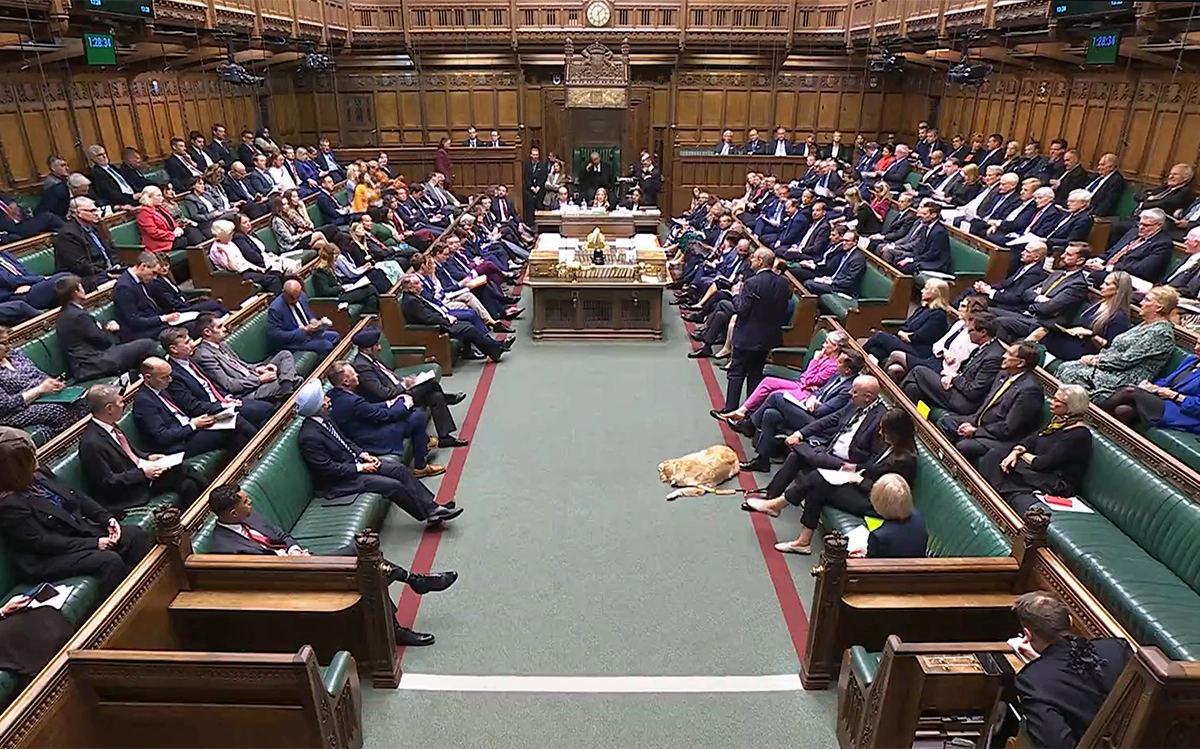
Three scenarios present themselves, each conditional on variables that remain unresolved:
The first involves Starmer surviving and the government recovering. Monthly GDP grew 0.5 percent in February 2026, with services and production contributing. If that trajectory accelerates and Reform’s governance produces visible contradictions or controversies, Labour could stabilize. Yet this scenario requires economic fortune that current indicators do not yet support, and it requires Labour to develop a governing posture and identity that speaks to both its right and left flanks. And economic improvement alone does not solve the coalition problem.
The second involves a Labour leadership transition before 2029. A Burnham succession would strengthen appeal in post-industrial England but risk further losses in southern marginals. His path to the leadership, however, remains obstructed: the Labour NEC blocked him from standing in the Gorton and Denton by-election earlier this year, and securing a parliamentary seat would require a further by-election that risks handing the Greater Manchester mayoralty to Reform.
A Streeting succession offers continuity with greater political energy but does not resolve the coalition contradiction. A Rayner succession signals a leftward shift, recovering some Green voters while deepening exposure in Reform-facing seats—and remains contingent on the resolution of her HMRC investigation. Yet no succession option eliminates the fundamental problem: Labour’s coalition contains incompatible demands that no single governing posture can simultaneously satisfy.
The third—and arguably the most likely single outcome—is a hung parliament. Polls have found Reform’s momentum slowing, pointing toward a more competitive and fragmented result. The coalition arithmetic in this scenario is contested. Half of Conservative voters would prefer their party to back a Reform-led government over a Labour one. But the viability of a Conservative–Reform arrangement rests on more than voter preference. Five of Reform’s eight sitting MPs are former Conservatives who defected after being expelled or removed from the parliamentary party.
Many remaining Conservative MPs experienced those defections as acts of hostility, not ideological realignment. The personal and institutional tension between the two parties makes a stable formal coalition considerably harder to engineer than public polling implies. A Reform-led minority government with external Conservative support is arithmetically conceivable. A durable governing partnership between them is another matter. The market reaction to the current political crisis adds a complicating variable to all three scenarios. Gilt yields at multi-decade highs and the explicit warnings of bond investors impose fiscal constraints on any incoming government, whether it be Labour under a new leader or a Reform-led administration promising tax cuts and spending efficiency. The financial markets have entered the political story and are unlikely to leave it.
A Reform-led minority government with external Conservative support is arithmetically conceivable. A durable governing partnership between them is another matter
The deepest unresolved question is not who will win in 2029 but whether the Labour coalition that won in 2024—assembled across post-industrial towns, urban progressive seats, suburban marginals, and minority communities—can be arithmetically reconstructed under the FPTP system. Its constituent parts now occupy different electoral addresses, speak different political languages, and have invested, to varying degrees, in distinct alternatives. Within that fragmentation, can Labour find a way to salvage the coalition?
No polling, no leadership change, and no economic upturn can resolve that question in isolation. What the evidence suggests, however, is that the conditions making reconstruction difficult—multi-directional dispersal, deepening identity investment in alternatives, and a five-party landscape the electoral system cannot process without distortion—are not temporary. They are likely the new baseline.