
Eagle Intelligence Reports
The geostrategic value of the Eastern Mediterranean has long drawn external powers seeking to assert influence, but the current phase marks a departure from past patterns. What was once determined by military posture and alliance structures has evolved into economic levers of influence through control over ports, supply chains, and critical infrastructure, which now shape strategic outcomes without the visible use of hard power.
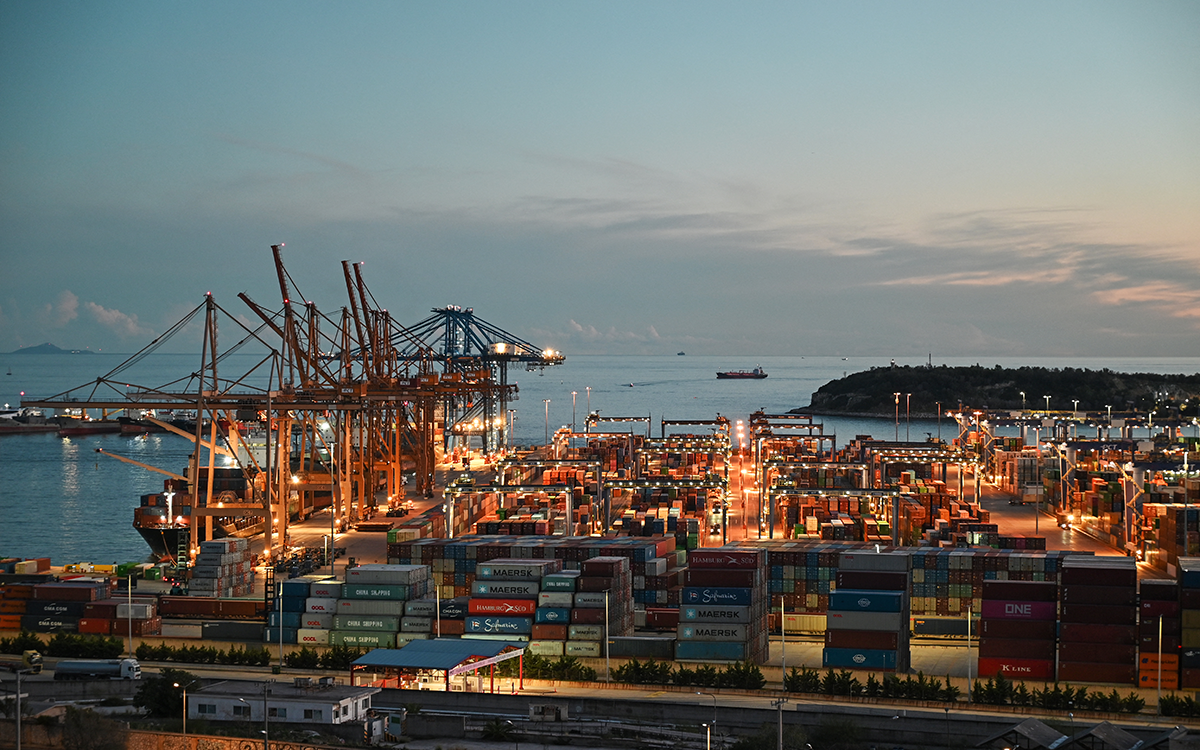
The evolution of the Port of Piraeus demonstrates this shift with unusual clarity. Once viewed as a pragmatic commercial transaction during Greece’s financial crisis, it has since become a strategic inflection point and a test case, triggering open geopolitical pushback by the EU and NATO over Chinese control of critical infrastructure. The recent diplomatic confrontation between Washington and Beijing over the port signals that commercial assets in the region are no longer treated as economically neutral, but as indicators of long-term strategic alignment.
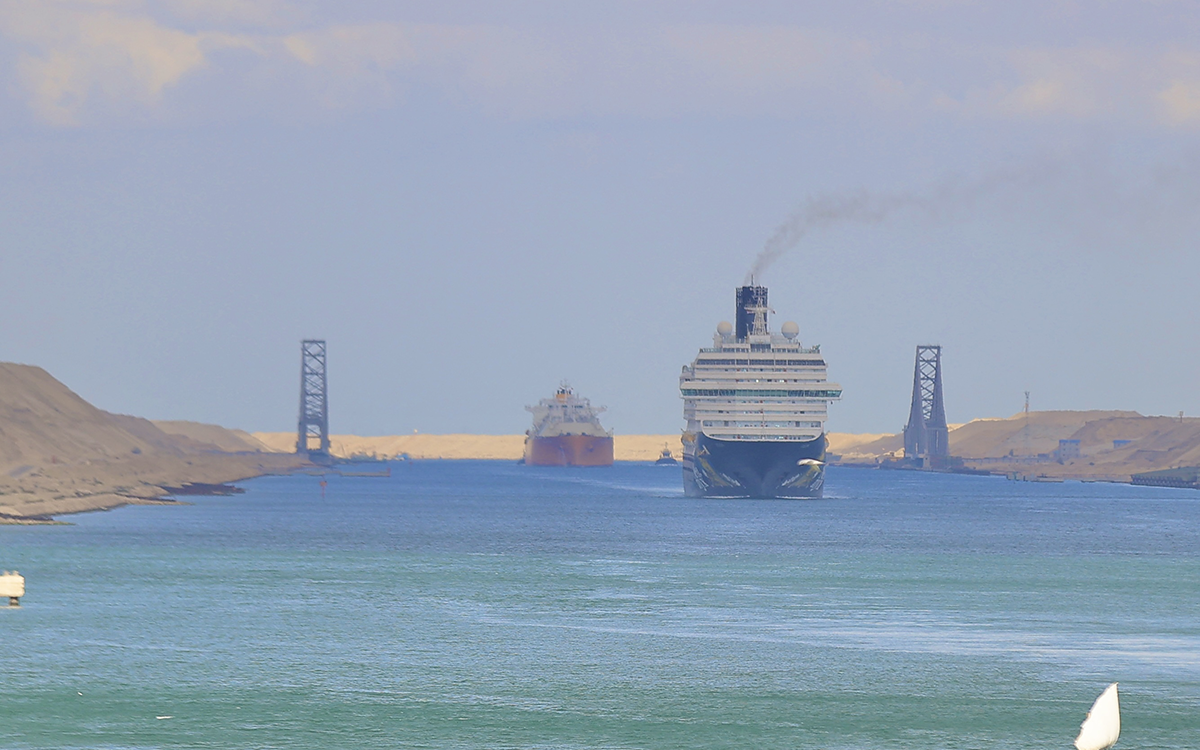
In practical terms, China’s expanding footprint from Piraeus to the Suez Canal Economic Zone has enabled it to anchor its supply-chain influence at the gateway between the Mediterranean and the Indo-Pacific. In response, the United States is recalibrating its approach, moving from passive risk management to efforts aimed at rebalancing structural exposure among regional partners. Meanwhile, Egypt’s accession to BRICS+ introduces new financing and alignment mechanisms that could, over time, alter the regional distribution of influence.
China’s expanding footprint from Piraeus to the Suez Canal Economic Zone has enabled it to anchor its supply-chain influence at the gateway between the Mediterranean and the Indo-Pacific
Taken together, these developments indicate that while military power remains central, strategic influence is increasingly exercised through connectivity governance and control of critical infrastructure, with far-reaching implications for regional stability, European security, and global trade resilience.
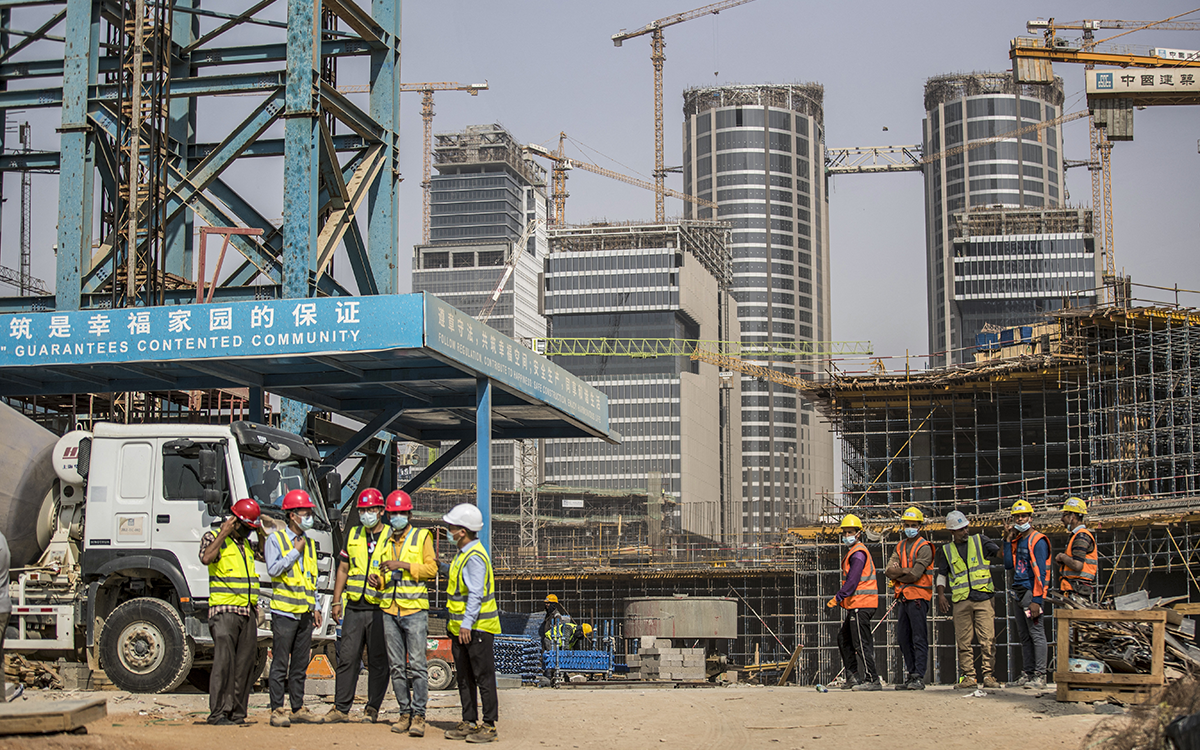
In Egypt, Chinese companies now hold strategic positions at both ends of the Suez Canal and are embedded across the broader economy. By early 2025, Chinese investment reportedly exceeded $7 billion, ranging from the Central Business District in the new administrative capital to a 1.1 GW wind project and a $5.1 billion ammonia plant, while Chinese automakers moved toward local EV production. These projects complement the logistics footprint in Ain Sokhna and East Port Said, transforming Egypt from a transit node into a production and distribution hub within China-linked value chains.
In Greece, China’s significance lies less in investment volume than in structural positioning. COSCO’s majority stake in Piraeus constitutes the only major Chinese-controlled port inside the EU, giving Beijing influence at the intersection of European supply chains and NATO’s southeastern flank. Integrated rail links into the Balkans have created a corridor effect, rerouting Asia–Europe trade flows through infrastructure shaped by Chinese commercial priorities. Together with a 24 percent stake in the national high-voltage grid operator (ADMIE), China’s presence translates into system-level rather than transactional influence, shaping operational decisions, regulatory debates, and the pace of diversification. As a result, Athens has increasingly adopted a balancing strategy, reinforcing alignment with the United States and the EU, while honoring existing agreements with Beijing to manage exposure without triggering economic or diplomatic retaliation.
In practice, Washington is now seeking to influence the broader operating conditions in which infrastructure decisions occur. This includes tighter scrutiny of foreign operators in key maritime and digital nodes, the promotion of alternative investment pathways, ranging from US-backed financing to private-sector participation, and the integration of port decisions into wider initiatives involving energy interconnectivity, naval access, and emerging Red Sea security dialogues.
The aim is not to block Chinese expansion alone, but to prevent structural dependency by enabling partners to diversify without facing economic penalties. This marks a transition from earlier US engagement that focused more on military posture and treated commercial infrastructure as peripheral. Today, ports, data systems, and energy-linked logistics are seen as integral to alliance resilience.
Within this broader shift, Greece has become illustrative rather than exceptional. Hosting the most significant Chinese-controlled port inside the European Union, it sits at the junction of NATO’s southeastern flank and emerging energy routes. In this context, US policy toward Greece reflects a regional logic, recalibrating exposure while demonstrating that diversification is feasible and politically sustainable.
Greece has become illustrative rather than exceptional. Hosting the most significant Chinese-controlled port inside the European Union
Overall, these moves show how Washington is attempting to shape the regional environment rather than individual assets. Nowhere is this recalibration more evident than in Greece, where Piraeus has moved from being viewed primarily as a commercial concession to becoming one of the most closely monitored cases of US–China competition inside the European Union.
The recent public exchange between the US and Chinese embassies in Athens marks a qualitative shift in how Piraeus is being contested. What was once managed discreetly has now entered the realm of open diplomatic signaling, underscoring the port’s transformation from a commercial success story into a symbol of strategic exposure inside the EU and NATO space. Washington’s suggestion that reduced Chinese influence could strengthen resilience and Beijing’s immediate lash out show that Piraeus is no longer treated as an isolated asset. Instead, it functions as a live laboratory for influencing competition within an allied state, narrowing Athens’ traditional ability to hedge.
Against this backdrop of growing scrutiny over Piraeus, the recent agreement allowing the US-backed ONEX–DFC consortium at Elefsina Shipyards to expand into port-related activity has taken on heightened strategic relevance. Rather than a routine industrial development, it reflects a coordinated effort by Washington and Athens to introduce infrastructure diversification into Greece’s port ecosystem.
In practical terms, Piraeus therefore illustrates one side of the emerging dynamic, where Chinese influence has already crystallized, and US and Greek strategy is focused on managing diversification rather than rollback. Meanwhile, Egypt represents the opposite trajectory, one in which China continues to expand its presence and translate its economic weight into institutional and, increasingly, security alignment.
Egypt is by far the most China-friendly country in the Eastern Mediterranean, despite receiving $1.3 billion annually in US Foreign Military Financing. Unlike other regional states that have begun reassessing exposure to Beijing, Cairo has continued to expand cooperation across economic, institutional, and now military domains. By March 2025, Chinese investment in Egypt had reportedly exceeded $7 billion, with more projects anticipated.
Egypt is by far the most China-friendly country in the Eastern Mediterranean, despite receiving $1.3 billion annually in US Foreign Military Financing
Chinese companies are constructing the Central Business District in the new administrative capital, a 1.1 GW wind project in the Gulf of Suez, and a $5.1 billion ammonia plant designed for export to European markets. The automaker BAIC has announced plans for an EV factory, reinforcing Cairo’s role as a prospective manufacturing hub within China-linked supply chains.
Furthermore, Egypt’s accession to BRICS+ represents more than symbolic diversification. It marks a shift toward alternative economic governance and financial insulation at a moment of acute vulnerability. Membership provides access to new financing channels through the New Development Bank, potential relief from dollar shortages, and the option to settle trade in national currencies. This is particularly significant for an economy constrained by external debt, inflation, and limited hard-currency reserves.
At a geopolitical level, BRICS+ offers Egypt an alternative platform to reduce reliance on Western-led institutions without formal realignment. It reinforces Cairo’s policy of strategic non-exclusivity, maintaining security ties with Washington while leveraging Beijing and other BRICS members, including Gulf states, for economic breathing room. For China, Egypt’s membership institutionalizes a partnership that previously relied on bilateral lending, making Beijing’s role more durable and less exposed to US pressure.
BRICS+ also strengthens China’s broader effort to reorient global connectivity away from Western-dominated mechanisms. Egypt’s participation links the Suez Canal, the world’s most critical maritime choke point, to an emerging bloc promoting alternative payment systems and south–south industrial cooperation. In practical terms, this gives Beijing influence not only over Egyptian infrastructure but also over the rules and platforms facilitating the movement of trade and finance through the Eastern Mediterranean.
BRICS+ also strengthens China’s broader effort to reorient global connectivity away from Western-dominated mechanisms
Beyond economics, Sino-Egyptian ties have taken on a new security layer. In 2025, the two countries held their first joint air drills, Eagles of Civilization 2025, featuring Chinese J-10C fighters. The exercise is widely interpreted as an opportunity for the Egyptian Air Force to evaluate advanced Chinese systems and mull a potential procurement. Cairo has also confirmed operational deployment of the HQ-9B long-range air-defense system in the Sinai Peninsula, marking China’s notable evolution in defense cooperation with the most capable military in the Arab world.
The result is a hybrid model of alignment, economic embedding linked to selective security access, deepening China’s regional role while maintaining plausible deniability and strategic flexibility. As China consolidates influence in Egypt while the United States reinforces diversification in Greece, the region is beginning to reflect two parallel models of great-power competition, each carrying distinct risks for regional stability.
Three dynamics stand out in terms of regional stability amid the great-power rivalry.
First, the region is moving toward dual connectivity ecosystems. In Greece and other US-aligned states, the priority is managed diversification, reducing reliance on Chinese-controlled nodes without attempting to reverse embedded assets such as Piraeus. In Egypt and increasingly Turkey, China is expanding its footprint through industrial investment, financing instruments, and selective defense cooperation. If these trajectories deepen in parallel, the Eastern Mediterranean risks developing fragmented logistics and regulatory systems, where ports, data flows, and payment mechanisms align with different external actors. Such fragmentation would not merely reflect geopolitical tension but could harden it into structural divisions.
Second, crisis vulnerability is increasing faster than crisis-management capacity. The disruptions in the Red Sea and the Ukraine conflict have shown how rapidly regional supply chains can destabilize. In a landscape where critical nodes are tied to competing external actors, local shocks, whether in Suez traffic, energy flows, or political instability, could generate cascading effects across multiple corridors. The absence of shared standards, coordination mechanisms, or de-confliction frameworks heightens the risk that economic interdependence becomes a source of instability rather than a stabilizing force. Third, regional states are gaining leverage but at narrowing margins.
These dynamics collectively suggest a gradual shift from flexible hedging toward structural constraint, where connectivity choices begin to shape long-term alignment even without formal realignments.
Diversification progresses without confrontation. Piraeus remains commercially important but no longer dominant, and Elefsina absorbs pressure. Egypt leverages BRICS+ financing without deepening defense dependence.
Result: competitive coexistence with reduced vulnerability.
Two connectivity ecosystems consolidate: US-aligned diversification in Greece and China-anchored expansion in Egypt and Turkey. Standards and payment systems diverge without direct escalation.
Result: managed friction, with periodic flashpoints but preserved autonomy.
Infrastructure decisions harden into exclusive choices. Supply chains and data systems bifurcate, and crises trigger geopolitical escalation.
Result: systemic vulnerability, shrinking hedging space, and higher strategic risk.
It must be clear that whether these dynamics stabilize into a workable equilibrium or harden into structural fragmentation will determine how the Eastern Mediterranean fits into the next phase of global rivalry.
However, if infrastructure and regulatory frameworks begin to align strictly with opposing strategic blocs, fragmentation may become a structural issue rather than a temporary event. The second factor relates to crisis-management capacity across critical nodes. Recent disruptions in the Red Sea and the Ukraine conflict have demonstrated how shocks rapidly cascade through interconnected supply chain networks. In the absence of shared standards, coordination mechanisms, or de-confliction frameworks, localized disturbances in Suez traffic, energy flows, or political stability could escalate into system-wide vulnerability.
The third variable involves the narrowing space for maneuver among regional states. For now, Greece, Egypt, and Turkey continue to extract benefits from both the United States and China, using access and infrastructure as bargaining instruments. Yet as Washington links exposure to alliance resilience and Beijing embeds influence through path-dependent economic and institutional mechanisms, hedging becomes increasingly constrained, with technical decisions carrying long-term strategic consequences.
Altogether, these dynamics will determine whether the region consolidates into a workable equilibrium or enters a cycle of escalating pressure, where connectivity choices begin to predetermine alignment rather than reflect it.
The Eastern Mediterranean is transitioning from a secondary theater to a preview of how great-power rivalry will unfold globally. China’s presence, once limited to opportunistic port acquisitions, is now embedded across logistics, energy, industrial production, and currency instruments, giving Beijing influence without a major military footprint.
The Eastern Mediterranean is transitioning from a secondary theater to a preview of how great-power rivalry will unfold globally
At the same time, the United States is adapting its regional posture, moving from reactive warnings to efforts designed to reshape structural exposure and demonstrate viable alternatives. The question now is not whether competition will continue, but whether it will remain manageable. If diversification and institutional engagement proceed without escalation, the region could become a model for de-conflicted infrastructure governance. If not, it may instead become a zone of compounding vulnerabilities, where economic interdependence fuels insecurity rather than resilience.
Either way, the dynamics unfolding in the Eastern Mediterranean will not remain confined to the region. They are likely to inform approaches in other chokepoints, from the Red Sea and Hormuz to the Western Indian Ocean and eventually the Arctic, making this region not an exception but one of the earliest testing grounds of the next phase of global competition.