
Eagle Intelligence Reports
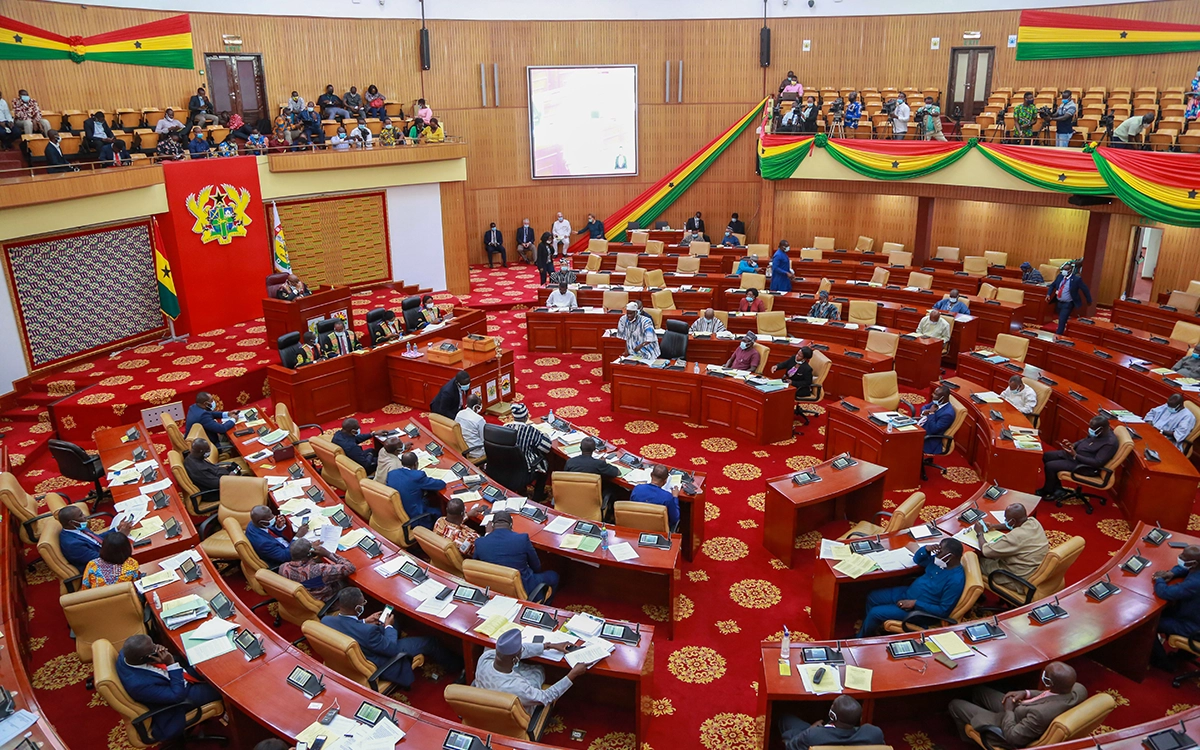
For decades, Ghana has cultivated a reputation as one of Africa’s most stable democracies, characterized by political continuity paired with a pragmatic, restrained, and morally credible foreign policy. Accra’s standing now has garnered an unusual global spotlight following a brief but highly charged diplomatic fallout with Israel, a country that has maintained ties since the early years of Ghana’s independence.
An alleged ill-treatment and deportation of a group of Ghanaian lawmakers and private sector delegates from Israel’s Ben Gurion Airport triggered the dispute. The incident provoked public outrage at home, prompting Ghanaian authorities to summon Israel’s envoy and later deport Israeli nationals in what officials described as reciprocal diplomatic action.
While the episode evolved suddenly, it quickly raised broader questions. Did Ghana react emotionally to an isolated consular incident, or was it signaling a deeper shift in its foreign policy posture in a markedly polarized global order?
Speaking exclusively to Eagles Intelligence Report, Hon. Emmanuel Kwasi Bedzrah, chairman of the Ghana–Israel Parliamentary Friendship Association, framed the dispute as neither ideological nor structural, but rather as an isolated diplomatic misunderstanding that escalated due to timing, symbolism, and domestic political pressures.
Recalling cooperation with Israel since the era of Ghana’s first president, Kwame Nkrumah, Bedzrah emphasized the depth and continuity of the bilateral relationship. “We’ve had that relationship with Israel for over 60 to 70 years,” he said, clarifying that “this was not hostility. It was a misconception that got politicized.”
The Ghana-Israel dispute is neither ideological nor structural, but rather as an isolated diplomatic misunderstanding that escalated due to timing, symbolism, and domestic political pressures
Placing Ghana’s relationship with Israel on a historical arc, the no-nonsense lawmaker elaborated that the current rift does not harbor ideological hostility, but rather a misconception that was blown out of proportion politically.
In what he termed the real account of the feud, Bedzrah recounted that some Ghanaian MPs and private-sector delegates traveled to Israel to attend a cybersecurity conference. After routine questioning at the airport, a few were detained and deported. “As the issue got traction in Ghana, some Israelis, who were also arriving in Ghana on a visit, received similar treatment. It then became a diplomatic issue,” he recalled.
This feud erupted in the heat of Israel’s war in Gaza, an issue that has divided African nations. Ghana’s calls for restraint and humanitarian protection aligned closely with the prevailing sentiment of the African Union, even as it stopped short of severing ties or adopting the confrontational posture with Israel seen elsewhere on the continent.
Rewinding to the immediate incident, the West African nation’s reaction carried weight as it deviated from its usual diplomatic approach, but this time with a stern retaliation. “We told them clearly: if they deport ten Ghanaians, we will deport ten Israelis. If they deport twenty, we will deport twenty. We will never accept this,” Samuel Okudzieto Ablako, Ghana’s foreign minister, stated in a radio interview. His remark reflected a rare and unusually assertive diplomatic posture by Accra.
Since independence, Ghana has avoided rigid bloc politics, preferring flexibility that allows it to defend national interests while maintaining dialogue across ideological divides. That tradition, analysts note, explains why Accra’s response to Israel was firm but calibrated, assertive, yet not escalatory.
Yet, the incident raises a question: Does Ghana’s action drift from its foreign policy doctrine? Lawmaker Bedzrah quickly rebuffed this assertion, saying that “Ghana has maintained its non-aligned stance all these years as a member of the African Union,” stressing that national interest remains the overriding guide.
From Parliament’s perspective, the episode reflects tactical recalibration rather than strategic realignment. The fact that diplomatic channels remain open and parliamentary engagement continues indicates an effort to manage tensions without dismantling long-standing cooperation. “That was done, and since then, the relationship has been restored,” Bedzrah said of the airport dispute, noting that “It wasn’t anything beyond our resolve.”
Meanwhile, amid this dispute, commentators in Ghanaian media took a different perspective, welcoming the foreign minister’s outburst as a demonstration that Ghana would not be undermined in matters of dignity and national respect. Experts interviewed on a televised news segment noted that swift action can reinforce a smaller state’s leverage in bilateral relations, especially where domestic audiences are watching.
Domestic political considerations played a decisive role in Ghana’s response to the incident. The involvement of sitting MPs quickly transformed a routine consular issue into a national political concern.
In Ghana’s competitive democratic environment, any perception that leaders failed to defend citizens abroad would have carried political costs. Bedzrah emphasized that lawmakers align themselves more closely with public sentiments than diplomats. “Members of Parliament are elected representatives of the people who have direct contact with the people. We listen to the people. We hear what the people say,” he said.
In Ghana’s competitive democratic environment, any perception that leaders failed to defend citizens abroad would have carried political costs
This sensitivity helps explain why Accra responded firmly, even while signaling a desire to de-escalate once dignity and reciprocity had been asserted.
Moreover, Samuel Abu Jinapor, a ranking member of parliament’s foreign affairs committee, publicly called for “quiet, calm and strategic diplomacy” to prevent escalation, underscoring the value of Ghana’s balanced foreign policy and cautioning against overt public exchanges that could inflame tensions.
He stressed that while protecting citizens abroad should be prioritized, attention should also be given to safeguarding Ghana’s broader diplomatic credibility. “It is important for the Minister for Foreign Affairs to take the path of quiet, calm, and strategic diplomacy in dealing with these matters,” he added.
This tension between decisive national defense of citizens and the need for strategic restraint reflects the pressures of domestic politics. With parliamentary delegations involved in the diplomatic episode, public sentiment in Ghana was high and served as an essential factor in shaping the government’s posture, even as Accra sought to avoid a protracted rupture.

Israel has invested heavily in rebuilding influence across Africa through technology partnerships, security cooperation, and parliamentary diplomacy. Ghana has been one of those key partners, not least because of its relative stability and diplomatic reach.
The dispute serves as a cautionary note for Israel’s Africa strategy. African states are increasingly unwilling to compartmentalize bilateral cooperation from broader concerns about international conduct. Even countries with deep historical ties now expect reciprocal respect, transparency, and sensitivity to domestic political realities.
Yet the Ghana case also shows the limits of rupture. Parliamentary channels remain active, and Bedzrah disclosed plans for reciprocal visits. “We may be visiting Israel this year as an association to cement that relationship further,” he said, adding that Israeli parliamentarians are expected to visit Ghana in return.
Ghana’s approach mirrors broader African Union dynamics, where public consensus often favors moral positioning without abandoning diplomatic dialogue. Accra’s actions fall in line with AU’s calls for ceasefires and respect for international law, reinforcing Ghana’s image as a continental team player rather than a unilateral actor.
As a member of the Parliament of the Economic Community of West African States (ECOWAS), Bedzrah framed Ghana’s stance as part of collective African caution. “We are always on the cautious side as a non-aligned country, along with other African brothers,” he said.
The tension between moral advocacy and pragmatic interest sits at the heart of the Ghana–Israel episode.
Ghana’s condemnation of civilian suffering resonates with its values and public opinion, yet its leaders remain mindful of the benefits derived from cooperation in agriculture, security, and technology with foreign partners.
Bedzrah underscored this balance, noting that “Ghana’s interest is paramount. Anything that will undermine our interest as a sovereign state will have to be reconsidered.”
Rather than choosing between morality and interest, Accra appears intent on holding both in view, asserting dignity while preserving space for collaboration. At present, the tension has been doused, as confirmed by the Ghanaian lawmaker Bedzrah. Israel, on the other hand, has remained publicly silent, with no visible signs of animosity.
ltimately, the Ghana–Israel dispute illustrates how African states are increasingly asserting agency in a polarized global order, navigating between moral positioning and strategic interest.
The Ghana–Israel dispute illustrates how African states are increasingly asserting agency in a polarized global order
Ghana’s response was firm but measured and vocal yet reversible, reflecting a foreign policy tradition that resists absolutism while adapting to mounting external pressures.
As global polarization deepens, Accra’s balancing act may offer a practical template for African diplomacy that is principled without being dogmatic, assertive without being reckless, and acutely aware that domestic credibility is as vital as international influence.