
Eagle Intelligence Reports
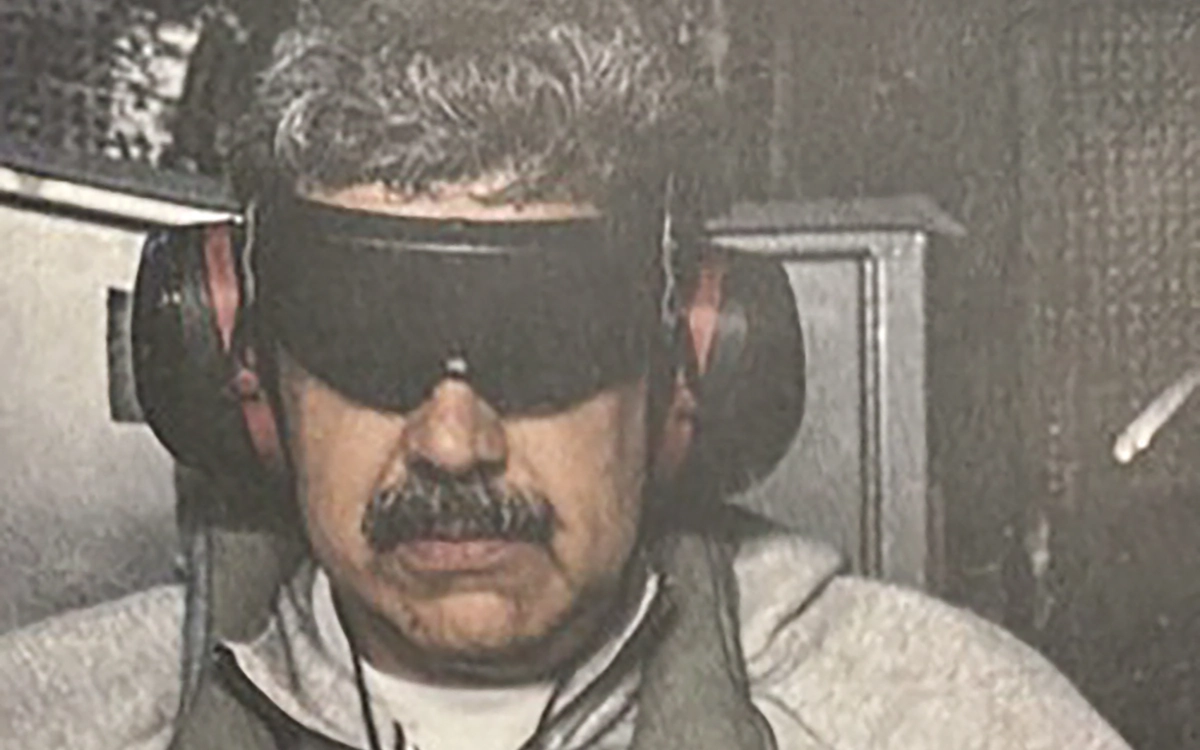
When US helicopters thudded low over Caracas in the early hours of January 3rd and explosions lit up Fuerte Tiuna and La Carlota Air Base, the strategic script felt eerily familiar, especially to anyone who remembers Manuel Noriega being flown out of Panama on January 3rd, 1990.
Hours later, Donald Trump announced that US special forces had captured Nicolás Maduro and flown him out of Venezuela to face narco-terrorism charges in the United States. The operation, conducted under the umbrella of Operation Southern Spear, a 2025 anti-drug campaign that has steadily morphed into a coercive regime-change tool, capped months of maritime interdictions, drone strikes on alleged drug boats, and a de facto oil blockade.
From Washington’s perspective, however, Southern Spear is not presented as regime change but as overdue law enforcement. The Trump administration has for a long time framed Maduro not just as an authoritarian ruler but as the head of a state-run cartel that weaponizes cocaine against the United States and its allies.
In this narrative, the raid is cast as a necessary extension of domestic law-and-order policy. For Trump personally, this operation is about power, legacy, and symbolism at a time of polarizing debates on migration and crime. Internationally, it allows him to project toughness after years in which critics have framed the United States as strategically distracted and risk averse. By demonstrating that Washington is willing to reach into a hostile capital, Trump signals to rivals from Beijing to Tehran and Pyongyang that formal sovereignty offers less protection than they once did.
For Trump personally, this operation is about power, legacy and symbolism at a time of polarizing debates on migration and crime
And by targeting a regime sitting on vast oil reserves, he can claim to be defending both American security and the stability of global energy supplies. In his press conference after the raid, Trump said the United States would “run” Venezuela until “a safe, proper and judicious transition” can take place and vowed that “very large United States oil companies” would go in, spend billions of dollars, fix the “badly broken” oil infrastructure and start making money for the country.
The way the operation was prepared in a small circle, with limited bureaucratic input and a premium on surprise, fits a broader pattern of leader-centric decision-making in an increasingly disorderly system. Caracas 2026 is, in effect, a classic Cold War-style decapitation strike. The difference is that it plays out in a world where the Cold War’s hierarchical blocs and crisis-management routines have largely eroded. We are not back in a bipolar standoff; we are rather entering a multipolar disorder, a world of unstructured rivalries with few rules left.
The closest historical analogue is the 1989 US invasion of Panama. Washington launched Operation “Just Cause” to depose Manuel Noriega, citing the protection of US citizens, treaty rights over the Canal, the defense of democracy and his indictment on drug-trafficking charges. Noriega was captured, flown to Miami and sentenced to decades in prison. Legally, the judgment was clear. The United Nations General Assembly and the Organization of American States condemned the invasion as a “flagrant violation of international law” and a breach of Panama’s sovereignty and territorial integrity under Article 2(4) of the UN Charter.
In 2026, once again, a sitting leader indicted in the United States on drug-related charges is seized by cross-border force. Once again, there is no Security Council mandate and no plausible claim of armed attack that would trigger classical self-defense. The legal rationalization now leans on the blurred “unable or unwilling” doctrine, the idea that states may use force on another state’s territory if that state harbors non-state threats and fails to act, a controversial reading of self-defense with limited state practice and even less consensus on its scope. That doctrine was already controversial when applied to jihadist groups. Extending it to an entire government rebranded as a terrorist organization is a substantive escalation.
At the normative level, the trajectory is equally clear. The prohibition on the use of force in Article 2(4) remains formally intact, but it is increasingly treated as a language game. Russia dresses its invasion of Ukraine in the rhetoric of “self-defense” and “genocide prevention”. Israel, Turkey, Iran, and others justify far-reaching strikes as counterterrorism. Now the United States stretches counter-narcotics and terrorism law to cover the capture of a foreign head of state.
The prohibition on the use of force in Article 2(4) remains formally intact, but it is increasingly treated as a language game
The effect is cumulative. Each “legally creative” operation, whether in Donbas, Gaza, Syria or Caracas, further normalizes the idea that force can be justified if the narrative is persuasive enough to one’s own coalition. For states and businesses outside the core power centers, that means the predictability once offered by a relatively shared legal framework is steadily declining.
Yet the differences between Panama in 1989 and Venezuela in 2026 are as important as the similarities. Panama was a late Cold War operation, carried out by a globally de facto dominant US military against a small client state, with American troops seizing and holding territory in a conventional invasion.
Venezuela unfolds in a crowded, multipolar environment, in which Washington faces open pushback from Russia and China, greater scrutiny from Latin American governments and global markets that immediately price in geopolitical disruption. Where Panama relied on large-scale invasion and temporary occupation, Caracas relies on special operations forces, targeted strikes, sanctions and legal instruments, a lighter, more law-enforcement-driven toolkit designed to achieve regime change without owning the aftermath.
In political practice, however, the international reaction will not mirror Panama. Western allies are critically cautious rather than openly condemnatory. In Paris, the Élysée has expressed concern about the absence of a clear legal mandate and warned that repeated breaches of this norm by permanent Security Council members will carry serious consequences for global security. Nevertheless, there was no outright condemnation of the raid.
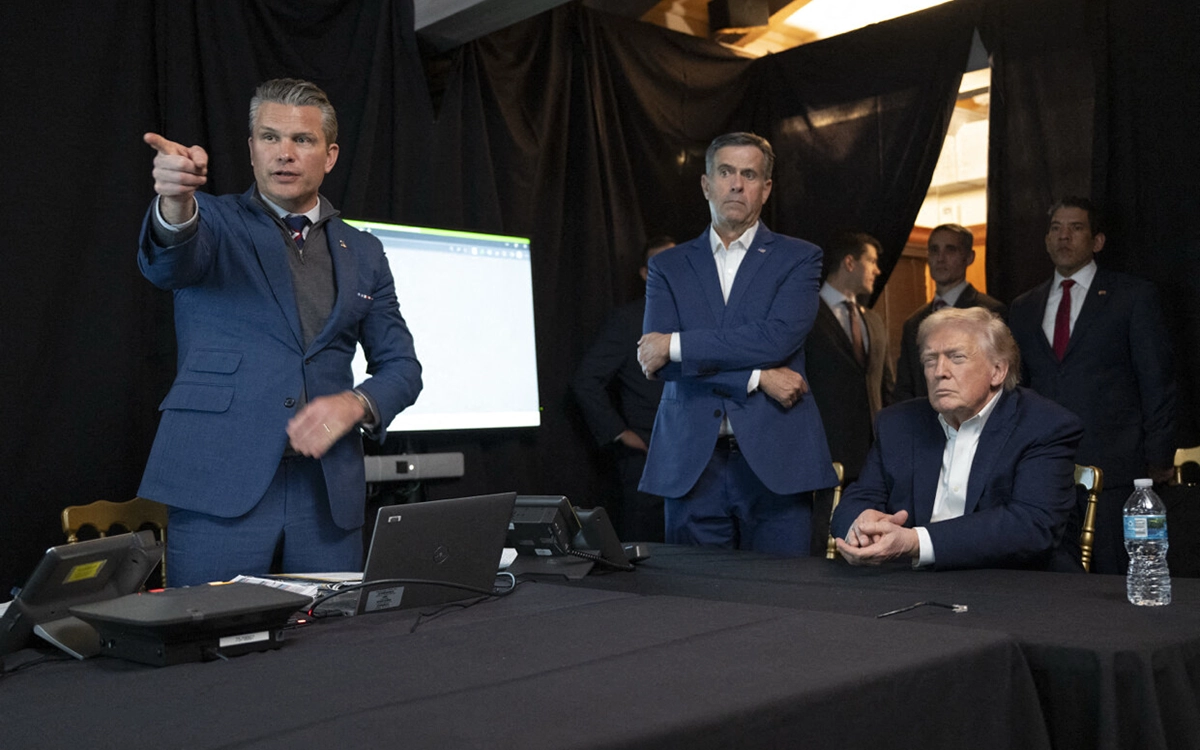
The British government has reiterated that it long viewed Maduro as an illegitimate president and “shed no tears” over the end of his regime, while stressing that the UK was not involved in the raid and insisting that any further steps must be consistent with international law and closely coordinated with allies. Berlin has underlined its attachment to international law and the primacy of multilateral crisis management, signaling concern over the lack of a UN mandate and the precedent of extraterritorial regime change, yet avoiding a direct confrontation with Washington and instead stressing the need to preserve Western unity on Ukraine and broader security issues.
In Brussels, EU foreign policy chief Kaja Kallas has paired support for holding Maduro accountable and for a peaceful transition with a firm reminder that any response must respect international law and the UN Charter. From a European perspective, her warning about restraint and adherence to multilateral frameworks is also a veiled concern that bypassing the UN and striking de facto bilateral deals over Venezuela’s political and energy future would further weaken an already fragile rules-based order and sideline EU partners in the process.
Some Latin American governments especially Milei’s Argentina welcomed Maduro’s removal; Russia, Iran, and others however denounce “imperialist aggression”. For Moscow in particular, Caracas creates a strategic dilemma. The Kremlin has to condemn the raid as an illegal use of force against its strategic partner, yet it is itself relying on flexible interpretations of sovereignty and non-interference to justify both its war in Ukraine and its own regional claims. And of course, the Kremlin can scarcely afford to risk a conflict with Donald Trump.
For Moscow in particular, Caracas creates a strategic dilemma. The Kremlin has to condemn the raid, yet it is itself relying on flexible interpretations of sovereignty
The overall result of international reactions will be not a clear legal line, but rather a fragmented legitimacy. The same template can now be invoked by others, from regional powers targeting exiled opponents to great powers justifying raids against “criminal regimes” in their near abroad. This fragmentation of legitimacy feeds directly into the strategic disorder shaping global power behavior today.
For many governments outside the transatlantic core, Caracas confirms an already entrenched view: that international law is applied rigidly when it serves Western interests and flexibly when it does not. The same capitals that denounce Russia’s invasion of Ukraine will struggle to explain why a decapitation raid in Venezuela is different in legal terms. That perception does not automatically drive them into Moscow’s or Beijing’s camp, but it reinforces their instinct to hedge, diversify security ties and resist coalition-building on Western terms.
Caracas matters less as a singular event than as a symptom of a broader trend: major powers increasingly behave as during the late Cold War, but the structural constraints that once channeled and contained that behavior have eroded. The United States now openly runs a hybridized war on drugs and terror in the Caribbean, using carrier strike groups, CIA assets and special operations raids to hit targets from Eastern Pacific drug boats to Venezuelan shores.
Russia wages a full-scale war in Ukraine while simultaneously conducting sabotage and assassinations abroad. China prosecutes a rolling gray-zone campaign around Taiwan and in the South China Sea. Iran and its partners strike across borders with missiles and proxies. The use of force is no longer an exceptional instrument; it is again a routine extension of policy.
During the Cold War, bipolar confrontation was brutal, but it was structured by arms control regimes, crisis hotlines, alliance discipline as well as a shared interest in avoiding direct collision. Today, most of those guardrails have rusted away. Strategic arms treaties have been hollowed out, conventional arms control in Europe has effectively died, the UN Security Council is paralyzed by veto politics and crisis communication is patchy. The system is more crowded and less ordered than anything the 20th century produced.
Great powers still project influence, but they no longer sit atop obedient blocs. Gulf states hedge between Washington and Beijing, India pursues radical autonomy, Turkey plays multiple sides and Latin America is split between ideological camps and transactional partnerships. Caracas will sharpen those divisions. Some governments will see a welcome end to a destabilizing regime; others will view it as proof that the rules-based order is simply great-power license in another guise.
Cold War methods are thus deployed into a post-Cold War landscape that lacks stable alignments and predictable signaling. The risk profile is different, fewer rigid blocs, more moving parts, less capacity to contain escalation once it starts.
For roughly three decades after the end of the Cold War, Western capitals spoke of a rules-based order even as they bent or ignored at least some of its constraints in the Balkans, Iraq, Libya and beyond. As a matter of fact, the rules-based order always coexisted with power politics and selective enforcement. What is changing now is the density and simultaneity of confrontations and the absence of a single organizing logic. This disorder is multipolar in structure, with several centers of power competing across overlapping layers of security, economics and norms rather than within a single dominant hierarchy.
This disorder is multipolar in structure, with several centers of power competing across overlapping layers of security, economics and norms rather than within a single dominant hierarchy
On the security front, multiple theaters from the Caribbean and the Black Sea to the Red Sea and the Indo-Pacific are increasingly linked both operationally and politically; moves in one arena are read as signals in another. Economically sanctions, export controls, ship seizures and cyberattacks are being weaponized across crises.
In Venezuela’s case, oil is a central driver of external calculations. Production at the state-owned oil and gas company PDVSA has collapsed under years of mismanagement and sanctions, yet the country still holds some of the largest proven reserves in the world.
For Washington, the combination of heavy crude needed by parts of the US refining sector, the desire to limit Russia’s and Iran’s room for maneuver in global energy markets and the opportunity to re-route sanctioned volumes under a different political leadership all feed into the logic of coercion. At stake is not only whether Venezuela returns to global oil markets but who controls that return.
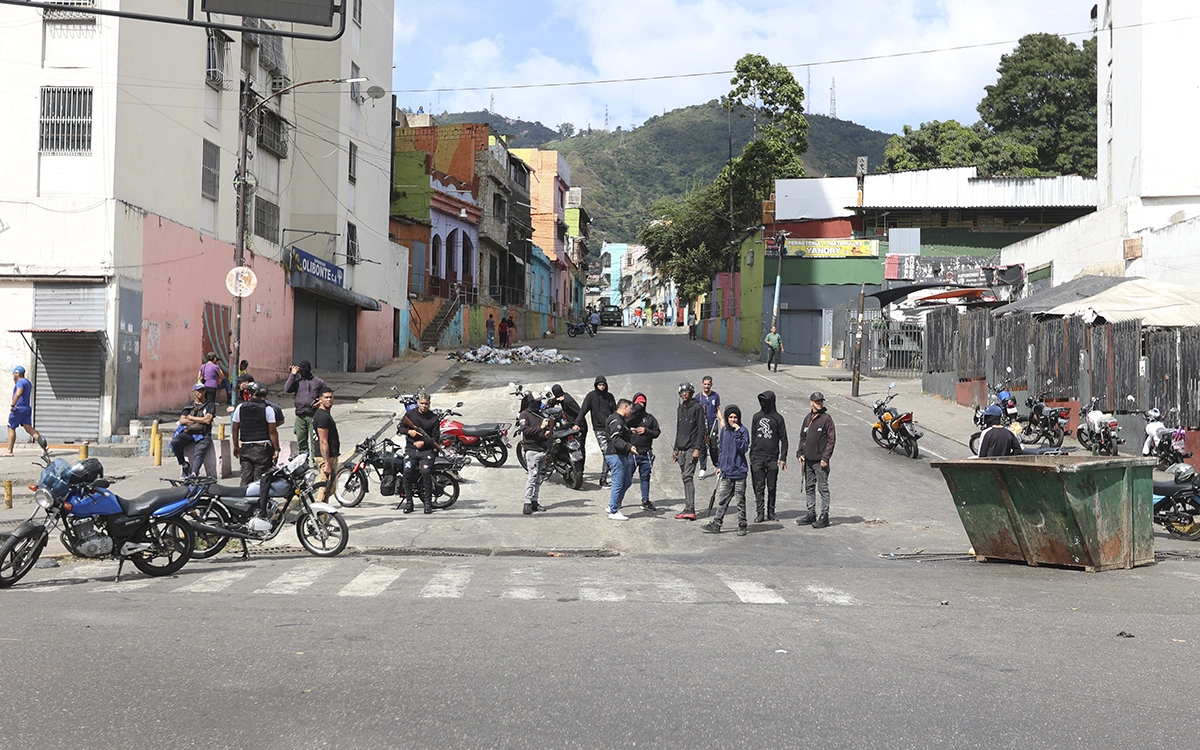
A post-Maduro government would have to restructure PDVSA’s debts, settle arbitration claims and renegotiate contracts in a landscape where US and European majors, Chinese and Russian state companies as well as bondholders all compete for position. Political recognition would translate quickly into control over export licenses, offtake agreements and new upstream investment. For investors, Caracas becomes a test case of whether regime change opens access and legal clarity or multiplies political and contractual risk.
Normatively, no actor has abandoned the legal vocabulary of the UN Charter, but key principles are hollowed out by competing doctrines of self-defense, counterterrorism, and a self-declared “responsibility” to act beyond borders. What emerges is not a simple return to classical spheres of influence, with fixed lines on a map, but to new, post–Cold War influence systems. Since the breakup of the Soviet Union, a new system of influence spheres – overlapping zones of leverage – has emerged.
These spheres run through markets, infrastructure, data flows, technology, energy routes, security assistance and so on. States can simultaneously fall into several of these spheres, buying weapons from one power, energy from another and technological infrastructure from a third and are pressured to signal alignment without ever receiving full protection in return. Influence is no longer primarily territorial; it is functional and networked and therefore more fluid, more reversible and more contested.
Caracas 2026 sits at the intersection of all three layers and these new spheres of influence. It is a security operation dressed as law enforcement, with immediate consequences for oil flows, shipping risk and regional alignments as well as longer-term consequences for what any state can plausibly claim as precedent. For policymakers and markets, Caracas 2026 will be a stress test for the emerging disorder.
Other major powers will study how far Washington can stretch the use-of-force regime without paying a prohibitive price and will adjust their own playbooks accordingly. Key middle powers in Latin America, Africa and Asia will quietly update their reading of Western commitments to international law. Energy traders, insurers and corporates with exposure to volatile regions will have to factor in that decapitation strikes, targeted seizures and rolling sanctions campaigns are no longer outliers but part of the normal repertoire of statecraft.
In that sense, the question is not whether the liberal order can be restored, but how states and businesses navigate a world in which power is exercised through overlapping and increasingly unpredictable layers of coercion. If operations like Caracas become a template rather than an exception, sovereignty will be increasingly conditional, international law more elastic, global energy markets more politicized and systemic stability more dependent on how leaders in a handful of capitals choose to interpret the risks and rewards of coercion.
If operations like Caracas become a template rather than an exception, sovereignty will be increasingly conditional, international law more elastic, and global energy markets more politicized