
Eagle Intelligence Reports
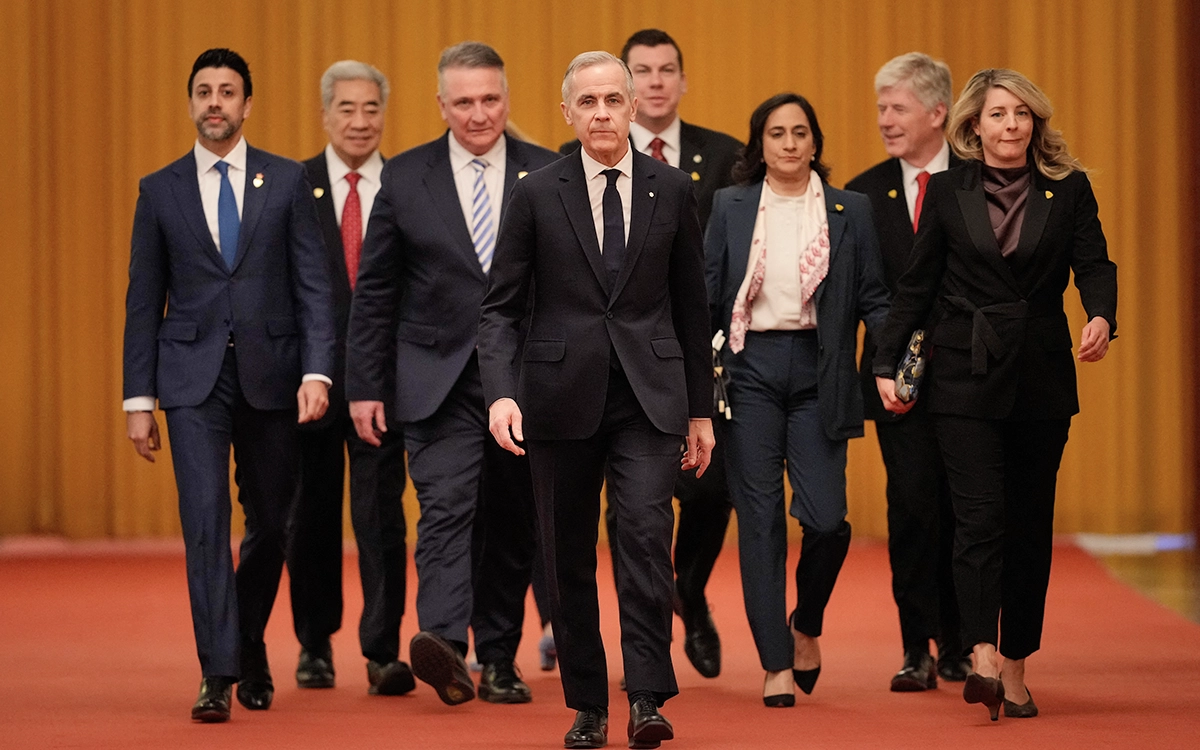
Canadian Prime Minister Mark Carney’s trip to Beijing last month produced a framework for bilateral partnership that includes tariff reductions on EVs and agricultural products, expansion in cooperation on energy and investment, visa measures, and limited international law enforcement agreements. The pragmatic reset comes at a crossroads, following a decade of controversy and diplomatic estrangement.
Yet Canada’s China reset is not a reaction to episodic leadership failure or diplomatic miscalculation. Rather, it reflects a pattern of middle-power adjustment under conditions of weakening Western hegemony and intensifying systemic competition. It is a structural adaptation that compartmentalizes cooperation—strengthening economic ties with Beijing while maintaining security alignment with Washington. Canada’s pivot underscores a lack of strategic coordination within the transatlantic bloc over how to respond to China’s growing global influence. The move contrasts with more confrontational approaches by European partners, such as the Dutch use of a Cold War-era national security law to seize control of the Chinese-owned semiconductor maker Nexperia last fall.
Carney’s remarks on the deal are striking less for their novelty than for their candor. “The global system has been upended,” he observed. “This is a rupture, not a transition.” Carney sharpened the point in Davos days later: “We knew the story of the international rules-based order was partially false,” adding, “the strongest would exempt themselves when convenient.” International law “applied with varying rigor” depending on the country. “The fiction was useful,” he said, so long as it sustained an American hegemony that benefited Canada. Today, however, amid “global flux,” middle powers like Canada must “chart a new course by navigating the world as it is, not as we might wish it to be.”
Canada confronts a world system in which the U.S.-centered political and economic alliance persists rhetorically even as the structural conditions that have long sustained it are eroding. And while Canada is the “first to hear the wake-up call,” as Carney put it, it is unlikely to be the last.
Canada confronts a world system in which the U.S.-centered political and economic alliance persists rhetorically
Carney’s remarks give voice to something long claimed outside the Western policy establishment but rarely stated within it: the West’s foreign-policy idealism, grounded in claims to a “rules-based order,” has for decades provided rhetorical cover for the projection of American hard power. With the collapse of the Soviet Union, the United States was no longer constrained by a systemic counterweight. It ostensibly replaced great power politics with this new political-ethical order, asserting American interests while offering partners like Canada incentives for collaboration. Yet it seems unlikely that this legitimating narrative will survive the emergence of a world order rooted not in American hegemony but in multipolarity and China’s increasingly global presence.
While Carney’s clarion call highlights a growing—if belated—recognition within the Western bloc of a shift in the global balance of power, it errs in attribution. It misperceives long-term political-economic change as the result of episodic misjudgment by a handful of statesmen. This elite perception failure has led policymakers to understand the Canada–China reset primarily as the result of Trump’s unpredictability. As Carney put it, “the United States looks to be actively trading away its status as a global hegemon” for a “hemispheric bullying,” as though global hegemonic status were a matter of individual intent rather than long-term structural development.
Trump and his analogs in Europe are better understood not as primary causes, but as symptoms of deep contradictions within the Western political-economic project. The profitability of Western capital has long remained dependent on low-cost, stable labor markets in East Asia. From the mid-1970s onwards, U.S. and Western European firms found a solution to stagflation and declining rates of profit—exacerbated by rising energy costs and wage-price pressures—by relocating operations to the East.
Over time, China has leveraged this dependence to reposition itself from a site of cost arbitrage within Western production to a strategic actor capable of translating economic power into leverage over trade regimes and geopolitical alignments. In this sense, China’s rise has merely placed the West’s vulnerabilities into sharper relief.
The response from Washington was swift. Trump threatened 100 percent tariffs on Canadian exports should Ottawa pursue a free trade agreement with Beijing. Carney then clarified that Canada had “no intention of doing that with China or any other non-market economy.” The central issue, then, is not competition per se, but the extent to which China’s hybrid political-economic system resists discipline by market mechanisms—in short, it is the threat posed by a rival order.
The U.S. response is one of relative weakness, not strength. Tariff threats operate within a legacy framework that relies on residual dollar power and privileged access to U.S. markets as instruments of leverage. But these are a poor substitute for the confident rule-setting historically enabled by U.S.–NATO hegemony and the U.S.-centered financial system. The post-1973 shift toward deregulating financial markets, removing capital controls, and floating the dollar—tying exchange rates to market fluctuations—benefitted the U.S. only in the absence of a real competitor. With China’s emergence as a systemic alternative, that premise is increasingly untenable.
Tariff threats operate within a legacy framework that relies on residual dollar power and privileged access to U.S. markets as instruments of leverage
Even Trump’s so-called “Don-roe Doctrine”—the reorientation of strategic power projection toward the Western hemisphere—unfolds amid NATO uncertainty, military-supply-chain vulnerability, and declining dollar primacy. It is also constrained by a deeply financialized political economy in which risk-averse private capital is structurally disinclined to commit to unstable, long-horizon projects like the rebuilding of Venezuela’s oil and gas sector. The U.S. capture of Nicolás Maduro is emblematic of a declining hegemon increasingly reliant on residual military supremacy as economic and political instruments yield diminishing returns.
Given these material constraints, Trump’s policies merely accelerate prior trends. But the question remains—is the West capable of perceiving its own relative decline? As trading partners diversify away from the U.S.-centric international system and undermine its underlying ideological framework, will U.S. policymakers recalibrate?
Carney’s admission illuminates the dynamics of late hegemonic denial: as the Western bloc confronts a general erosion of its global coordinating power, middle powers like Canada hedge against uncertainty, and the United States continues to rely on traditional yet outdated instruments of influence rather than adapting to the emerging world order.
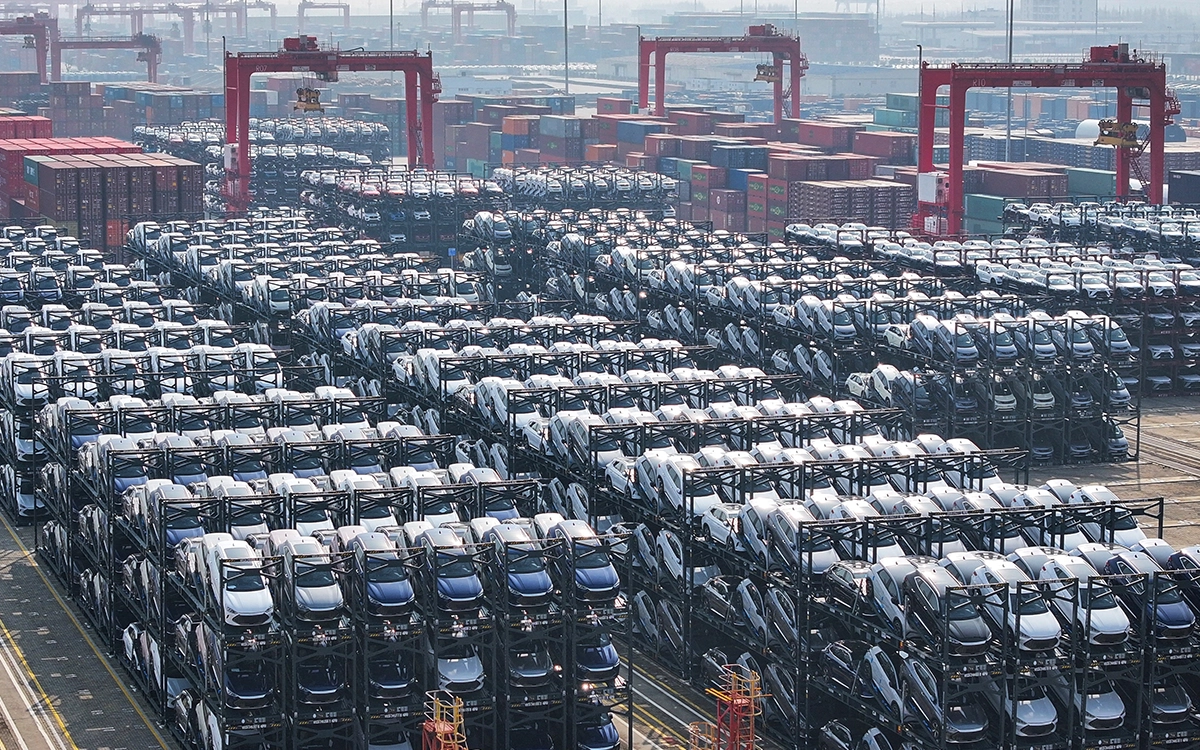
The Canada–China agreement highlights the material incentives informing middle-power repositioning under conditions of systemic competition. It also reveals the longer-term structural forces reshaping world trade and disrupting the transatlantic alliance. The deal’s centerpiece is a reduction in EV tariffs from 100 percent to 6.1 percent, capped at an annual volume of 49,000 units. Beijing expects this to catalyze new Chinese joint-venture investments, expanding Canada’s EV supply chain. This “managed market entry,” as the preliminary agreement describes it, deepens Canada’s integration into China’s industrial ecosystems. While the agreement avoids Belt-and-Road-style language, its emphasis on a “robust build-out of Canada’s EV supply chain” signals cooperation on infrastructure development.
While it is unlikely that such projects would reach the scale of the Chinese-built Hungary–Greece Corridor, they would involve Chinese participation in port upgrades and battery-related embedded infrastructure. Moreover, given Canada’s role in lithium, cobalt, graphite, and nickel extraction, cooperation could extend into downstream processing—an area requiring capital outlays at a scale that Canadian private lenders are reluctant to finance. This would likely entail Chinese financing via state-owned development banks, and possibly direct involvement by China’s state-owned construction enterprises.
EV infrastructure requires investment in embedded systems—particularly charging stations—and battery production, the most capital-intensive segment of EV supply chains. This introduces the risk of structural dependence, given that Chinese firms now account for more than 80 percent of global EV battery manufacturing, the result of 15 years of state-led industrial scaling in lithium-ion battery production. Through coordinated industrial policy, state subsidies, and EV and battery pilot programs, China had established global market dominance by 2018–2019, well before most Western states considered batteries a strategic industry. In doing so, Beijing accepted significant allocative and firm-level inefficiencies and rising local debt burdens in exchange for rapid scale and long-term strategic positioning.
In contrast to Canada’s earlier efforts to limit Chinese influence through forced divestment, the new agreement expands China’s role in industrial development, effectively opening the door to infrastructure and capital commitments prone to dependency. Chinese SOE participation in financing and construction would further blur the boundary between state and private activity in China’s international economic engagements, exposing the growing strategic gap between formal regulatory frameworks and the functional exercise of power.
The agreement sets the stage for China to extend its involvement from Central and South America—where it is already building dozens of port, rail, road, and airport construction and modernization projects—into North America. The accord expands China’s strategic footprint beyond Xi Jinping’s stated focus on developing countries and into a NATO founding member at the core of the Western bloc.
The Canada–China accord expands China’s strategic footprint beyond Xi’s stated focus on developing countries and into a NATO founding member at the core of the Western bloc
The White House responded sharply to the Canada–China agreement. “If Governor Carney thinks he is going to make Canada a drop-off port for China to send goods and products into the United States,” Trump said, “he is sorely mistaken.” Treasury Secretary Scott Bessent echoed the claim, saying he would not let China “pour their cheap goods into the United States” via Canada.
Yet low-cost consumer imports from China have long been integral to the American economic model. For decades, they have dampened inflationary pressures, kept interest rates low, and helped maintain U.S. living standards despite weak growth in real wages. From retail giants like Walmart to advanced industrial firms like Ford or GE, American businesses have offshored production and sourcing, implemented just-in-time logistics networks, and leveraged dollar primacy to reduce input costs and expand purchasing power.
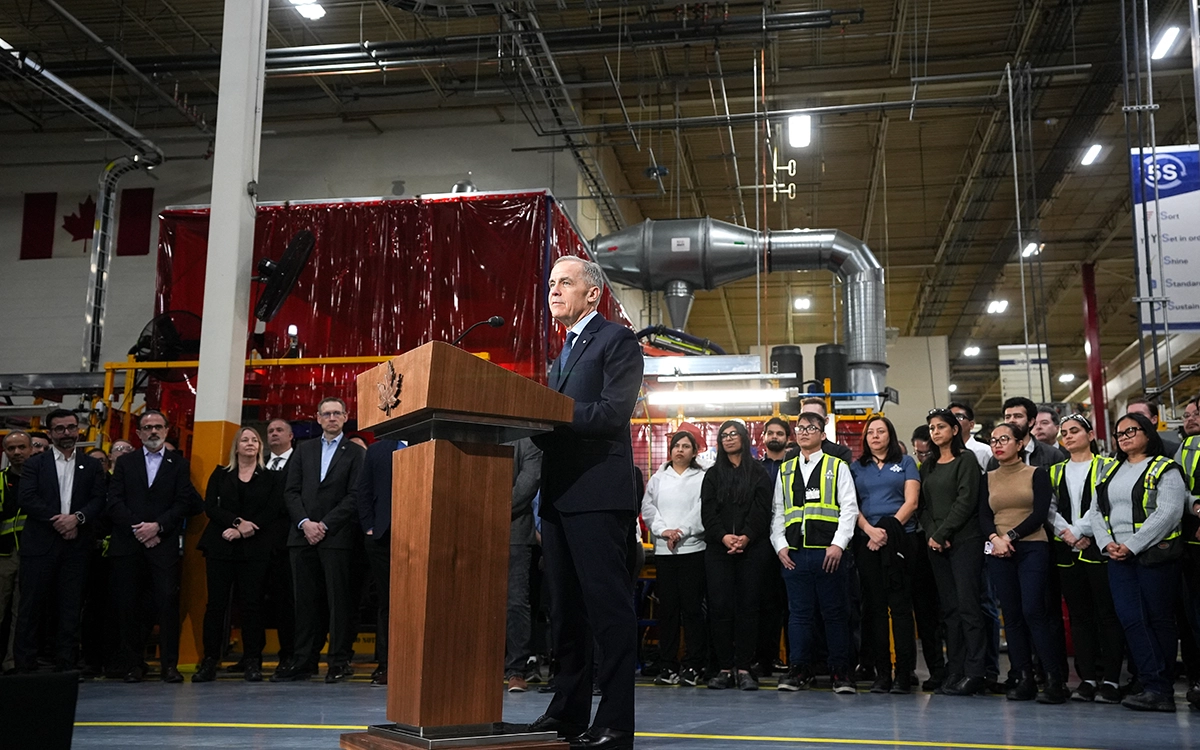
The novelty is that China is no longer simply a low-cost producer compliant with the West’s consumer needs. After decades of interdependence—facilitating licit and illicit technology transfers—China is now a systemic competitor with a strategic industrial policy, technological sophistication, and scale. Canada’s move exposes a gap in Western strategic understanding: the concern is not that cheap Chinese commodities will enter the U.S. via Canada, but that China’s rise creates incentives for longstanding U.S. allies to adapt around U.S. trade barriers and coercive capacity. The underlying logic of commodity production, circulation, and consumption has not changed; it is just that the United States no longer fully controls the system it once designed, whether in Bretton Woods or on Wall Street.
Yet Western policymakers and adjacent elites still advocate protectionist policies to counteract “the negative impact of overcapacity,” as the EU International Trade Committee put it. During her visit to China in 2024, former Federal Reserve Chair Janet Yellen said China’s “excess industrial capacity threatened both American and European firms.” Indeed, China’s long-term industrial strategy has produced global dominance in EVs, photovoltaics, and batteries, threatening the West’s leadership in high-tech production.
Yet using state power to boost critical industries and create dominance in security-sensitive sectors is hardly unprecedented. American Cold War-era strategic industrial policy laid the foundations for its global dominance in computing, aerospace, and military technology. Extensive subsidies and strategic protections still underwrite U.S. agricultural competitiveness, while guaranteed public procurement and reimbursement frameworks in defense and pharmaceuticals ensure dominance in those sectors.
What has changed is not the logic of state intervention, but who now wields state power most strategically within the global system. As the global balance of power tilts in China’s favor, strategic industrial policy is recast as “overcapacity,” implying a normative critique rather than a structural explanation.
Put simply, “overcapacity” is a category error that exists relative to Western expectations rather than Chinese strategic intent. It reflects a policy discourse in which the ideological narratives used to legitimize American hard power take precedence over the real long-term strategic planning and state investment that produced and sustained it. The post-Cold War sanctification of market forces has prevented state planners from understanding the sources of American ascendancy, and today it blinds them to the causes of its relative decline. What Carney’s comments shatter is not the underlying mechanisms of power, but the narratives that have long concealed them.
“Overcapacity” is a category error that exists relative to Western expectations rather than Chinese strategic intent
The fixation on “overcapacity” reveals a broader conceptual problem within Western political analysis—a tendency to privilege moralizing and discursive critique over structural explanation, thereby granting ideology greater causal weight than political-economic conditions. This inversion has left policymakers ill equipped to interpret China’s rise, as they misread long-term industrial planning as opportunistic market distortion rather than as the deliberate exercise of state power toward discrete strategic ends.
In this context, Canada’s recalibration is not an aberration, nor a betrayal of Western norms. It is a rational middle-power response to an international environment in which power has shifted but perception has not. The problem the West faces is not that China is necessarily playing a new game, but that Western elites have forgotten the playbook for the old one. If they are to counter China’s rise, they must begin to see the world as it is, rather than as they might wish it to be.